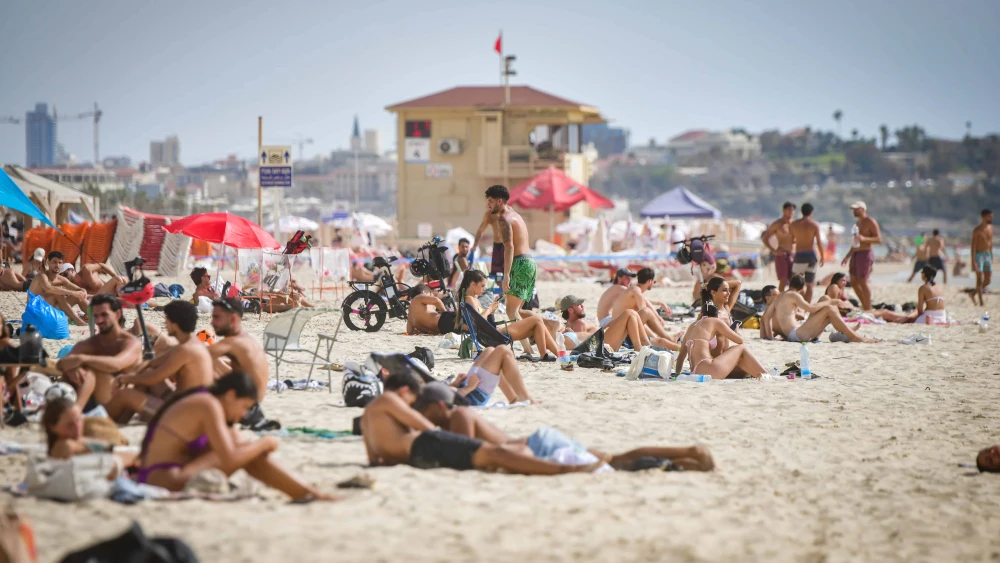
Israel experienced a severe heat wave on Wednesday as temperatures reached 108°F (42°C) in the Beit She’an Valley and 111°F (44°C) in the Arava Desert, with safety authorities issuing comprehensive protection guidelines for outdoor workers.
The extreme heat conditions affected most regions of the country, with temperatures topping 104°F (40°C) in many areas, prompting official recommendations for protective clothing, increased hydration, and modified work schedules during the afternoon hours.
After slight relief on Thursday and Friday, the heat wave is expected to intensify again over the weekend with temperatures potentially reaching 113°F (45°C) in the Arava region, making this one of the most severe summer weather events in recent memory.
Israel’s Institute for Occupational Safety and Hygiene issued several updates aimed at protecting workers whose jobs are outdoors. The institute notes that heat protection includes three stages, including appropriate clothing, hydration and training.
Workers are required to wear light, breathable and sweat-wicking clothing like cotton—and avoid synthetic fabrics as much as possible that limit evaporation and make it difficult for the body to cool down.
Additionally, workers must be thoroughly familiar with the dangers of exposure to severe heat and early symptoms requiring immediate response—such as extreme fatigue, confusion, rapid pulse, headaches, or vomiting.
The past Hebrew year was the warmest on record in the Jewish state in the last 75 years, the Israeli Meteorological Service revealed in October.
The year, which was marked by a particularly warm summer and mild winter, surpassed the previous record warmth set a decade and a half ago in 2009-10. The hottest reading last summer was 48 degrees Celsius or 118.4 degrees Fahrenheit, which was recorded in the Jordan Valley.
Originally published by Israel Hayom.