


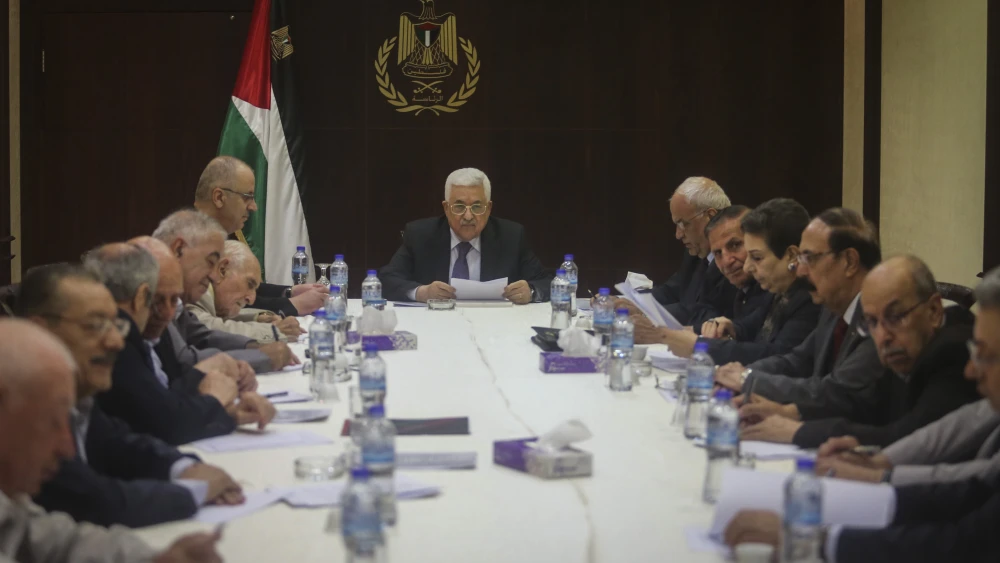
Palestinian Authority leader Mahmoud Abbas plans to impose additional sanctions on the Gaza Strip, Palestinian officials were quoted by Arab media as saying on Wednesday.
According to the reports, Abbas, who is currently in New York to attend the 73rd U.N. General Assembly, plans to convene his government upon his return to Ramallah and outline a series of new financial sanctions against Hamas, the terrorist organization that rules Gaza.
Hamas routed Abbas’s Fatah-led government from power in Gaza in 2007, effectively splitting the Palestinian population into two separate political entities. Egyptian efforts over the past decade to promote a reconciliation between the rival Palestinian factions—the latest brokered in October 2017—have so far failed.
The consistent failure to reinstate the P.A.’s power in Gaza has prompted Abbas to impose a series of crippling financial sanctions on its rulers, including suspending the salaries of thousands of Hamas government employees and cutting P.A. payments for the electricity used in Gaza, in an effort to regain control of the Strip.
These moves have significantly aggravated the already dire economic reality in Gaza. With unemployment exceeding 50 percent and no growth to speak of, the World Bank has recently warned the coastal enclave’s economy was on the verge of “immediate collapse.”
Abbas also hopes the sanctions on Hamas will pressure Israel to resume the Israeli-Palestinian peace process, deadlocked since 2014, the media reports suggested.



