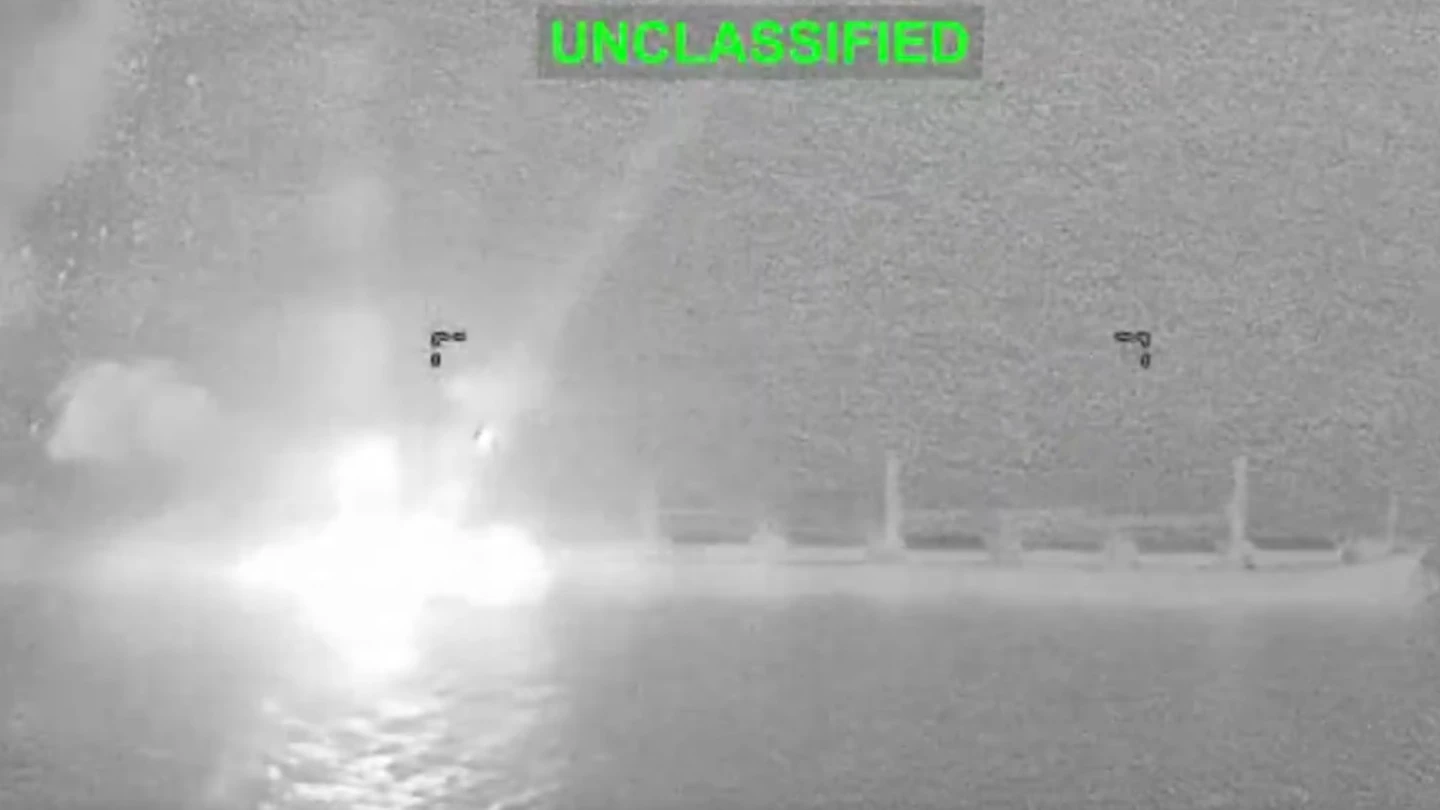

Israel’s recent strike on senior Hamas figures in Doha, Qatar, marked a dramatic expansion of the conflict, extending the battlefield far beyond Gaza and placing direct pressure on the terror group’s political leadership abroad.
The strike was likely to deeply shake the Hamas chain of command, according to Ephraim Inbar, former head of the Jerusalem Institute for Strategy and Security (JISS).
“The Hamas leaders will all go into hiding. They’ll be constantly looking over their shoulder and worried that someone is reporting on them,” he told JNS.
The strike, which came after Hamas rejected the most recent U.S.-backed ceasefire proposals, raised immediate questions about the future of Hamas’s leadership, the conduct of the war inside Gaza and the prospects for renewed negotiations.
Israeli officials named Khalil al-Hayya, Zaher Jabarin and Khaled Mashaal as being among the top figures targeted in the Doha strike. Al-Hayya, who has been central to ceasefire talks in recent months, operates as a key link between Hamas’s Gaza-based commanders and international mediators. Jabarin oversees the group’s financial channels abroad.
Mashaal, who is the former head of Hamas’s political bureau, has lived in Qatar for more than a decade after leaving Damascus following the start of the Syrian civil war. Since 2012, Doha has hosted much of Hamas’s leadership, offering offices, security and diplomatic access.
The Qatari capital became the center of the organization’s political activity, with senior officials coordinating terror plots, funding streams and, recently, negotiations with Israel from what has often been described as Hamas’s “embassy in exile.”
Following the strike, Hamas claimed its senior figures were unharmed, though details remained unclear. Israeli analysts stressed that even an unsuccessful attempt carries strategic weight.
Yoram Schweitzer, an expert on international terrorism and head of the Institute for National Security Studies (INSS) Program on Terrorism and Low Intensity Conflict, told JNS, “The message was very clear that if Hamas leadership deluded themselves into thinking that they had some form of immunity, they were mistaken. This message is sent no matter the results of the strike.”
The chain of command
The strike in Doha comes at a time when Hamas is already struggling to balance its “inside” and “outside” leadership structures. Historically, decision-making authority has been divided between commanders operating in Gaza and the political bureau stationed abroad, first in Damascus and later in Doha.
Researchers at the Meir Amit Intelligence and Terrorism Information Center note that this split has often created friction, with the Gaza wing pressing for armed escalation while the external leadership managed finances and international contacts. By placing the Doha leadership under direct threat, Israel has intensified this longstanding tension at a moment when communication lines are already strained.
“As an operation, it makes their activities much more cumbersome, even if the leaders were not liquidated. Everything has to be more secure and more hidden. They can not operate out in the open,” Inbar explained. “The organizational advantage that they had by at least having an exiled leadership that could comfortably operate without hiding is gone,” he added.
The attack also compounds the heavy losses Hamas has suffered inside Gaza. Yahya Sinwar, Mohammed Deif, Marwan Issa and Saleh al-Arouri were all eliminated in Israeli strikes over the past year, depriving the terror group of its most experienced commanders. Their deaths left brigade-level leaders in charge of the day-to-day operations.
Israeli assessments describe the current command structure as fragmented, with local units exercising more autonomy but lacking the coordination once provided by senior commanders.
However, Inbar explained that taking out leaders was unlikely to seriously affect the terror group’s operations.
“Hamas was already a decentralized organization before the attack. Taking out leaders has effects, but in terms of the chain of command, it is always possible to find new people, and Hamas has already been doing so for a long time,” said Inbar. “There are many centers of power, and they all operate pretty independently.”
Multiple Hamas figures remain active and could supplement the organization’s political and financial operations if the Qatar bureau were neutralized.
Osama Hamdan, based in Lebanon, has long served as a senior Hamas foreign relations figure and has publicly maintained relationships with both Hezbollah and Iran.
Mousa Abu Marzouk, a Hamas founding leader and former head of its political bureau, is frequently cited as one of the contenders for the top job and is known for his diplomatic roles outside Gaza.
In addition, regional operatives, including Jihad Yaghmour, have established a major operational hub in Turkey, managing logistics and maintaining connections with Hamas’s financial networks. Their continued activity highlights that while the Doha strike was significant, Hamas retains alternative leadership structures.
The Gaza City offensive
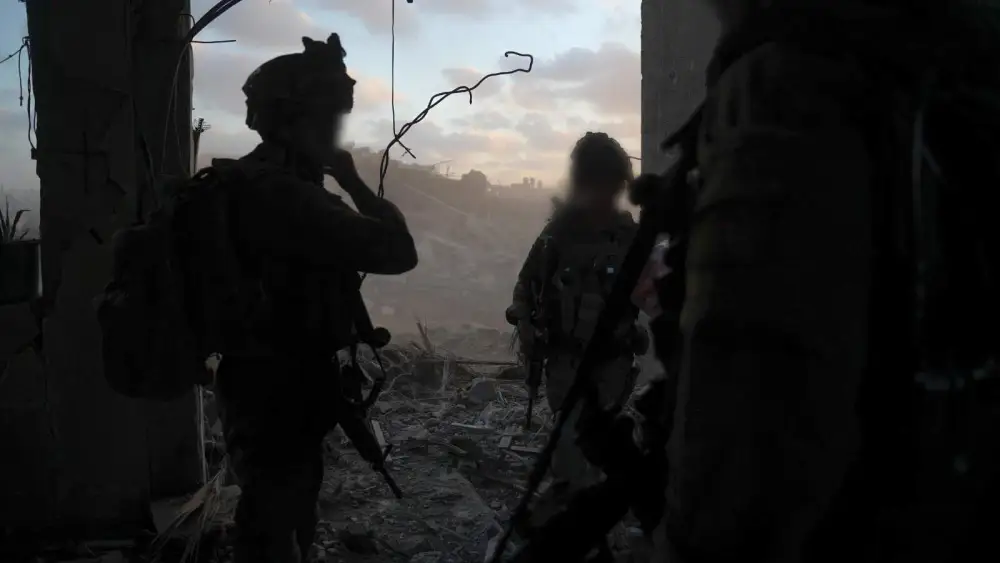
The strike in Doha came as Israel ordered the full evacuation of Gaza City, signaling the beginning of the largest stage of the ground campaign since the initial offensive in October 2023.
On Sept. 9, IDF Arabic-language spokesperson Lt. Col. Avichay Adraee called on residents to “leave immediately,” warning that the army “will operate in the Gaza City area with great force.”
Within days, IDF spokesperson Brig. Gen. Effie Defrin reported that Israeli forces had gained “operational control of 40 percent of Gaza City” and that the offensive would “continue to expand and intensify in the coming days.”
The timing of the Doha strike alongside these announcements highlighted Israel’s effort to apply simultaneous pressure on Hamas’s leadership abroad and its fighters in the city.
On the battlefield itself, control has shifted to mid-level commanders of the Izz ad-Din al-Qassam Brigades, including Gaza City Brigade commander Izz al-Din al-Haddad and operational chief Raed Saad, who continue to direct ambushes and small-unit resistance.
Analysts note that this localized structure allows Hamas to keep fighting even when senior figures are killed, and say that the Doha strike should not have a major effect on the upcoming day-to-day combat in Gaza City. IDF officials have described the current combat in Gaza City as “a guerrilla-style war of small terror cells carrying out localized ambushes,” a method that persists despite the removal of top commanders and the vulnerability now demonstrated at the political bureau level.
“Ultimately, in terms of the actual effect on the fighting on the ground in Gaza, there would be a much greater effect if Israel actually succeeded in taking out the leadership in Doha than if they didn’t. However, even if Israel did succeed in killing the political leadership in Doha, it wouldn’t lead to a serious surrender in Gaza,” said Schweitzer. “They are operating in small groups, which are quite capable of continuing to fight, and they are not dependent on the people in Qatar for that.”
While the strike in Doha is unlikely to impact Hamas’s micro-operations, it is likely to affect the coordination of political and military operations.
The Meir Amit Intelligence and Terrorism Information Center has documented Hamas’s reliance on encrypted channels and messengers to pass directives from external leaders to Gaza. Israeli analysts note that pressure on the Doha bureau increases the likelihood of delays and miscommunication during critical stages of the ground offensive.
This coordination is critical for the informational elements of Hamas’s strategy, which often depends on media content produced in Gaza and spread by outside distribution networks.
“Their military is very weak, but they are still very functional in other ways, such as media and propaganda. They are sending out messages, pictures, and videos every day; they are very active on social media. That part of Hamas is still functional,” former Israeli Deputy Foreign Minister Danny Ayalon, chairman of the Silver Road Capital financial advisory firm, told JNS.
However, the value of this propaganda material does depend on an organized outside system that can funnel this material into the relevant networks. The disruption of Hamas operations in Qatar is likely to disrupt these efforts.
According to experts, the strike in Doha may also have a psychological effect on the fighters in Gaza. By targeting leaders who for years operated from the safety of Qatar, Israel sought to demonstrate that the terror group’s external command is no longer beyond reach.
While this does not immediately change the tactics of fighters inside Gaza City, experts argue that it may erode the perception among Hamas’s rank and file that the political bureau can continue to provide direction and protection from abroad.
“The attack has a major effect on morale. They believe that the Americans supported this strike, and that means that they believe the Americans are supporting Israel in extreme actions. They are afraid that Israel is less constrained and that now we mean business in Gaza. They are afraid there is no more playing games in Doha and stalling,” Inbar explained.
Ceasefire negotiations
The Doha strike took place while mediators were pushing a U.S.-backed proposal for a 60-day ceasefire. Israel had signaled acceptance of the plan, which called for the release of all remaining hostages on the first day of a truce in exchange for the release of thousands of Palestinian prisoners and a staged redeployment of Israeli forces away from densely populated areas of Gaza.
Hamas’s delegation in Qatar, however, rejected those terms, insisting on a guaranteed permanent ceasefire and the full withdrawal of Israeli forces from Gaza before any release could take place. This deadlock left the talks effectively frozen at the time of the strike, with mediators in Cairo and Doha unable to bridge the gap.
The strike placed the future of negotiations in doubt, although Hamas quickly made clear that it still intended to continue the negotiations even while insisting its terms “remain unchanged.”
Inbar said that for Hamas, continuing negotiations, even after the Doha strike, served a concrete strategic purpose.
“Negotiations are always possible. At the end of the day, for Hamas, negotiations are not only about achieving a result; it’s also about assessing Israeli intentions, it’s about putting pressure on Israel,” he explained. “For them, it is always an advantage to have this tool,” he added. Schweitzer agreed that negotiations were likely still on the table. “For the short term, negotiations are likely to be frozen, but that does not mean that in the future there will be no more negotiations.”
Schweitzer said that for Israel, targeting Hamas’s Doha bureau during talks reinforced the message that its leaders cannot negotiate in luxury while their operatives continue attacks in Gaza, rather than showing a disinterest in negotiations.
“I think the strike in Doha was in some sense the continuation of Israeli policy. Israel’s trying to apply military pressure to get some sort of a deal,” he explained. “The attack in Doha was a signal for Hamas to stop playing games, to come to the table and to agree to a good deal. It was not a signal that negotiations are totally over until the end of the war,” Schweitzer added.
The reaction of mediators reflected concern that the attack could complicate their roles, but the effect was largely practical rather than political. Qatar condemned the strike and warned it would make mediation harder, while U.S. and Egyptian envoys focused on whether Doha remained a viable venue for indirect talks.
Schweitzer said that the Doha strike was likely to reshuffle the logistics and the players surrounding negotiations, but not actually end them.
“A major effect of the strike is that mediations are likely to shift away from Qatar and more toward Egypt. It is not clear when, if ever Qatar will return to the role of senior mediator in this negotiation,” he said.
In practice, the Doha strike underscored a strategic reality: negotiations will continue only under terms dictated by Israel’s battlefield momentum. By exposing Hamas’s external command to direct attack, Jerusalem demonstrated that the terrorists’ ability to seek political leverage abroad is diminishing.
Mediators remain active, but their leverage is constrained by the fact that Israel holds both the military initiative in Gaza City and the ability to expand its campaign to Hamas leaders overseas.