Newsletter
Newsletter Support JNS

Eyal Zisser

Eyal Zisser is a lecturer in the Middle East History Department at Tel Aviv University.

The 2006 Second Lebanon War was more successful than many believe it to have been, but despite the deterrence Israel secured, the challenges Hezbollah poses remain.
Would-be autocrat Turkish President Recep Tayyip Erdoğan’s crushing failures in diplomacy and foreign policy, and his attempts to destroy Turkish democracy, are starting to boomerang.
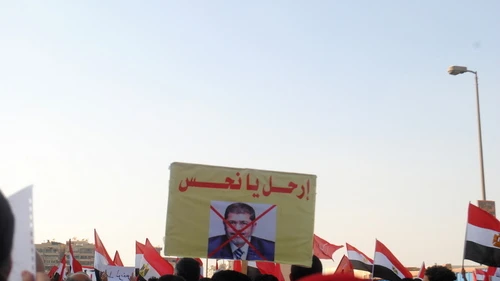
Interestingly, Islamists have only been successful in the two non-Arab Muslim countries in the region, Turkey and Iran, whose regimes don’t appear to be in jeopardy of cracking.
Their behavior over the years teaches us that stability and economic development don’t top their list of priorities.
Iran is hoping to pressure the U.S. into easing sanctions via terrorist attacks. The U.S. will have to deal the regime a serious blow instead, not only to deter it but to prevent future escalation.
The Palestinians, true to their tradition, are choosing the path of rejection. But this time they’re alone.
Paradoxically, the dollars funneled into Gaza by Qatar only expedite Gaza’s descent into decay, as they keep Hamas in power.
Once a weak and isolated country in the Middle East, Israel is now a central player and a desirable ally in the Arab world.
Europe still believes that denial is the best way to cope with radical Islam, but time and again we see that denying the existence of a problem doesn’t solve it.
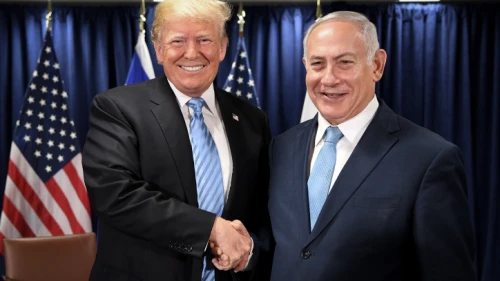
It would be a mistake to think that Trump’s Mideast peace plan will be completely inconsequential: It could have far-reaching implications on the future of Israeli-Palestinian relations, and more importantly, on the future of Israel itself.
The re-election of Israeli Prime Minister Benjamin hasn’t sparked any discernible uproar, and we can assume that some Arab leaders even breathed a sigh of relief upon learning he would continue serving as prime minister.
It may be that sheer inhumanity was the basis for Syria’s behavior over the years, but it is just as logical that its leaders acted out of a desire to trade and haggle over the bodies in peace talks.