Newsletter
Newsletter Support JNS
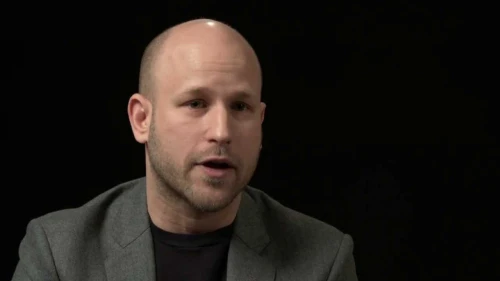
Moshe Phillips. Credit: Courtesy.

Moshe Phillips

Moshe Phillips, a veteran pro-Israel activist and author, is the national chairman of Americans For a Safe Israel (AFSI). A former board member of the American Zionist Movement, he previously served as national director of the U.S. division of Herut and worked with CAMERA in Philadelphia. He was also a delegate to the 2020 World Zionist Congress and served as editor of The Challenger, the publication of the Tagar Zionist Youth Movement. His op-eds and letters have been widely published in the United States and Israel.

With his past record on U.S.-Israel relations, why is former Secretary of State Henry Kissinger addressing Temple Emanu-El in New York City?
The same leftist activists who demand that Israel expel “illegal” Jewish settlers simultaneously insist that Israel not expel Bedouin squatters.
Where Greg Epstein’s influence may well be felt, I fear, is on Jewish students’ perceptions of Israel, the Holocaust and anti-Semitism.
Medieval Jew-haters introduced it in the 12th century C.E. as a way of singling out Jews for contempt; much later, Nazi Germany’s propaganda machine invoked the stereotype.
The pro-Palestinian wing of the Democratic Party will make sure that the money flows to Gaza, come hell or high water.
East and West are not simple geographic terms as they are in the United States.
Michael Fischbach’s book review in “American Jewish History” is a vicious screed that challenges the very legitimacy of Israel’s existence and justifies the anti-Israel “right of return.”
A review of the Quartet’s website is instructive in examining just what’s wrong with the body. Its failures—and they are plentiful—stem from its entire approach to Israel.
Objecting to the reproduction of a hate map should not be a partisan issue. Palestinian Arab violence has never distinguished between left-wing and right-wing Jews.
Anti-Israel extremists continue to use the lie of Deir Yassin to bash Zionism and the Jewish state.
Although his literary scholarship continued over the years, a large portion of his time was devoted to what he termed “the Jewish wars.”
He was a different kind of leader: He loved the battleground of ideas, but struggled mightily to show respect for his adversaries.