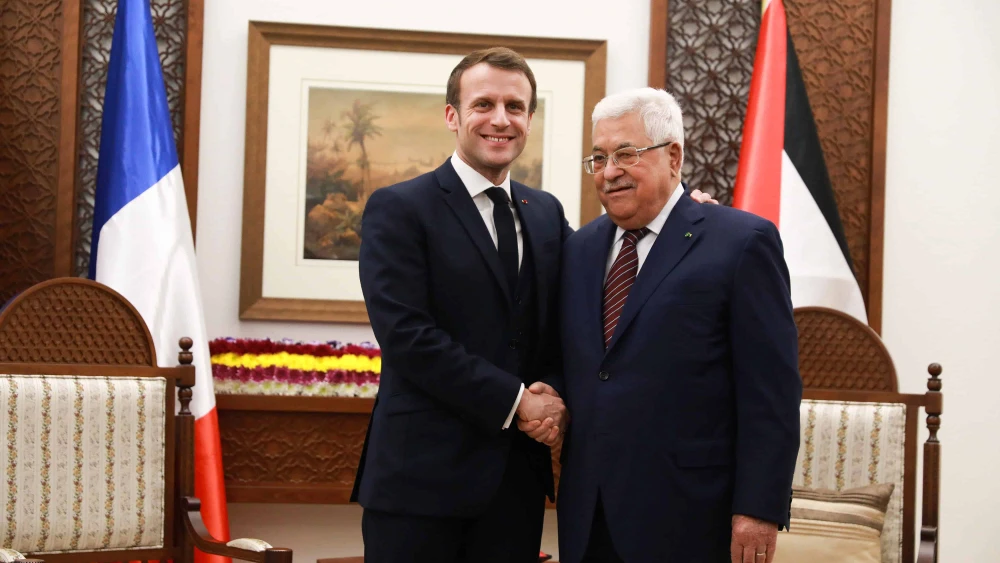

Israel’s recent approval of 3,401 housing units in the strategic E1 corridor has unleashed the usual chorus of outrage from world leaders and Palestinian statehood advocates. Chief among them is French President Emmanuel Macron, who is pushing to force a United Nations General Assembly vote on Palestinian statehood in September.
For Macron, it’s a grand gesture—a pacifist fantasy that pretends a Palestinian state is the antidote to war. But for Israel, it’s an existential threat.
The E1 corridor, connecting Jerusalem to the city of Ma’ale Adumim, is a vital buffer against the encirclement of Israel’s capital by a hostile Palestinian entity stretching from Ramallah to Bethlehem. Without it, Jerusalem risks becoming isolated and vulnerable, as it was between 1948 and 1967, when Jews were barred from the Western Wall.
This is why Finance Minister Bezalel Smotrich pushed the plan forward. Detractors dismiss him as a hardline minority voice. Yet the truth is that his stance reflects a sober reality: Israel cannot trade its survival for international applause.
The Palestinian leadership has never renounced its jihadist vision. It never condemned the Oct. 7, 2023, massacre. It continues its “pay-for-slay” policy that rewards terrorism. And now it proudly declares that thanks to Oct. 7, it is winning the war of opinion.
Macron and his allies—Australia, Canada and others—are effectively rewarding Hamas by pressing for Palestinian statehood at the U.N.
Israel has been here before. The Arab League’s “three no’s” after the Six-Day War left no room for compromise. Every Israeli offer of peace has been met with terrorism, from Arafat’s rejectionism to Abbas’s intransigence. The so-called “Green Line” was never a border, merely an armistice line, and today it is being used as a weapon against Israel’s legitimacy.
E1 is more than a housing plan. It is a shield for Jerusalem and a message to Israel’s enemies: this nation will not be divided or surrounded again.
Whatever the U.N. decides, Israel will chart its own course. Macron may dream of playing Europe’s anti-American visionary, but Israel has a far more urgent role—to eliminate Hamas, protect its citizens and partner with moderate Arab states to build a safer, more stable Middle East.
The alternative—handing jihadists the victory they seek—is unthinkable.