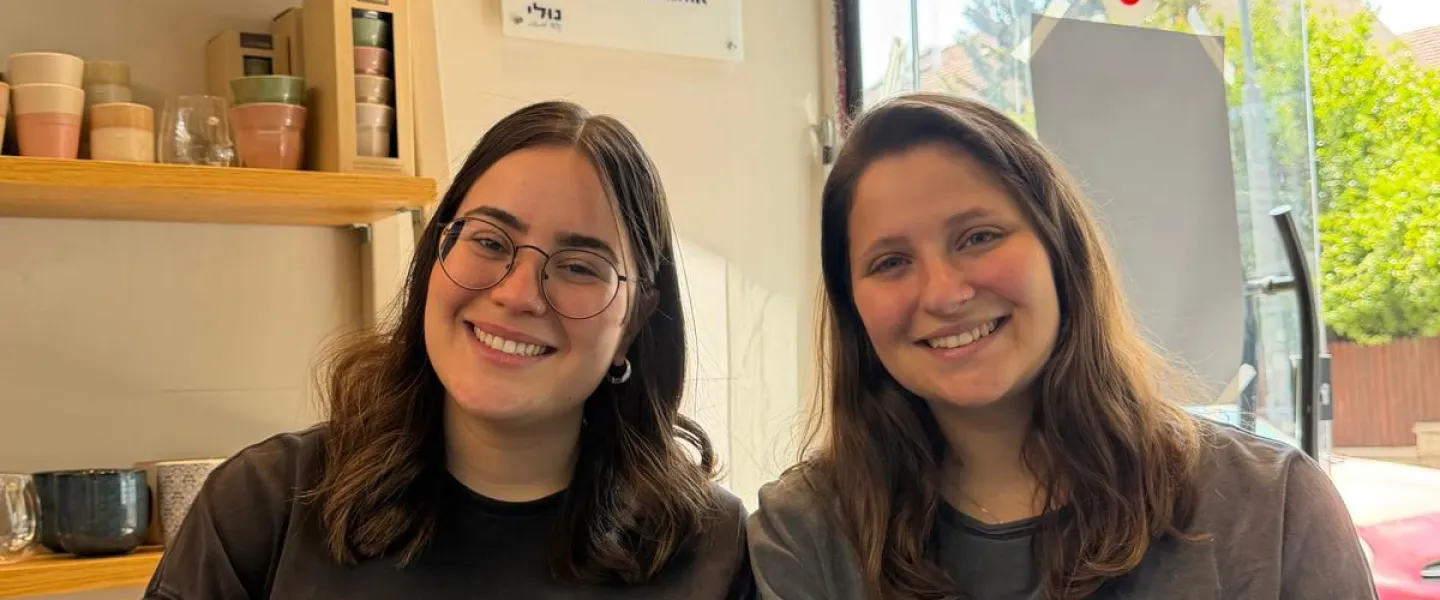
Tama Ben Hagai and Yaeli Billig were not in the operations room at the IDF’s Nahal Oz outpost, less than a mile from Gaza, on Oct. 7, 2023. Ben Hagai was completing her officers’ course while Billig was home on leave.
But 15 of their fellow field observers, or “spotters,” were killed and seven were taken captive by Hamas terrorists and brought to Gaza. Video of the young women being captured—including a Hamas gunman telling one of them, “You are beautiful” as he bound her hands—went viral.
Serving as a field observer is an intelligence role that requires intense concentration and the use of advanced technology to monitor enemy activity. Women almost exclusively fill the position.
Of the seven young women taken hostage, one was rescued by the Israeli military, one was murdered in captivity, and five were held for more than 460 days before being released.
Ben Hagai and Billig said they rarely spoke about what happened on Oct. 7, even though both lost close friends in the attack. After completing their military service, they decided to do something together that would commemorate those who were killed or kidnapped.
They recently opened “Nuli"—a childhood nickname for Billig—a tiny café in central Jerusalem with a sign at the entrance reading: “This business is dedicated to the memory of the operations room (hamal) at Nahal Oz.”
Alongside quality coffee and a small selection of pastries, salads and cakes, the two young women share the story of what happened that day. They also collect donations for a nonprofit organization that supports the Nahal Oz field observers and their families. Handmade pottery and other gifts are also available for purchase.
“First of all, we just want to make people happy,” Ben Hagai said. “Who gets chocolate, coffee and a gift and doesn’t smile?”
Ben Hagai and Billig warmly greet every customer who walks through the door, including several regulars on a recent afternoon. Others stop to ask about the sign dedicating the café to their friends.
Both women say opening the café has become part of their own healing process.
“Because we were so close to so many of those who were killed, I didn’t really like to talk about it,” Billig said.
“It’s hard,” Ben Hagai added. “But I feel that part of my own process of recovering is telling the story of what happened that day.”
Asked whether Israeli society is beginning to forget the events of Oct. 7, nearly three years later, both women paused.
“I think some people really don’t know the story of Nahal Oz,” Billig said. “For others, it’s a reminder of what happened there.”
The two young women hope the world will never forget what happened at Nahal Oz on Oct. 7. And they hope to help keep those memories alive—with good coffee, a pastry and a smile.