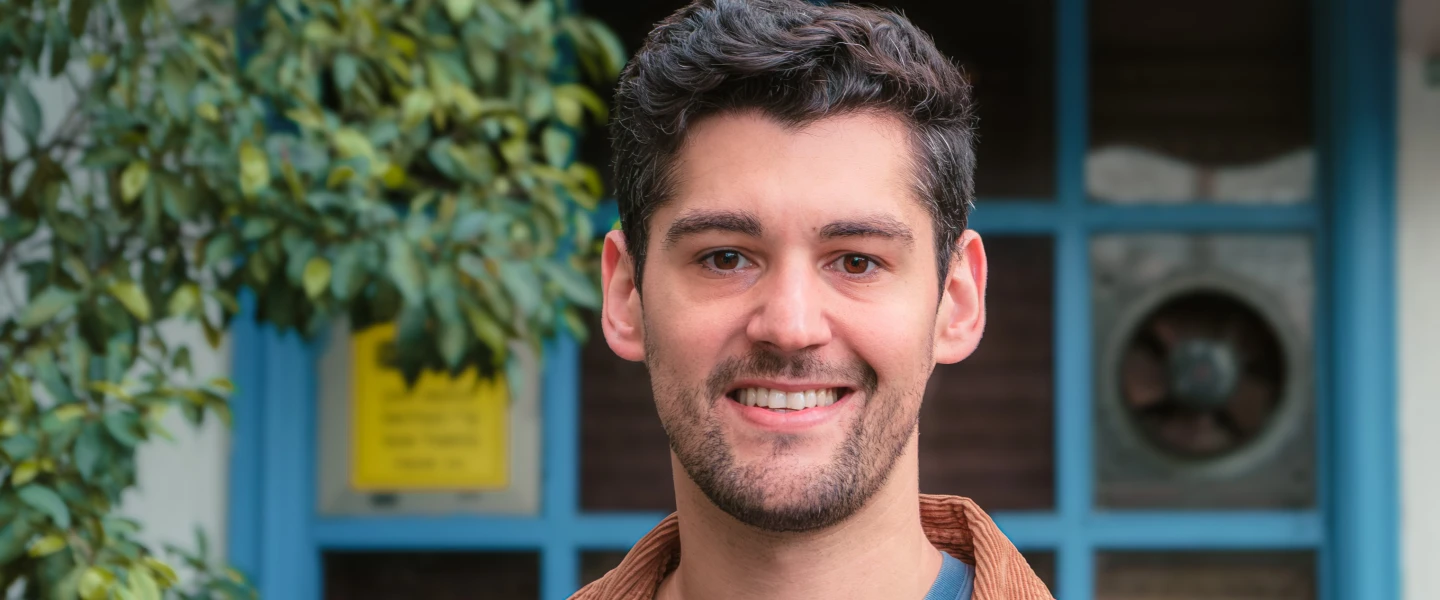
For Felipe Mediavilla Levinson, his move to Israel began to feel real during an ordinary walk along Tel Aviv’s Dizengoff Street.
After immigrating from Chile in October 2025, he had completed an ulpan, a Hebrew-language course in Haifa, secured a job in Israel’s high-tech sector and found an apartment. Years of preparation had finally turned into a life he could imagine sustaining.
“Summer was starting, so everything looked beautiful, people looked happy,” he told JNS. “I was like, ‘wow, I cannot believe how fast this went and how good everything ended up.’”
Levinson is one of two recently arrived data scientists at Fetcherr, an Israeli company specializing in AI-driven pricing and demand forecasting. His colleague William Blaufuks, 30, came from France two months earlier. They took different routes to Israel, but both describe finding work as a decisive milestone in making the country home.
Their experiences reflect changing immigration patterns in Israel following the Hamas-led attacks of Oct. 7, 2023. During the Hebrew year ending in September 2026, more than 20,000 people made aliyah, according to the Ministry of Aliyah and Integration and the Jewish Agency. Of those, more than one-third (35%) were ages 18 to 35.
Why Israel, why now?
Both men spoke to JNS about their first year in Israel.
Levinson, who was raised in an Orthodox community in Chile and now describes himself as secular, cited antisemitism, Jewish identity and growing Zionism among his motivations.
“I think it’s a mix of many things,” he said.
His brother had lived in Israel for about five years, and his closest school friend had also immigrated. Asked about attitudes among people in his hometown, he recalled a party where a university friend introduced him as “the only Jewish person you will meet that is a nice person.”
The comment stunned him.
“You are my friend, what do you mean?” he remembered thinking at the time.
For Blaufuks, the path ran directly through Oct. 7.
After the attacks, he returned to Israel to volunteer, having felt distant from the country in his 20s. He was struck by Tel Aviv’s youthful energy and the willingness of strangers to help one another.
“The feeling in this country of togetherness, people supporting each other, people being really nice,” he told JNS.
He had never considered making aliyah before, so he waited several months after returning to France before committing, wanting to be sure his decision would outlast the emotions he felt during his visit.

In France, Blaufuks had not personally encountered direct antisemitism, though he described a wider sense of needing to be on guard. What drew him toward Israel was a feeling of mutual responsibility.
“There is really this feeling of being surrounded by people who want to help you,” he said.
Aliyah from France rose 65% over the same period, to 4,364 from 2,649 a year earlier, making it the second-largest source of new immigrants after Russia, according to ministry figures.
The ministry has attributed the increase in aliyah from Western countries to rising antisemitism and a surge in Jewish identity and Zionism after Oct. 7, with Aliyah and Integration Minister Ofir Sofer saying Israel should be prepared for “massive immigration absorption” following riots in France.
Finding a foothold in Startup Nation
Israel’s high-tech sector carries a global reputation, but hiring growth has slowed. The Israel Innovation Authority’s 2026 High-Tech Status Report put employment at about 400,000 in 2025, up 2.5% from 2024, compared with average annual growth of roughly 6% over the previous decade.
For newcomers, unfamiliar hiring customs can add another layer of uncertainty.

Juan Taifeld, CEO of the nonprofit Gvahim, helps skilled immigrants enter Israel’s labor market. He identifies three primary obstacles for new olim: language, cultural differences and professional connections.
“The third one, and in my opinion the most important, is the lack of a professional network,” he told JNS.
Immigrants often lack contacts accumulated through Israeli universities, IDF service and previous jobs, even if they arrive with relevant qualifications.
He described a common mistake: “They are sitting in a cafe, they’re opening their laptops, they’re searching for jobs, and they’re sending their CVs. They have zero chance to be hired.”
Gvahim (Hebrew for “heights”) was founded in 2006. Its career program offers workshops, one-on-one consulting, mentoring and employer meetings.
Taifeld, who immigrated from Mexico in 1991, shared the story of how his father tried living in Israel in the early 1970s but returned to Mexico within months after being unable to fully integrate.
Materials supplied to JNS say Gvahim supported more than 230 technology professionals in their job searches between January and September 2026, while its wider career services include a network of hundreds of mentors.
Levinson encountered Gvahim through workshops at his Haifa ulpan. He attended sessions on CVs and LinkedIn but particularly valued a one-on-one meeting with a human-resources specialist from Argentina who understood the professional conventions he had grown up with.
“In Chile, if you add someone on LinkedIn, it’s because you personally know them,” he said. “Here in Israel everyone adds everyone.”
Blaufuks, on the other hand, first attended Gvahim’s Zoom sessions for prospective immigrants before arriving.
“Even before I arrived, I kind of knew that you need to ask people, you need to go over to them, you need to show confidence, you need to be proud of who you are and what you did,” he said.
After arriving, he asked Gvahim for contacts and leaned on family, friends and French-speaking acquaintances.
Levinson said he found his Fetcherr position through an unsolicited application rather than a Gvahim referral and received an offer just before the program ended. Blaufuks searched for several months after arriving in August 2025 and joined Fetcherr in February 2026.
Neither described Gvahim as the direct source of his job offer.
Gvahim says about 85% of participants find jobs in their field within six months of completing its career program. Taifeld separately said recent monthly tracking put the figure at roughly 82% to 83%, which he attributed to tech layoffs.
Finding a home away from home
Neither man portrays the move as effortless. Settling in a new country requires a major cultural adjustment, compounded in Israel by regional instability and war.
For Levinson, the greatest challenge has been the distance from his family in Chile. He misses his mother, grandmother and even his dog, while everyday conversations in Hebrew remain difficult.
Blaufuks misses his family and friends in Paris and recalls adjusting to life in Israel amid renewed fighting, a period he called “pretty intense.”
Fetcherr has made accommodations for the needs of its olim employees. During the interview process, the company told Blaufuks it was willing to let him work from Paris from time to time.
“This was a huge help because I feel like I can still have a connection with them and spend some time with them, and I don’t feel as far away as I would if the company wouldn’t allow me to do that,” he said.
Levinson, who hasn’t seen his family in more than a year, said he travels to the office each day not from obligation but desire.
“I do [it] because I love it here,” he said.
Taifeld believes the test of successful aliyah extends beyond arrival. He argues that successive governments have devoted insufficient attention to helping new immigrants establish themselves during their first two years, calling for greater support with employment, housing and integration.
For Blaufuks, the process has unfolded through a series of milestones: beginning Hebrew lessons, finding an apartment, making new connections and eventually securing employment. Each made his decision to move to Israel feel less provisional.
“As long as you don’t find a job, it’s still theoretical because you know that you cannot stay this way forever,” he told JNS.
For many new immigrants, those steps can initially seem daunting. Finding a home, opening a bank account, and learning the language are staples of aliyah, but building a new life takes time, with many things falling into place only weeks, months, or years later.
With their first months behind them, neither considers the move a mistake.
Asked whether he had made one, Levinson answered, “Not from my side.”
Blaufuks agreed.
“No, me neither.”