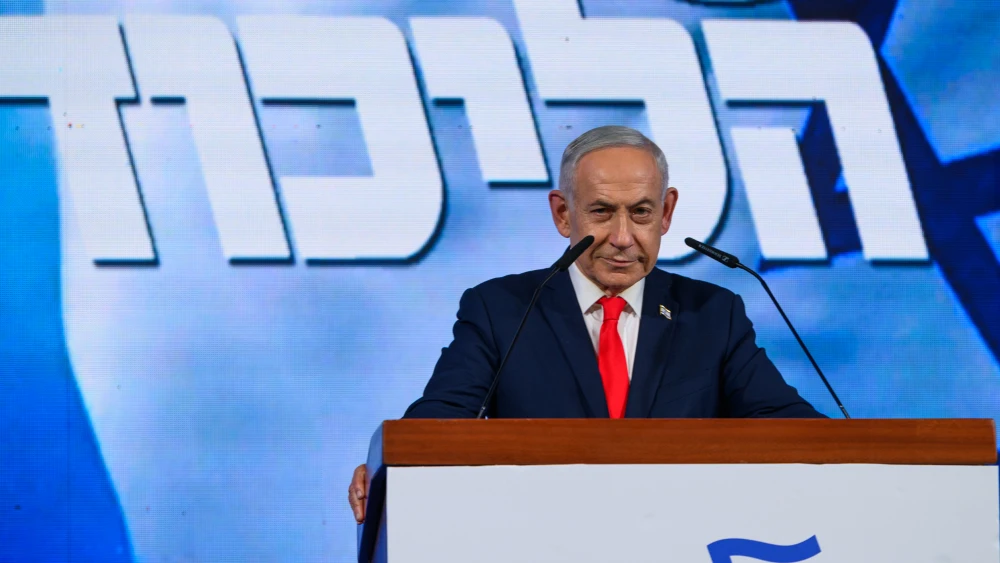
Israel’s Likud party is preparing to appeal the country’s Oct. 27 election results in their entirety and demand new elections, Hebrew media reported on Sunday.
The party is preparing the appeal to District Court through attorney Ilan Bombach, according to Channel 12 News. Its central allegation concerns the use of voter-mobilization apps in the Arab community.
Israel’s Central Elections Committee approved the results of the election on Wednesday, saying it had examined every complaint and request for review submitted by political parties, candidate lists and members of the public.
“The review found no evidence of irregularities that compromised the integrity of the election or affected its results,” the committee said.
Likud emerged from the election a the largest party with 27 seats, but Israeli Prime Minister Benjamin Netanyahu’s bloc secured only 53 of the Knesset’s 120 seats, short of a majority. Gadi Eisenkot’s opposition bloc won 48 seats and the Arab parties 19.
The planned legal challenge follows Netanyahu’s call on Saturday night for a unity government.
Israeli President Isaac Herzog announced on Saturday night that he would task Yashar leader Eisenkot with forming the next government. The ceremony is scheduled for 5 p.m. on Sunday at the President’s Residence in Jerusalem and will be broadcast live, Herzog’s office said.
Factions totaling 67 Knesset members recommended Eisenkot during consultations that ended on Thursday, including the Arab-majority Joint List and Ra’am (United Arab List) parties. Factions totaling 46 lawmakers backed Netanyahu. The seven-seat United Torah Judaism party recommended no one.
After concluding his consultations with the parties on Thursday, Herzog said he had asked the representatives of the factions “difficult questions in an effort to help the parties and the public to break free from set ways of thinking and open their minds to other paths.” He warned that while the results of the recommendations may appear clear, the ability to form a government in the current conditions is “not entirely clear, given the mutual vetoes between the blocs and within the blocs themselves.”
Herzog said he would leave “no stone unturned” in an effort to build a “stable and good government for the people of Israel.”
Once formally tasked, Eisenkot will have 28 days to form a government. Herzog can extend that period by up to 14 days.