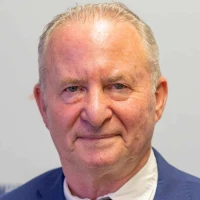
In the wake of Hamas’s Oct. 7, 2023, onslaught, a former U.S. Army colonel believes Israel’s security doctrine needs a grassroots civilian layer—armed, trained and ready within seconds.
Col. (U.S. Army, ret.) Yonatan David Zagdanski, 53, is the co-founder with his business partner, Yonatan Lahav, of Citizen Defenders, a rapidly expanding initiative that trains armed Israeli civilians to serve as first responders to terror attacks in their own neighborhoods—before police, army units or even local rapid-response squads arrive.
“The bottom line is to make sure that Oct. 7 never happens again,” Zagdanski said in a JNS interview at the Jerusalem Media Hub at the end of December.
The idea took shape immediately after the massacre. “On Oct. 8, the project was launched,” Zagdanski said.
The inspiration came from one small Gaza-border community that fared differently from others on that day. In the community of Ein Basor, the local security chief had quietly trained residents with licensed firearms months before the attack. When dozens of terrorists arrived, a handful of civilians fired back.
“We’re talking about a handful of citizens armed with pistols, up against 80 to 90 terrorists with AKs and RPGs,” Zagdanski said. “As soon as the terrorists realized they were getting shot at, they just left.”
That moment became the blueprint for the Citizen Defenders Project (formerly Ezrach Lochem, it is now known as Ezrach Magen in Hebrew). It describes itself as “a grassroots security initiative designed to protect Israeli neighborhoods from terror by empowering everyday citizens with the tools and training to act fast.”
A neighborhood-based force
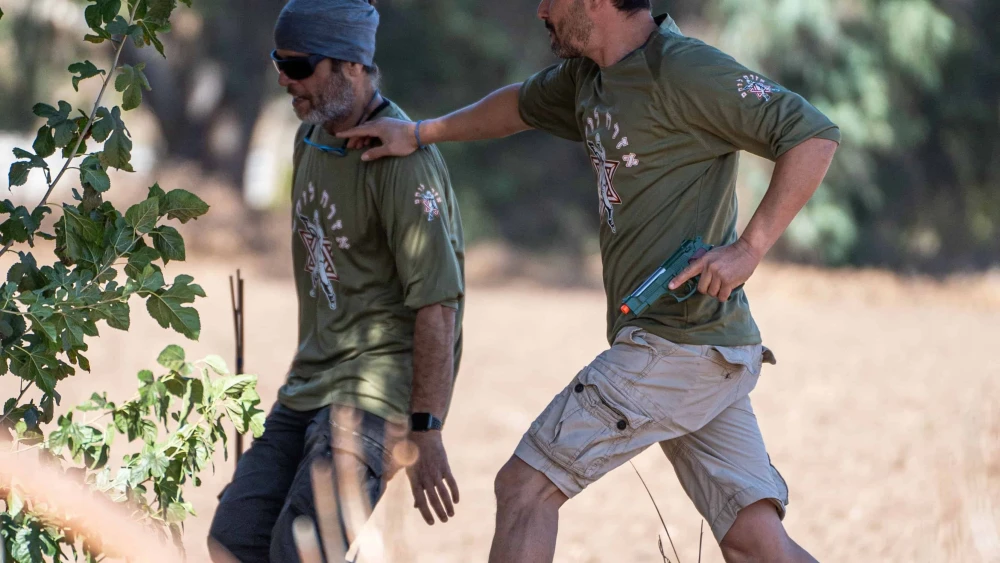
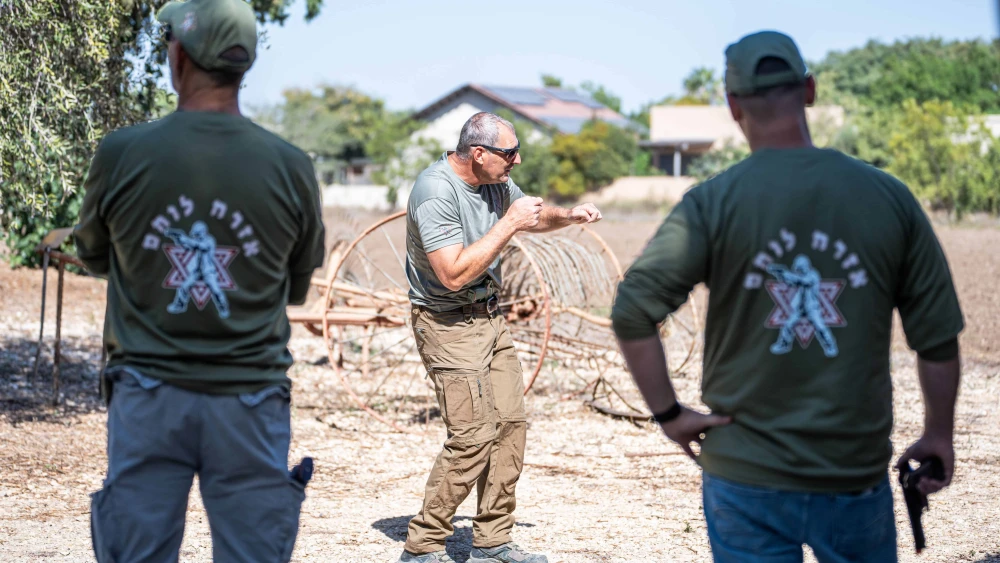
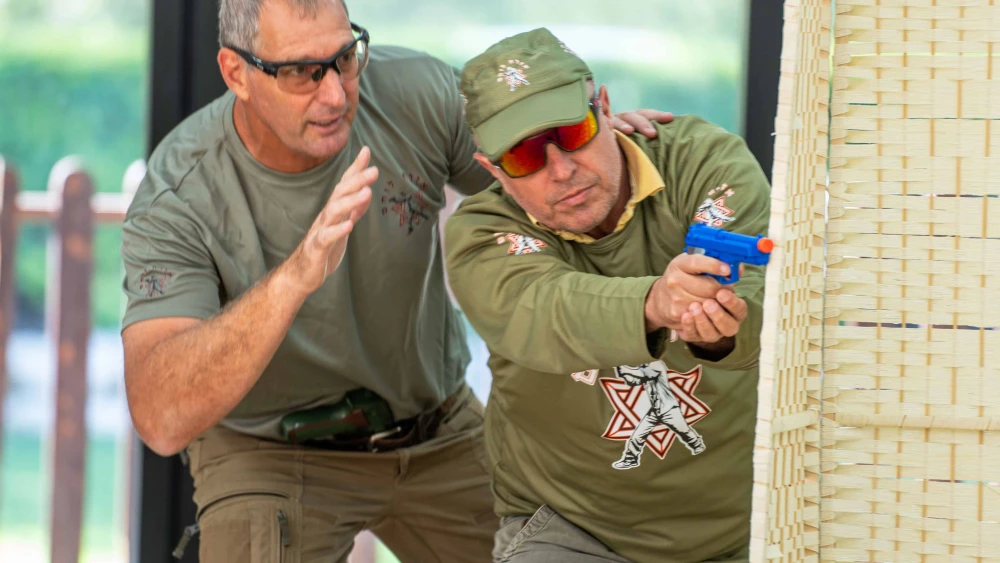
Citizen Defenders recruits volunteers already licensed to carry firearms, then puts them through a yearlong training cycle—basic, intermediate and advanced—culminating in a live-fire urban combat exercise.
Teams of 12 to 15 are assigned to specific neighborhoods and are expected to deploy within 60 seconds. “They have their gear hanging by the door,” Zagdanski said. “Within a minute, they’re out.”
Unlike Israel’s established kitot konenut rapid-response squads, which draw members from across a town or city, Citizen Defenders is hyper-local.
“The kita konenut is necessary, but it can’t react within minutes,” he explained. “Security works in concentric circles. The immediate circle is citizen defenders, then the quick-reaction force, then police, then the army.”
While many cities in Israel have a kita konenut of 40-50 members, Zagdanski pointed out, “this is clearly inadequate to defend a whole city.” For example, he said, the northern city of Afula has a kita konenut of 50 members for a city of 70,000 (one defender for 1,400 residents).
“Citizen Defenders will considerably boost security by adding responders in every neighborhood,” he said. “We are trying to recruit up to 10 groups (up to 150 responders) for 10 neighborhoods in Afula.”
Afula leads the way
The Citizen Defenders initiative has garnered support from Israel’s law enforcement community. The first city to adopt the model was Afula. The local police chief attended the initial planning meeting alongside the mayor and expressed clear approval of its mission.
“The police chief told us, ‘This is exactly what we want and exactly what we need,’” Zagdanski said. “They understand that there simply aren’t enough officers to respond instantly to a mass terror attack, and having trained, local first responders complements their ability to secure the city.”
Zagdanski emphasized that this endorsement is critical to the model’s success and legitimacy in the wider security landscape. The initiative operates under police authority to prevent confusion or friendly fire—an issue that plagued some areas on Oct. 7, Zagdanski stressed.
“You don’t want unidentified armed civilians running around,” Zagdanski said. “Once the police take control, citizen defenders pull back and protect their homes.”
Deterrence through strength
Beyond immediate response, Zagdanski believes the program creates deterrence.
“Hamas, like any bully, looks for soft targets,” he said. “As soon as they see strength, they buckle.”
That lesson, he noted, was proven on Oct. 7 in the few communities where armed civilians responded immediately.
From U.S. military chaplain to making aliyah

Zagdanski was born in the United States but grew up in Belgium and then left to spend a year in Mexico, after which he enlisted in the U.S. Army at the age of 24.
Zagdanski’s path to Israel began in the U.S. Army, where he rose through airborne and Ranger training and served multiple tours, including in Iraq and Kuwait. He was awarded the Bronze Star Medal for outstanding leadership during Operation Iraqi Freedom (OIF).
During the course of his service, he became an observant Jew and a military chaplain.
He recalls little antisemitism, save for one early incident that shaped his worldview. “You can’t hide your Jewishness,” he said. “You have to show strength.”
The Sept. 11, 2001, attacks—coinciding with Israel’s Second Intifada—ultimately pushed him toward making aliyah in 2005.
“I felt like God was telling me: You think you’re safe here? You’re not,” he said.
After living initially in Efrat, Zagdanski and his family moved to the Golan Heights, near the border with Syria.
A model for Israel—and beyond
Citizen Defenders is funded primarily by private donors and is focused on nationwide implementation. But Zagdanski believes the model will eventually spread abroad.
“Every synagogue will need citizen defenders,” he said, comparing them to air marshals—trained, armed and unobtrusive.
For now, the mission in Israel remains urgent and local.
“This project is about saving lives,” he said. “Every dollar goes to training people who will stop the next attack.”
Zagdanski’s closing message was blunt.
“Be strong. Be ready,” he advised. “The Messiah hasn’t come yet. Until then, have your sword ready and be ready to fight. And when the Messiah comes—may it be soon in our times—we shall beat our swords into plowshares.”
Those who want more information or wish to contact Citizen Defenders, go to https://e-l.co.il/main/#contact, and for direct donations, go to https://secure.israelfriends.us/campaigns/citizen-project.