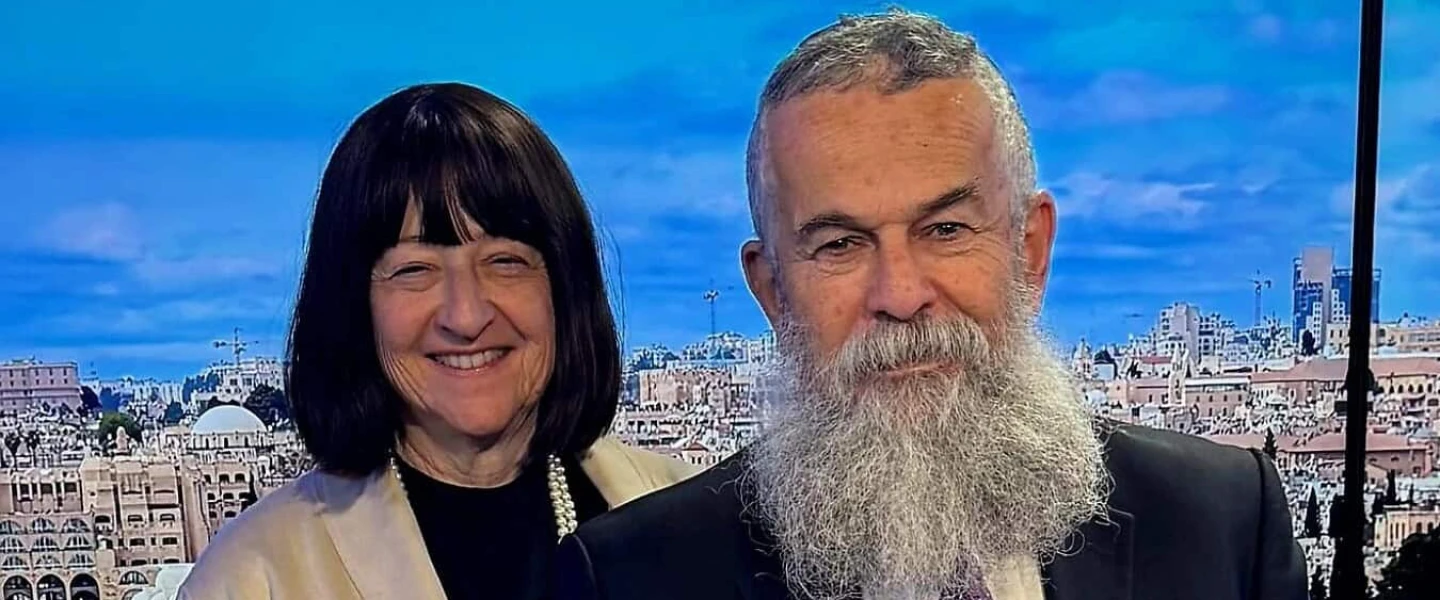
For more than a decade, Rabbi Shalom Myers and his wife, Lynne, have quietly built a Jerusalem-based lifeline for one of the most vulnerable populations in Israeli society: religious and Haredi (ultra-Orthodox) soldiers—men and women—serving in the Israel Defense Forces.
Many are immigrants from English-speaking homes. Some are lone soldiers from abroad. Most are observant, but the women include non-observant Israelis who lack meaningful emotional, communal or practical support. What unites them is the challenge of choosing military service while striving to maintain a religious way of life.
“We don’t look at labels,” Rabbi Myers says in an interview in the JNS Studio in Jerusalem on Feb. 2. “Lone soldier, not lone soldier—if a Haredi or religious young man or woman is serving and needs support, we’re there.”
From their home base in Jerusalem, the Myers have transformed what began as simple hospitality into a wide-ranging support system that today touches the lives of hundreds of soldiers each year.
Through their initiatives, from Emek Lone Soldiers to Lev L’Chayalot, they provide housing, food, Torah learning, counseling, mentorship and long-term guidance—before, during and after army service.
A home where none existed
Shalom and Lynne Myers, who are originally from Cape Town and have five children, made aliyah from South Africa in 1985. Trained as an accountant, Rabbi Myers gradually moved into rabbinic leadership, founding the English-speaking Emek Learning Center community in Jerusalem 13 years ago.
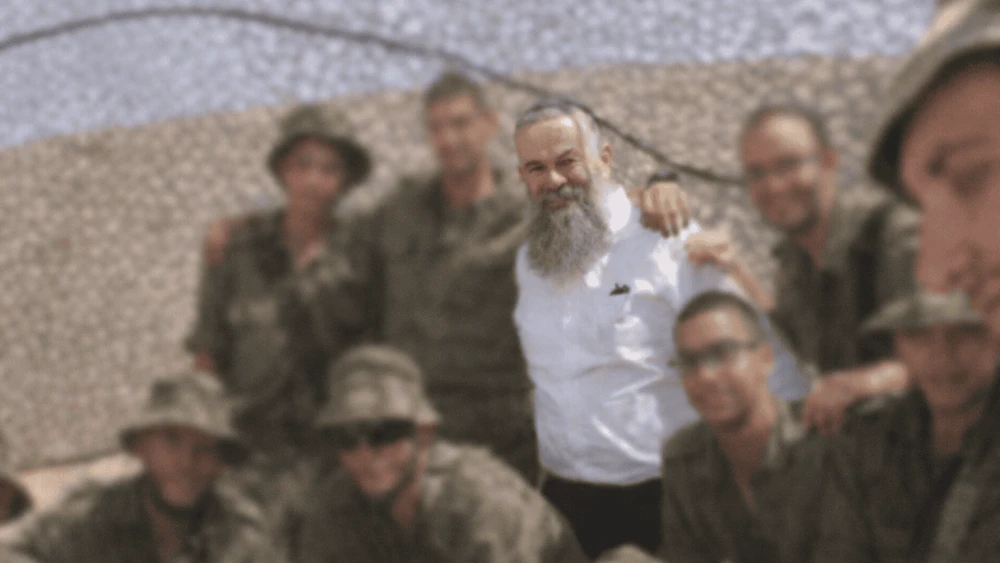
Almost immediately, soldiers began gravitating toward the shul—first English-speaking lone soldiers, later Israeli Haredi recruits navigating an unfamiliar and often lonely path.
“At the beginning, it was very informal,” he recalls. “Once a month, we hosted 20 or 30 soldiers for Shabbat. But pretty quickly, they told us, ‘We need more than a meal. We need a place where we feel comfortable, where we can grow.’”
That request became the seed for Emek Lone Soldiers. Over time, the initiative expanded from meals and hospitality to furnished apartments, regular communal programming, Torah classes, pastoral counseling and practical assistance. The goal was not only to help soldiers survive army life, but to help them emerge from it stronger—spiritually, emotionally and socially.
For Haredi soldiers in particular, the challenges can be acute. Some leave insular communities where military service is discouraged or viewed with suspicion. Others retain family ties but lack the day-to-day backing needed to withstand the demands of service.
“There are soldiers who are making a double sacrifice,” Rabbi Myers explains. “They’re giving everything to the country and they’re doing it without a safety net.”
Today, the Myers are in contact with roughly 500 soldiers at any given time, across multiple infantry and combat units. They employ additional rabbis, deliver hundreds of lectures annually, organize “Shabbatons” on IDF bases and in Jerusalem, and operate post-army yeshiva and academic support programs.

Oct. 7 and a new focus
For Rebbetzin Lynne Myers, a qualified architect who ran her own practice for four decades, the work initially centered on logistics—furnishing apartments, organizing meals and hosting soldiers. That changed decisively after the Hamas attacks on Oct. 7, 2023.
“When the war broke out on Simchat Torah and three of our sons were called up immediately, it shook everything,” she says. “Nothing felt theoretical anymore.”
A month into the war, the couple was asked to organize a barbecue for a unit on base. While there, Lynne noticed that the female soldiers, religious and secular, were standing off to the side. Many were surveillance soldiers who had lost friends on Oct. 7, or whose friends had been taken hostage.
“They were invisible,” she says. “I went over and spoke to them—and I knew we had to come back.”
Two weeks later, she returned with friends, care packages, warm clothing and food. That visit marked the beginning of Lev L’Chayalot, an initiative dedicated to supporting female soldiers—Haredi, religious and secular women serving in IDF combat units and the Border Police.
What began with care packages evolved into something far more personal. “We don’t just show up and leave,” Lynne says. “We build relationships. We stay in touch. If a girl needs something—equipment, help or just someone to talk to—we try to be there.”
Over the past two years, Lev L’Chayalot has organized more than 80 events and visits to IDF bases around the country, while maintaining ongoing contact with hundreds of women serving in the Israeli military.
Celebrating milestones
The Myers’ work extends well beyond the battlefield. In recent years, they have helped organize and finance weddings for soldiers—men and women—who served in combat units and lacked the means or family backing to celebrate such milestones. They have assisted newly married couples in furnishing their homes and continued mentoring soldiers as they transition back into civilian life.
“These are people who put their lives on the line,” Rabbi Myers says. “Helping them build a future is not charity; it’s responsibility.”
All of the organization’s work is funded entirely through private donations. Emek Lone Soldiers receives no government, municipal or military funding. Registered as a nonprofit in Israel and as a 501(c)(3) in the United States, it relies on individual donors around the world who recognize the unique needs of this population.
Building for the future
After more than a decade of renting scattered apartments, the Myers are now working toward what they see as the next essential stage: purpose-built residential centers for religious and Haredi soldiers— and separate facilities for men and women.
“Renting apartments was a solution, but not an ideal one,” Rabbi Myers says. “A dedicated building creates stability, scale and real community.”
The vision includes housing for dozens of soldiers, alongside space for resilience workshops, mental-health programming and post-service transition support. During the week, when many soldiers are on base, the facilities could also serve reservists and veterans adjusting back to civilian life.
For Lynne Myers, the need among religious combat women is particularly pressing. “Many of these women would traditionally do national service. Now they’re choosing the army. Having a supportive place to come back to—especially for Shabbat—can change everything.”
Making history
Despite the emotional weight of the past two years, both speak of the work as a source of strength.
“It carried me through the war,” Lynne Myers says. “Focusing on helping the soldiers gave meaning to a very dark time.”
Rabbi Myers recalls visits to bases near Gaza before and after soldiers entered combat, speaking with young men who had lost friends or been injured.
“We’re not just witnessing history,” he says. “These soldiers are making it.”
His message is one of purpose and responsibility. “There is a bigger plan, even when we don’t see it,” he concludes. “Our job is to show up, to support those who step forward, and to turn these moments into something lasting and good.”