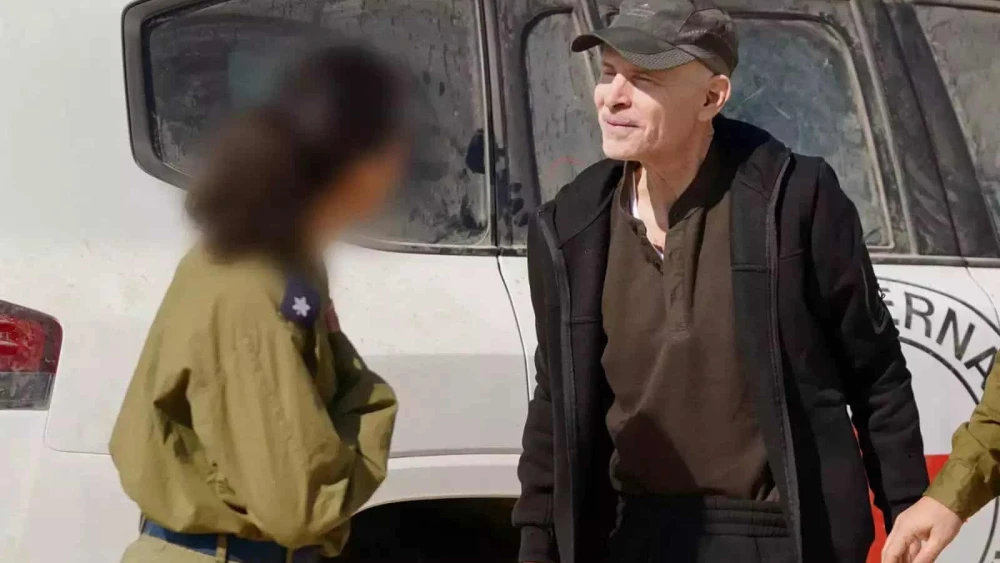
Six-and-a-half months following his release from Gazan captivity, Keith Siegel gave an interview Sunday morning to Niv Raskin on Channel 12.
The American-Israeli, abducted from Kibbutz Kfar Aza on Oct. 7, 2023, and detained for 484 days in the Strip, disclosed additional details regarding the conditions under which captives were confined.
“Ever since my return, I find it challenging to employ the term ‘challenging,’ because my thoughts turn to the 50 individuals there and their families,” Siegel explained.
“I personally lived through the emotional rollercoaster of negotiations reportedly approaching conclusion—only to be told it never materialized. The hostages still there endure this repeatedly, as if what they suffer—violence, mistreatment, starvation under the most severe conditions imaginable—were not enough.
“I witnessed individuals subjected to torture,” he said. “I observed a female hostage being beaten while they shoved a sharp rod into her forehead, brought me into the chamber and instructed me to tell her to confess to actions she had never committed. I personally endured serious violence as well.”
Nevertheless, Siegel added that the most challenging aspect of imprisonment proved to be something completely different. “My greatest difficulty was recognizing that my family suffered far more than I did, lacking any means to know how I was. I remain certain their anguish exceeded mine. The separation from family, uncertainty about their condition and awareness they possessed no knowledge of my state—this alone constitutes torture. They, the 50 hostages and their families, continue experiencing that suffering and horror.”
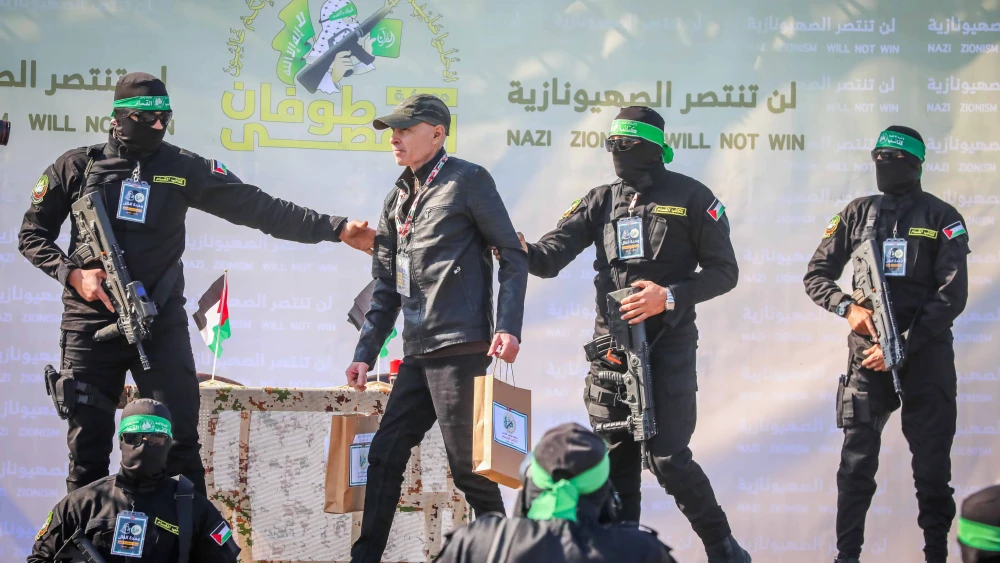
He referenced the families’ battle, which his wife, Aviva, joined following her return from captivity in November 2023. “Witnessing the extent of families’ determination is remarkable, traveling globally, working morning till night trying to recover their beloved ones, alongside people who joined their cause. My family supplied tremendous strength during captivity, making me feel obligated to survive for my return to them.”
Today, having remained home six months while engaged in intense rehabilitation, he keeps thinking about the companions he met in Gaza and who are still there.
“My thoughts turn to Matan [Angrest], with whom we remained confined over two months in a chamber lacking illumination and windows. We pleaded for bathroom access, banged on the door hoping it would open. I spent considerable time with Omri Miran; he often discussed family and overwhelming longing. I think of Gali and Ziv [Berman] from my kibbutz, individuals I’ve known since birth. After all this time—all of them fall within the humanitarian classification [for release].”
His approach to managing distressing thoughts, he shared, involves maintaining active participation in the campaign for the hostages to come home.
“I’m doing things I never would have dared to do before, like speaking in front of audiences of hundreds and thousands of people. In the past, just the thought of such a situation would fill me with anxiety; today I know I have a voice to share, and I’m grateful that I can stand on my feet and do things in the hope that it will help.”
Originally published by Israel Hayom.