Newsletter
Newsletter Support JNS

Israel’s High Court stays extradition to US of suspected Russian hacker

The ruling follows petitions by Aleksey Burkov, who has been in Israeli custody since 2015, and the family of Israeli-American woman Naama Issachar, who has been held by Russia since April.

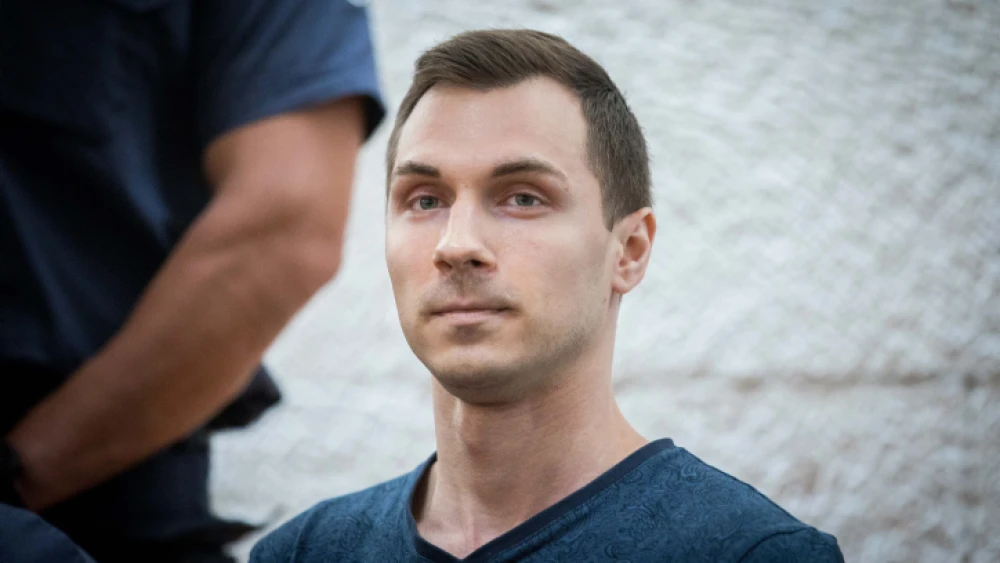
Aleksey Burkov, a Russian IT specialist and alleged hacker wanted by the United States, arrives for a court hearing at the Supreme Court in Jerusalem on Nov. 3, 2019. Photo by Yonatan Sindel/Flash90.

Israel’s High Court of Justice on Sunday ordered a temporary postponement of the extradition to the United States of Russian IT specialist Aleksey Burkov, who the family of an Israeli-American woman imprisoned in Russia on drug-related charges had hoped would be used to secure her release.

Burkov has been in Israeli custody since 2015. He is wanted in the United States for allegedly stealing millions of dollars from American consumers in a massive credit-card scheme.

Naama Issachar, 26, was arrested in April after 9.5 grams of marijuana were found in her carry-on bag during a stopover in Moscow. She was sentenced to seven-and-a-half years in prison for drug trafficking.

Her harsh sentence, even though she had argued that she never intended to sell drugs in Russia or even to leave the airport, has led supporters to believe that Issachar was being used as a pawn to secure the transfer of Burkov to Russia.

Naama Issachar, 26, was sentenced to seven-and-a-half years in a Russian prison after 9.5 grams of cannabis were found in her luggage during a stopover in Moscow, Oct. 11, 2019. Russian President Vladimir Putin pardoned her on Jan. 29, 2020. Source: Screenshot.
Naama Issachar, 26, was sentenced to seven-and-a-half years in a Russian prison after 9.5 grams of cannabis were found in her luggage during a stopover in Moscow, Oct. 11, 2019. Source: Screenshot.

Last week, Israeli Justice Minister Amir Ohana signed Burkov’s extradition order over the protests of Issachar’s family. Ohana said he signed the order only after careful deliberation.

“I suggest not creating a very dangerous precedent here—that each time there is a country that wants to have someone extradited, it captures an Israeli and makes a scapegoat of them,” Ohana told Kan public radio last month, in regard to the possibility of a prisoner swap with Russia.

Following the signing of the extradition order, both Burkov and Issachar’s family submitted petitions to the High Court against the extradition.

The court on Sunday ruled that the extradition would be postponed until Burkov’s petition is discussed and a ruling issued.
The Islamic Republic is seeking to recover economically and militarily through the memorandum of understanding with the U.S., while avoiding any relinquishment of long-term strategic assets.
The left-wing columnist “spent years questioning everyone else’s integrity. Now his own is under review,” Israel’s Foreign Ministry says.
“Not many people believed it would be possible to establish new communities,” said council head Yaron Rosenthal.
The blind spot could leave less time to prepare for increasingly dangerous heat events.
We “will continue to remove threats and strengthen the defense of Israel’s northern residents,” the army said.
The subject of Tehran’s nuclear project was deferred to further negotiations after Iran and the U.S. signed an initial memorandum of understanding.