The Lebanese Armed Forces (LAF) claimed on Sunday that its troops in the Bint Jbeil area had been wounded in an Israeli strike. The Israel Defense Forces, after initially telling JNS that it was “not aware of any IDF strikes” in the area involving injured LAF troops, discovered upon further investigation that the LAF vehicle had driven over an explosive device belonging to Hezbollah.
The LAF at first had claimed five soldiers sustained minor injuries in what it described as an “Israeli enemy attack.”
The LAF admitted in a subsequent statement that an inspection by a “specialized unit” found that the explosion had been caused by a “suspicious object,” rather than an IDF strike. It said the incident remained under investigation.
The incident occurred outside the Security Zone in southern Lebanon, where no IDF soldiers are present.
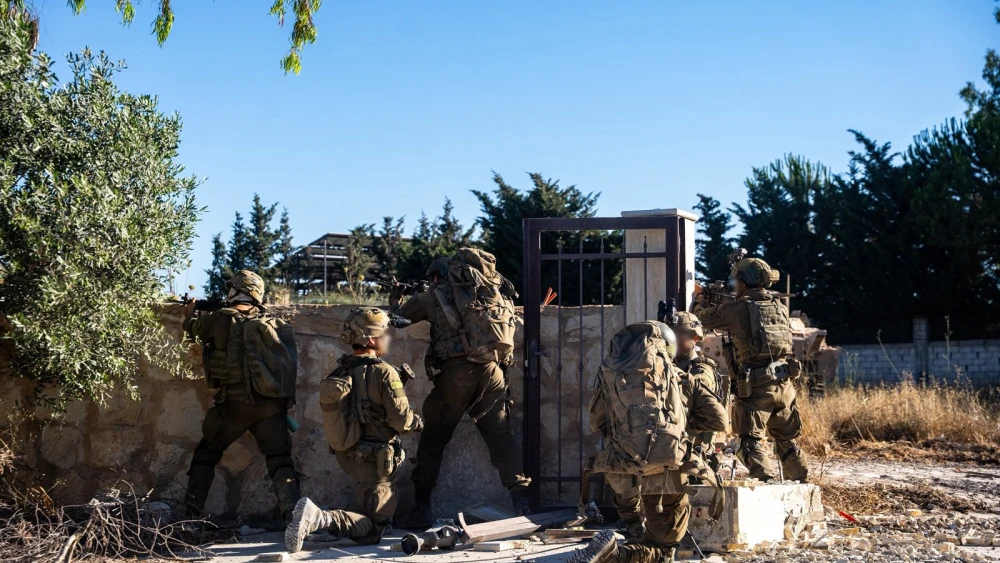
The IDF said earlier on Sunday that soldiers from its 401st “Iron Tracks” Armored Brigade had completed an eight-month mission in Southern Lebanon, during which they destroyed more than 1,200 Hezbollah sites, seized over 600 weapons and killed more than 60 terrorists.
The brigade, operating under the 91st “Galilee” Division, conducted “defensive operations along the border and operations in the security zone in Southern Lebanon to remove threats to the State of Israel,” the military said.
The troops also dismantled terror tunnels stretching hundreds of meters with the assistance of the Yahalom combat engineering unit, the IDF said.
“Our mission was clear: to prevent and push back the threat to Israeli civilians. This was the objective we repeated to ourselves every morning and every evening,” the brigade’s commander, Col. Yoav Schneider, said in the statement. “The brigade’s achievements in Lebanon came at a heavy cost—we will always remember the brigade’s fallen, and they will remain in our hearts forever,” he added.
Iranian-backed Hezbollah resumed rocket and drone attacks from Southern Lebanon on March 2, 2026, shattering a ceasefire that had been in place since November 2024.
The IDF responded with a broad air campaign against Hezbollah targets and expanded ground operations in Lebanon aimed at preventing Hezbollah attacks on Israeli communities.
Following the renewed fighting, Lebanese President Joseph Aoun pledged to do “the impossible” to end cross-border hostilities and moved to outlaw the Iranian proxy.
Israeli and Lebanese officials held five rounds of direct talks at the U.S. State Department, resulting in a framework of understandings reached on June 26 that is contingent on Hezbollah’s removal from southern Lebanon. A subsequent round of U.S.-brokered talks is scheduled to take place in Rome on Aug. 4–6 to advance implementation of the agreement.