IDF Chief of Staff Lt. Gen. Eyal Zamir summoned senior officers for private meetings on Sunday to announce command actions following the Oct. 7 failure. The officers held command roles with operational responsibility the morning of the massacre in 2023.
Officers summoned included Military Intelligence Directorate head Maj. Gen. Shlomi Binder, who led the Operations Branch at the IDF General Staff, and former Southern Command chief Maj. Gen. (res.) Yaron Finkelman, who commanded the sector during the massacre and led the Operations Division months earlier. Operations Directorate chief Maj. Gen. Oded Basiuk, who held that post on the morning of the massacre, was also called in. Meetings will extend to lower ranks beyond those with the chief of staff.
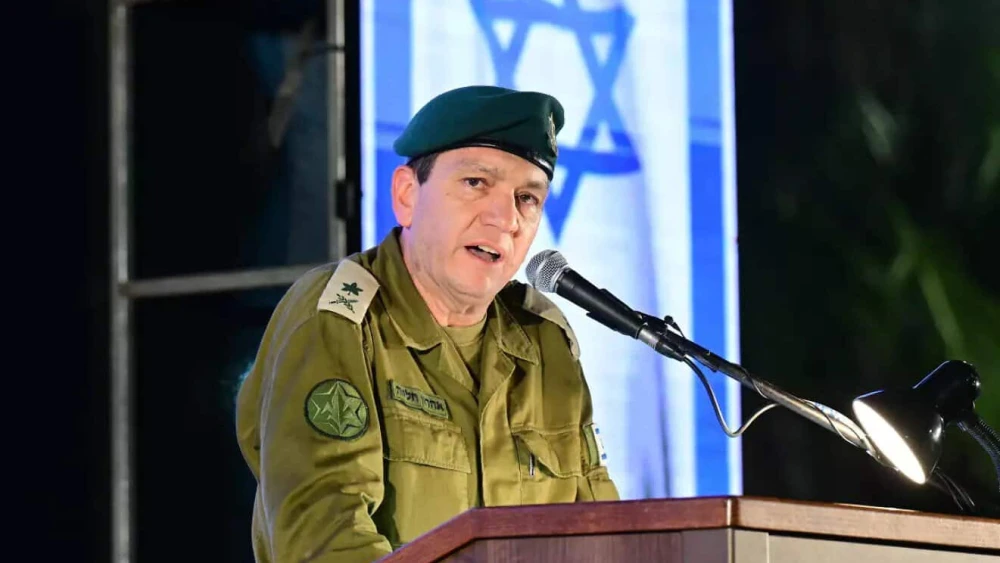
Also summoned were Maj. Gen. (res.) Aharon Haliva, who served in his last position as head of the Military Intelligence Directorate when the war broke out, and retiring Gaza Division commander Brig. Gen. Avi Rosenfeld, Israeli Air Force chief Maj. Gen. Tomer Bar, Israeli Navy chief Vice Adm. David Salama and Brig. Gen. (res.) Yossi Sariel, former Unit 8200 commander. Additional officers were also summoned, with major generals and brigadier generals meeting with the chief of staff and additional officers going to Deputy Chief of Staff Maj. Gen. Tamir Yadai.
Among those not summoned are Maj. Gen. Ghassan Alian, head of the Coordinator of Government Activities in the Territories unit, and then-Air Force Chief Operations Officer Brig. Gen. Omer Tishler.
Earlier this month, the expert team led by Maj. Gen. (res.) Sami Turgeman finished the “investigation of investigations,” examining probes conducted in the IDF since Oct. 7 events. Zamir appointed the team upon assuming his role, and during the review, 25 investigations were assessed for quality and depth.
This revealed that some investigations were professional, thorough and enabled “learning and progress,” in military terminology; some had solid factual foundations but failed to pinpoint failure points and needed changes; some were absent entirely; and some “fell short.” The team produced detailed assessments for each investigation’s quality, with concrete recommendations moving forward. Of 25 investigations examined, five were rejected by the experts.
Five investigations were flagged—those addressing the Operations Branch’s performance under current Military Intelligence Directorate head Binder, the systemic-strategic level (the conception), the pre-attack night investigation that fell short of established standards, the Israeli Navy probe, and IDF operational planning.
The report notes that beyond the General Staff as a whole, which fundamentally misjudged Hamas intentions despite labeling it a “terror army” (and failed to produce an adequate military response), other bodies contributing significantly over years to the catastrophic failure include the Operations Directorate, Military Intelligence Directorate, Southern Command and Gaza Division, which couldn’t defend the sector against the Strip’s threat.

These bodies’ failures are extensive, but central ones involve threat assessment, surprise attack readiness, identifying Hamas operational developments, defense failures for southern communities and matching actions to field results—which surpassed, as stated, the reference scenarios the military constructed over years.
The Air Force and Navy also contributed to Israeli failure, with main shortcomings found in creating defensive coverage in national airspace and protecting Israeli shores at war’s start. The report also describes chaos in reporting to higher echelons and gathering precise intelligence during the attack across various bodies.
Originally published by Israel Hayom.