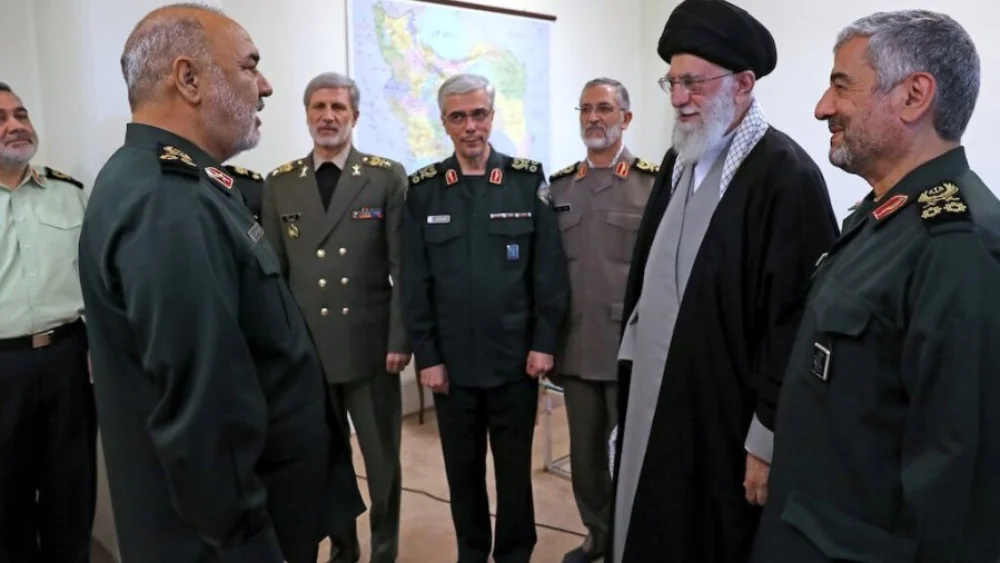
Iran has dropped its apparent precondition for reviving the 2015 nuclear deal that the Islamic Revolutionary Guard Corps (IRGC) be removed from the U.S. State Department’s list of foreign terrorist organizations, CNN reported.
A senior Biden administration official cited by the news outlet revealed that Iran’s response earlier this week to a draft nuclear agreement proposed by the European Union made no mention of Tehran’s previously firm position on the IRGC.
“The current version of the text, and what they are demanding, drops it,” the official was quoted as saying. “So if we are closer to a deal, that’s why.”
The Islamic Republic also dropped its demand for the delisting of several companies with ties to the IRGC, added the official.
Another source told CNN that while a deal was “closer than it was two weeks ago, the outcome [is] uncertain as some gaps remain. [U.S.] President [Joe] Biden will only approve a deal that meets our national security interests,” said the source.
According to Politico, Biden finalized the decision to keep the IRGC on the U.S.'s terrorism list in April and thereafter made it known to then-Israeli Prime Minister Naftali Bennett during a phone call.
“I commend the U.S. administration, led by my friend President Joe Biden, on the decision to keep the Islamic Revolutionary Guard Corps (IRGC) in their rightful place—on the Foreign Terrorist Organizations (FTO) list,” said Bennett in a statement on May 24.
The Wall Street Journal reported on Aug. 17 that a central tenet of Iran’s response to the latest draft proposal is that guarantees be put in place if the U.S. attempts to again withdraw from the deal, as it did under former President Donald Trump.
“What is important for Iran is that there are assurances that if the United States suddenly leaves the deal again … it comes at a price,” Seyed Mohammad Marandi, a media adviser to Iran’s negotiating team, was quoted by the Journal as saying.