


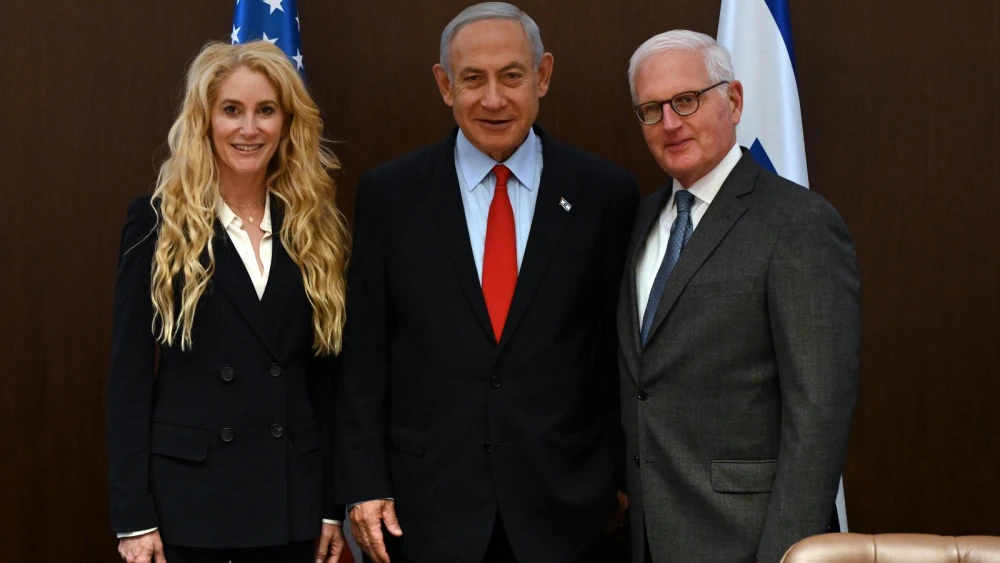
Howard Kohr, whose “mark on the U.S.-Israel relationship will forever be felt,” intends to step down as CEO of AIPAC on Dec. 31, the national pro-Israel lobby announced on Tuesday.
Kohr “helped transform AIPAC into the successful, respected, and enduring force that it is today,” the group said. “Indeed, our organization has never been stronger.”
“It would be impossible to enumerate Howard’s many accomplishments at AIPAC,” it added. “His mark on the U.S.-Israel relationship will forever be felt. Howard’s remarkable leadership enabled us to navigate changing landscapes in Washington and Jerusalem to effectively strengthen the alliance between the United States and Israel.”
Michael Tuchin, Betsy Berns Korn and Bernie Kaminetsky—AIPAC’s president, board chair and president-elect, respectively—will join others on a search committee, the group’s board and the executive search firm Stanton Chase to find Kohr’s replacement.
“Howard Kohr is an icon whose positive impact on the US-Israel relationship will continue for decades. It is the end of an era,” wrote William Daroff, CEO of the Conference of Presidents of Major American Jewish Organizations.
“Nearly 30 years ago, I was given the honor of a lifetime to direct and lead AIPAC,” Kohr stated.
“There will be plenty of time for reflection when I leave the position in a little more than nine months,” he added. “For now, our collective focus must remain on ensuring Israel has the time, resources and support it needs to win this war, including building bipartisan support for the president’s $14.3 billion emergency request for Israel.”


