


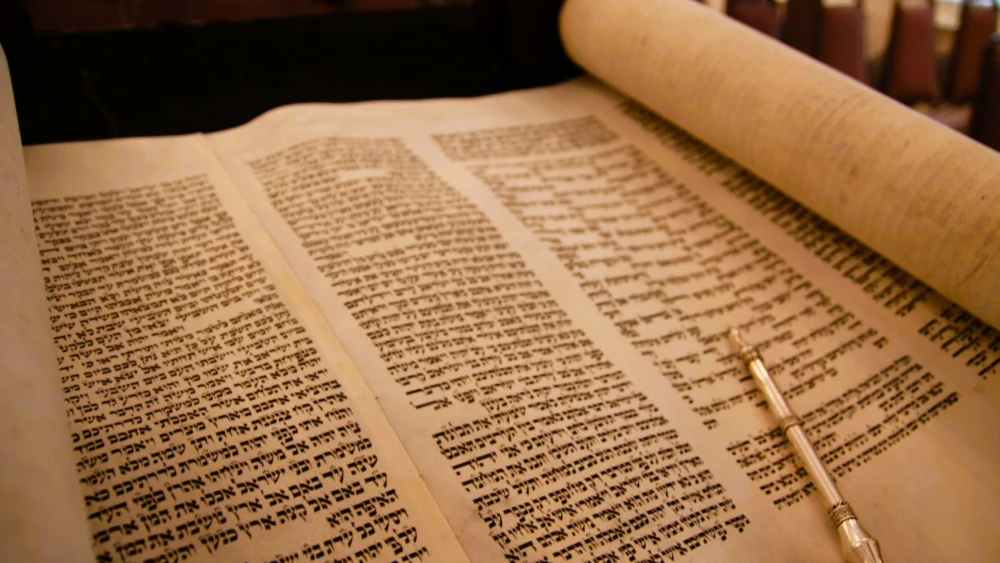

Shavuot is the only holiday with no concrete mitzvot. No matzah, no sukkah, no shofar, no fasting. And yet, it may demand more of us than any other day in the Jewish calendar. While we do have some Shavuot customs—staying up late learning Torah, eating dairy and enjoying cheesecake—these traditions are not halachic requirements; they emerged over time, rather than being formally mandated as mitzvot are for other holidays.
This absence of specific mitzvot for Shavuot is puzzling. Furthermore, in the Talmud (Pesachim 68b), debate is centered on how one should appropriately celebrate. Should holiday celebrations be completely focused on God? Should they be focused on physical enjoyment? Perhaps it should be a combination of both? The unanimous conclusion is that Shavuot cannot be purely spiritual; it must also be experienced in the physical realm.
On the surface, that is surprising. On the day that Jews mark the receiving of the Torah—the source of our holiness and spirituality—why is the emphasis on physical experiences? Surely, our engagement in the physical should pale in comparison to the majesty of the Torah. This paradox is exactly the point.
The lack of specific commandments on how to mark the holiday reminds us that the Torah is not limited to a certain type of action or celebration. Rather, it is all-encompassing, stretching into every aspect of our lives, creating holiness especially in the mundane, in the everyday. What defines our Shavuot experience and the receiving of the Torah is the role we play in society, how we respond to modern societal needs and challenges.
We are not angels. And the Torah was not meant for angels. It was given to human beings to be embraced, interpreted and lived in all the complexity of human existence.
Our job, then, is to use Torah as our guide to engage with the world and transform it. Especially when the Torah can impact all parts of the private and public sector, we must use the values of Torah to create a just society—a society that treats all, Jew and non-Jew, with respect.
The beit midrash, the study hall, is a critical incubator for this: nurturing men and women with Torah values. In fulfilling that role, however, it must not become a secluded, hermeneutically sealed structure, but a conduit through which we cultivate individuals who can positively impact our society and the world.
In practice, this means that those who are able-bodied serve in the Israel Defense Forces, even if that means missing yeshivah classes and leaving families behind at home (as commanded in the Torah); or squeezing in a faster-than-usual prayer before training on base or going on a mission, maintaining one’s Jewish and religious identity, which includes meeting the societal needs at hand.
That means serving alongside others from different backgrounds and levels of religious observance, to defend Israel, brings the Torah to life. Family members of these soldiers and reservists are also doing the holy work of the Torah, embodying the true message of Shavuot as they hold their homes together—raising and inspiring children, doing laundry, going to work, cooking—amid all of the difficulty, danger and loss.
If the Torah is meant to be lived in the real world, then it must shape how we treat other people. As we move through these challenging days, clinging to Torah means respecting others, even when they may seem very different from ourselves. Some of the most moving moments I have experienced as a rabbi include seeing bare-headed soldiers cover each other’s heads with their hands to recite a blessing of thanksgiving after surviving a battle, or hearing stories of hostages in Gaza trying their best to keep kosher or fast on Yom Kippur.
When it comes to interacting with non-Jews, we are no less obligated to follow Torah values. The Torah’s mandate to treat non-Jews with respect, dignity and equality appears dozens of times in the Bible and throughout rabbinic literature. “You shall have one standard for stranger and citizen alike; for I the Lord am your God” (Leviticus 24:22).
Keeping the Torah mandates abiding by civil authority and the law of the land, and requires educators and other leaders to teach this clearly and call out inappropriate behavior when it occurs. Our calling is not just to follow the letter of the Torah, but to embrace its overarching mandate, what Shavuot demands of us: to engage with the world and seek to improve and elevate it.
The Torah came to the Jewish people not in a quiet study hall, but in an overwhelming physical experience that the whole world witnessed. Shavuot asks us to receive it in the same way—not by retreating from the messy complexity of the physical world, but by entering it more fully, more justly and with great courage.
That is the revelation we are called not just to remember, but to live.


