


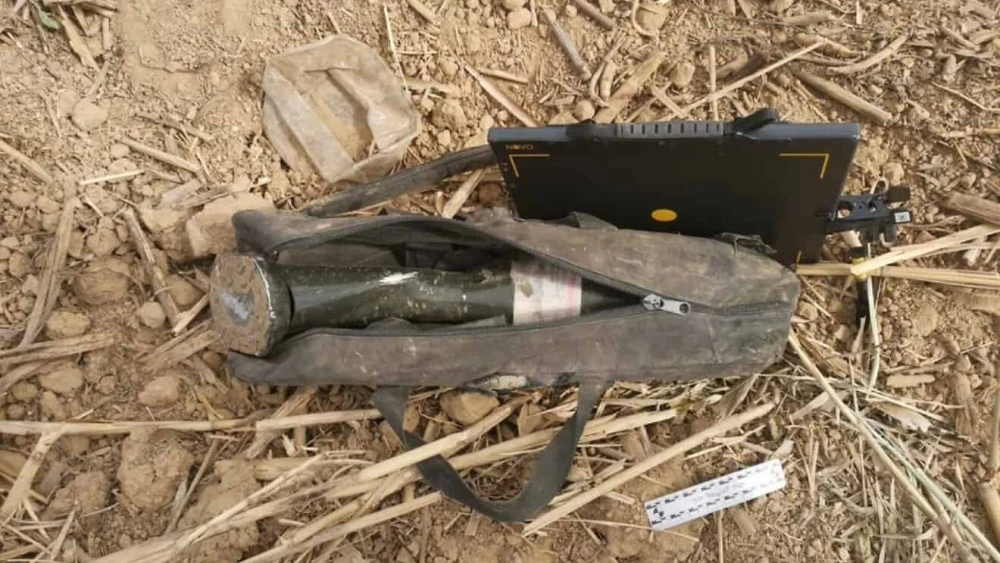
Israeli police on Wednesday discovered an improvised explosive device near the city of Netivot believed to have been left there during the Hamas-led invasion of southern Israel on Oct. 7, 2023.
Officers from the Netivot station located the bag containing the device in an open area during a routine patrol, according to police. The bag bore Arabic writing, according to the statement.
Preliminary investigation suggested that the device may have been left behind by terrorists who attempted to infiltrate the city during the Oct. 7 assault. The attackers are believed to have encountered resistance from police and municipal security forces, causing them to abandon the device.
Police sappers from the Southern District began neutralizing the device shortly after it was located, and police are investigating the scene.
A photo released by the police shows a dusty bag or case, about a foot in length, lying on dry ground, surrounded by straw and debris. The bag is unzipped, revealing a cylindrical object consistent with a makeshift explosive device.
The find is among hundreds of items brought into Israel by the approximately 6,000 Hamas terrorists and others who crossed the border into Israel on Oct. 7, 2023. For months after the onslaught, police, soldiers and civilians found pieces of equipment from the attack, including weapons and ammo. In Sderot, police found the body of a terrorist more than 40 days after the attack.
Unlike in Sderot and Ofakim, terrorists did not invade Netivot, but some of their vehicles were observed outside the city, which is situated about 11 kilometers (7 miles) from the Gaza border.



