


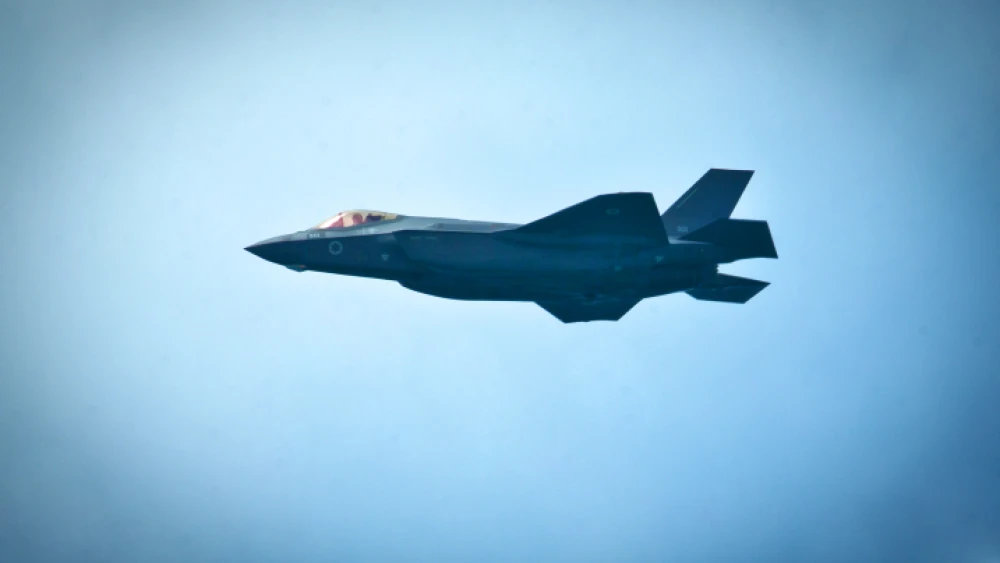
The Israel Defense Forces said on Monday that it had attacked targets belonging to the Iranian-backed Hezbollah terror organization in Southern Lebanon.
In a statement, the Israeli military said it had struck Hezbollah “military” camps used to train terrorist operatives for planning and carrying out attacks against Israeli soldiers and civilians.
🎯 STRUCK: Hezbollah terror infrastructure in several areas across southern Lebanon.
— Israel Defense Forces (@IDF) January 19, 2026
Targets included:
• Military structures used for Hezbollah drills and training to plan attacks
• Tunnel shafts used to store weapons
• Launch sites and additional military structures…
“As part of the training conducted in the camps, terrorists underwent live-fire drills and trained in the use of various types of weapons,” the IDF stated.
The military also said it struck tunnel shafts used to store weapons at several sites in Southern Lebanon, adding that “unusual” Hezbollah terrorist activity had been identified at those locations in recent months.
Additional strikes hit launch sites and “military” buildings that the IDF said were used to advance plans for attacks targeting the Jewish state.
“The Hezbollah terrorist organization’s activity in these sites constitutes a violation of the understandings between Israel and Lebanon and a threat to the State of Israel,” the military’s statement concluded.
Hezbollah leader Naim Qassem declared on Saturday that the Iranian-backed terrorist army would not disarm and “the aggression against Lebanon cannot continue,” and claimed a “right to defend ourselves.”
His comments, made during a televised address broadcast on Iranian media, came against the backdrop of continued Israeli airstrikes in Lebanon nearly 14 months after the U.S.-brokered ceasefire deal.
The remarks followed statements by Lebanese Foreign Minister Youssef Rajji, who said in a recent interview with Sky News Arabia that Israel retained the right to strike Lebanon until Hezbollah fully disarms.
Rajji was quoted as saying that “as long as weapons are not permanently restricted,” Jerusalem “unfortunately has the right to continue its attacks according to the agreement.”
Hezbollah started attacking the Jewish state on Oct. 8, 2023, a day after the Hamas-led terrorist massacre in the south, opening a second front in the country’s north that lasted until the Nov. 27, 2024, truce deal.
The truce terms required Hezbollah to be disarmed, starting in regions adjacent to the border, with the Lebanese Armed Forces mandated to establish a monopoly over arms in the country under the terms of the ceasefire agreement and a subsequent Lebanese Cabinet decision.
The Israeli Prime Minister’s Office in a Jan. 8 statement said that while Beirut’s efforts were “an encouraging beginning,” they were “far from sufficient” given Hezbollah’s ongoing Iran-aided rearmament efforts.
“The ceasefire agreement brokered by the United States between Israel and Lebanon states clearly, Hezbollah must be fully disarmed. This is imperative for Israel’s security and Lebanon’s future,” Jerusalem said.
Israeli Prime Minister Benjamin Netanyahu reportedly received a green light from U.S. President Donald Trump at Mar-a-Lago in Palm Beach, Fla., on Dec. 29 to restart the military campaign against Hezbollah.


