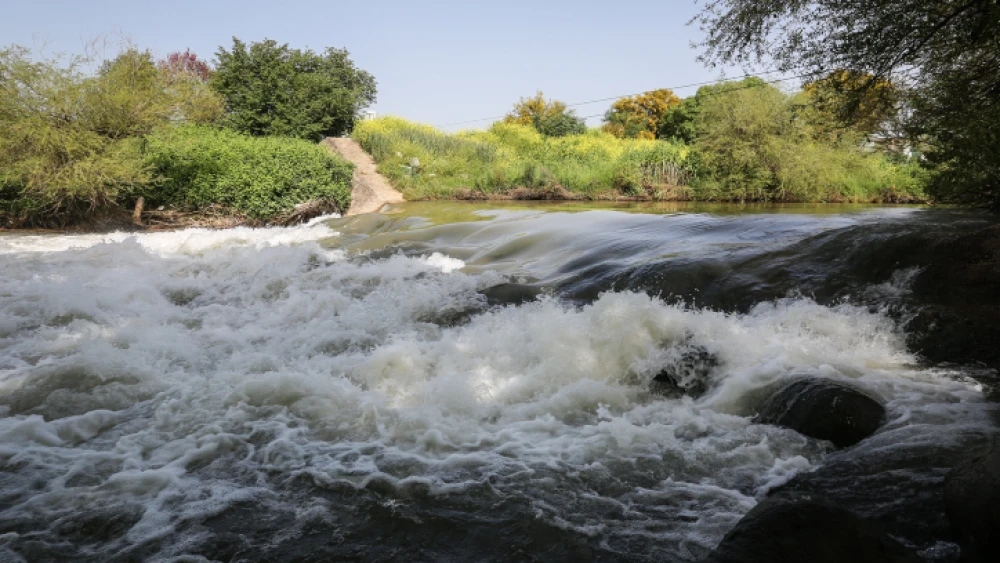
The Israeli government on Sunday approved what they called a historic plan to develop and restore for tourism purposes parts of the southern Jordan River, said the Environmental Protection Ministry in a statement.
“This is the broadest plan for rehabilitating the river and developing [it] that has been authorized in recent decades,” said the ministry.
It added that the goal is to increase water levels and ensure a constant flow throughout the year, turning the area into a diverse biological ecosystem and a tourist destination.
As part of Israel’s effort to deal with climate change, the proposal envisions the creation of a continuum of open areas that protects the surrounding environment and encourages sustainable farming. This will include eliminating two sources of pollution that have led to bans on bathing in a section of the river that extends for 11 kilometers (7 miles) from the Kinneret to Naharim, as well as installing a water desalination plant.
“This is a historic government decision,” said Environmental Protection Minister Tamar Zandberg. “It is the first time that an Israeli government took a decision to rehabilitate the central and most important river in Israel, which also forms a rich ecological system, a tourist attraction, and a community and social focal point, as well as a center for regional and international cooperation.”