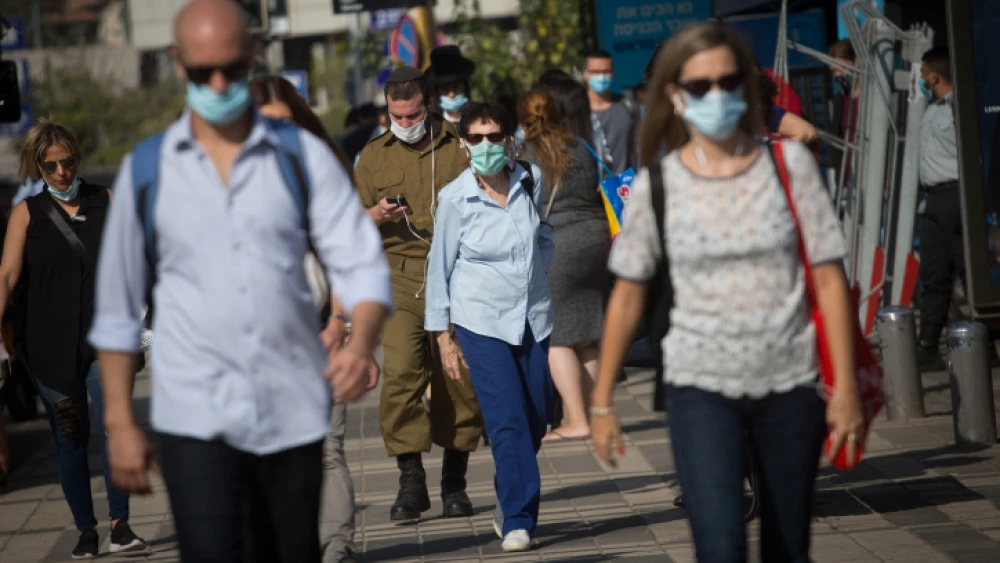
Israel’s rate of coronavirus continues to drop in the midst of a successful mass vaccination campaign against the coronavirus with public health chief Dr. Sharon Alroy-Pries saying on Tuesday that starting next week, Israelis will not be required to wear face masks outdoors.
“According to the latest data, when it comes to outdoors, but not during public gatherings, masks can come off starting next week,” she said, reported Ynet.
But, she added, “masks will have to stay in our bags at all times since it is still mandatory to wear them indoors. We do not know if someone next to us is infected or not, vaccinated or not, and closed spaces still pose a high risk. Therefore, masks will have to stay with us.”
Alroy-Pries said that 95 percent of the country has been labeled “green,” meaning no infection hotspots there. Still, she noted that 35 percent of the population, including children, remain unvaccinated with 1 million citizens over 16 also not having received a vaccine for COVID-19.
On Monday, according to the report, ministers voted to fully reopen all of Israel’s education system without dividing classes into capsules.