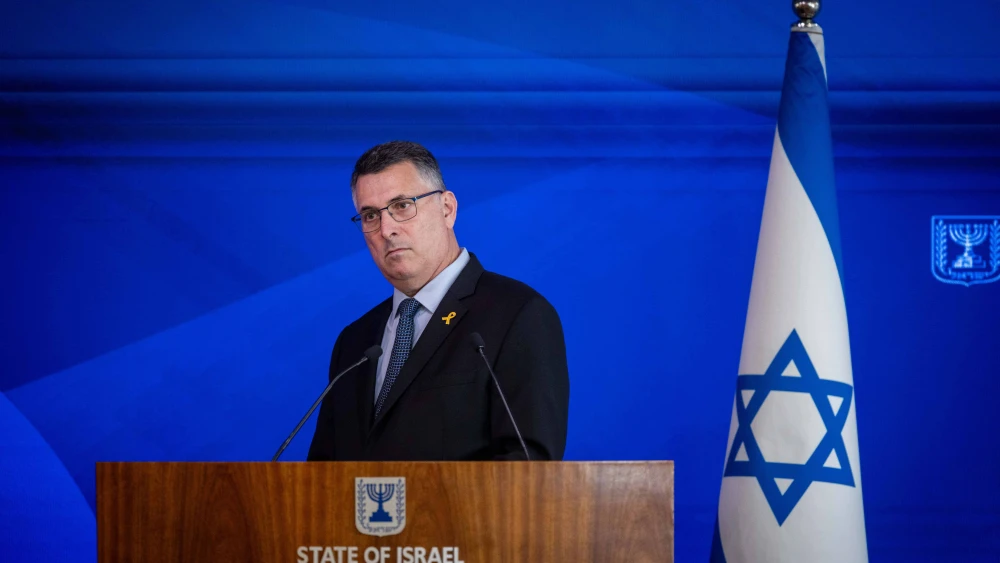
Israel’s foreign minister on Tuesday recommended “extreme caution” to whomever is named as Iran’s next military chief of staff, following the assassinations of two earlier leaders within days of each other.
“We still don’t know who the successor to the successor of Iran’s Chief of Staff will be,” Foreign Minister Gideon Sa’ar posted on X. “I’d recommend whoever that position is offered to think it through. If he accepts—extreme caution is recommended.”
The announcement came just hours after news that Maj. Gen. Ali Shadmani, who commanded both the Islamic Revolutionary Guard Corps (IRGC) and the Iranian army, was killed in an Israeli attack, and three days after Shadmani’s predecessor was eliminated in the opening strike against Iranian military leaders and nuclear sites.
Israel’s top diplomat wrote in his post that in his three decades of public office, never has a military campaign been planned and managed so thoroughly and intensively. He also stated that Israel’s public position in the international arena amid the ongoing military operation is strong.
“There is great understanding of the actions we have taken and also understanding that the existential threat to Israel has implications for the security of the entire region, the security of Europe, and world order at large,” he wrote.
On Sunday, Sa’ar briefed hundreds of foreign ambassadors and diplomats stationed in Israel, along with Israeli envoys abroad, on the latest developments in the ongoing conflict with Iran.
“Iran chose to target Israeli citizens in an attempt to break the spirit of the Israeli public. Our people are strong and understand the necessity of our action,” said Sa’ar.
He noted that Israeli forces had reached a point of being able to operate freely over Tehran, striking targets linked to Iran’s nuclear program in the capital after dealing a significant blow to the country’s air defense systems.
“The Iranians know they are exposed. We have great freedom of action in western Iran and Tehran,” added Sa’ar.