Newsletter
Newsletter Support JNS

Israeli minister pays first official visit to Sudan since normalization

Intelligence Minister Eli Cohen discussed diplomatic and security issues with Sudanese leaders, and the potential for economic cooperation.

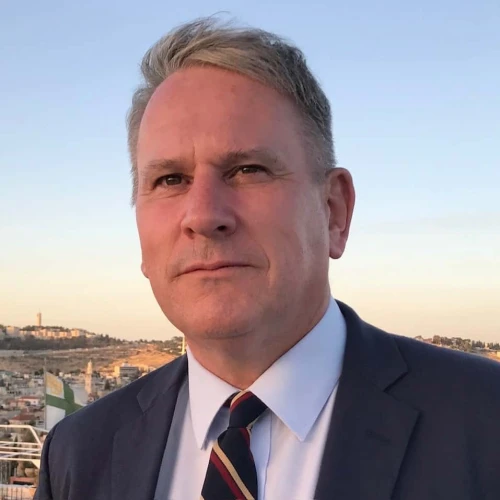
Israeli Intelligence Minister Eli Cohen at a ceremony in Jerusalem on May 18, 2020. Photo by Yonatan Sindel/Flash90.

In a historic first, an Israeli Cabinet minister led an official delegation to Sudan on Monday.

Israeli Intelligence Minister Eli Cohen met with Sudanese leaders, including Abdel Fattah al-Burhan, the acting head of state, to discuss a variety of diplomatic and security issues as well as the potential for economic cooperation, reported Reuters.

“I am confident that this visit has laid the foundations for many important collaborations, which will help both Israel and Sudan, and security stability in the region, deepen our ties with Africa and lead to further agreements with countries in the region,” said Cohen, according to Israel HaYom.

Sudan officially joined the Abraham Accords on Jan. 6, following the United Arab Emirates and Bahrain, which also agreed to normalize relations with the Jewish state. Morocco followed in December with a similar agreement.

Sudan agreed to normalize relations with Israel in October on the condition of being removed from the U.S. list of state sponsors of terrorism. A stipulation on the U.S. side of the agreement included the guarantee that Sudan would agree to pay $335 million in compensation to American victims of terrorism.

The United States and Israel commenced formal negotiations to replace the expiring defense memorandum with a new framework.
“The dehumanization of Jews in rhetoric, through the use of violence, attacking Jews at synagogue or yeshiva—too many people think it’s okay,” said Rep. Mike Lawler.
CENTCOM stated that the strikes are “in response to Iran’s unwarranted and continued aggression.”
“The graduating student’s display included imagery that many people associate with antisemitism and that caused pain and concern,” a university spokesman told JNS.
“If CAIR does not meet the criteria for designation, it is difficult to understand why specially designated global terrorist sanctions exist,” stated the groups led by the Middle East Forum.
Haji Najibullah, who led Taliban fighters in Afghanistan’s Wardak Province, admitted to helping kidnap a New York Times reporter and supporting attacks that killed three American soldiers.