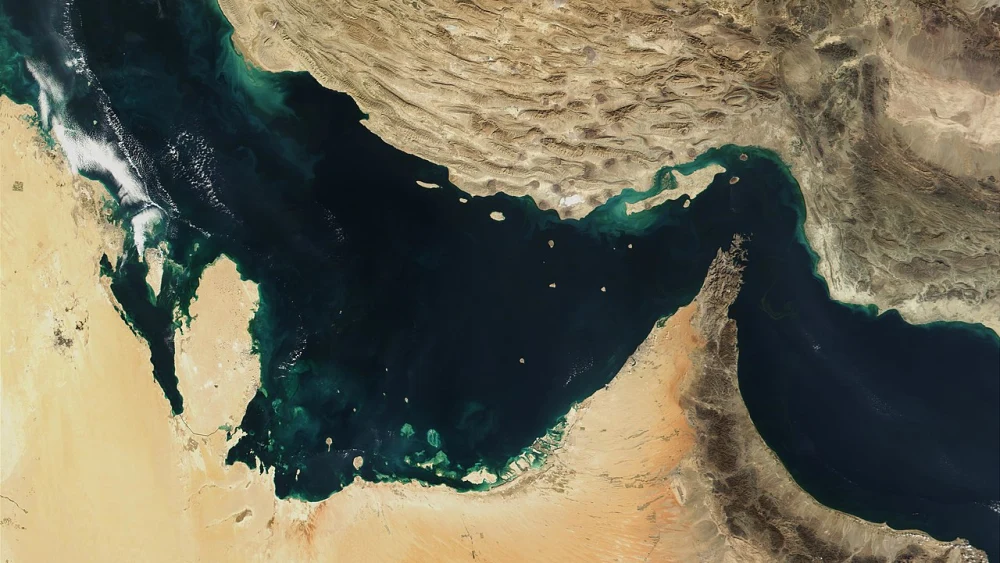
Nearly two dozen nations, most of them European, said in a joint statement on Saturday that they are ready “to contribute to appropriate efforts to ensure safe passage” through the Strait of Hormuz.
“We condemn in the strongest terms recent attacks by Iran on unarmed commercial vessels in the Gulf, attacks on civilian infrastructure including oil and gas installations, and the de facto closure of the Strait of Hormuz by Iranian forces,” read the statement of 22 countries.
“We welcome the commitment of nations who are engaging in preparatory planning,” the statement added, while urging an “immediate comprehensive moratorium on attack on civilian infrastructure, including oil and gas installations.”
The countries committed to helping the United States are: Australia, Bahrain, Canada, the Czech Republic, Denmark, Estonia, Finland, France, Germany, Italy, Japan, Latvia, Lithuania, the Netherlands, New Zealand, Norway, Romania, Slovenia, South Korea, Sweden, the United Arab Emirates and the United Kingdom.
Joint Statement on the Strait of Hormuzhttps://t.co/fVPAYozdF4 pic.twitter.com/n25zPDCtLO
— MoFA وزارة الخارجية (@mofauae) March 21, 2026
Some 20% of the world’s oil and gas flows routinely through the Strait of Hormuz. The attacks on oil and gas infrastructure in Iran and Gulf Arab states have led to rising energy prices globally.
Analytics firm Kpler recorded a decrease of 95% in the naval passageway from peacetime averages, AFP reported.
Meanwhile on Friday, the Trump administration announced that it had temporarily lifted sanctions on Iranian crude oil currently stranded at sea.
Explaining the decision, U.S. Treasury Secretary Scott Bessent wrote on X that sanctioned Iranian oil “is being hoarded by China on the cheap. By temporarily unlocking this existing supply for the world, the United States will quickly bring approximately 140 million barrels of oil to global markets, expanding the amount of worldwide energy and helping to relieve the temporary pressures on supply caused by Iran. In essence, we will be using the Iranian barrels against Tehran to keep the price down as we continue Operation Epic Fury.”
He said the short-term authorization is strictly limited to oil that is already in transit and does not allow new purchases or production. According to the Treasury Department, the permit applies to oil loaded onto ships by 12:01 a.m. Eastern Time on Friday, and will remain in effect until April 19.
“Further, Iran will have difficulty accessing any revenue generated and the United States will continue to maintain maximum pressure on Iran and its ability to access the international financial system,” Bessent continued.
The secretary added that “Any short-term disruption now will ultimately translate into longer-term economic gains for Americans—because there is no prosperity without security.”
Iran is the head of the snake for global terrorism, and through President Trump’s Operation Epic Fury, we are winning this critical fight at an even faster pace than anticipated. In response to Iran’s terrorist attacks against global energy infrastructure, the Trump…
— Treasury Secretary Scott Bessent (@SecScottBessent) March 20, 2026
The New York Times reported on Friday that Tehran has allowed some friendly countries, including China, India, Pakistan, Malaysia and Iraq, free passageway through the Strait of Hormuz.
Iranian legislators are mulling a transit fee for any ship crossing the narrow sea passage, the Times cited Iranian media as saying.
It moreover cited the International Maritime Organization as reporting that approximately 2,000 ships and 20,000 seafarers are currently trapped in the area.
Since the start of the war on Feb. 28, crossings through the Strait have plummeted from 130 vessels per day to three or four daily, the report added.