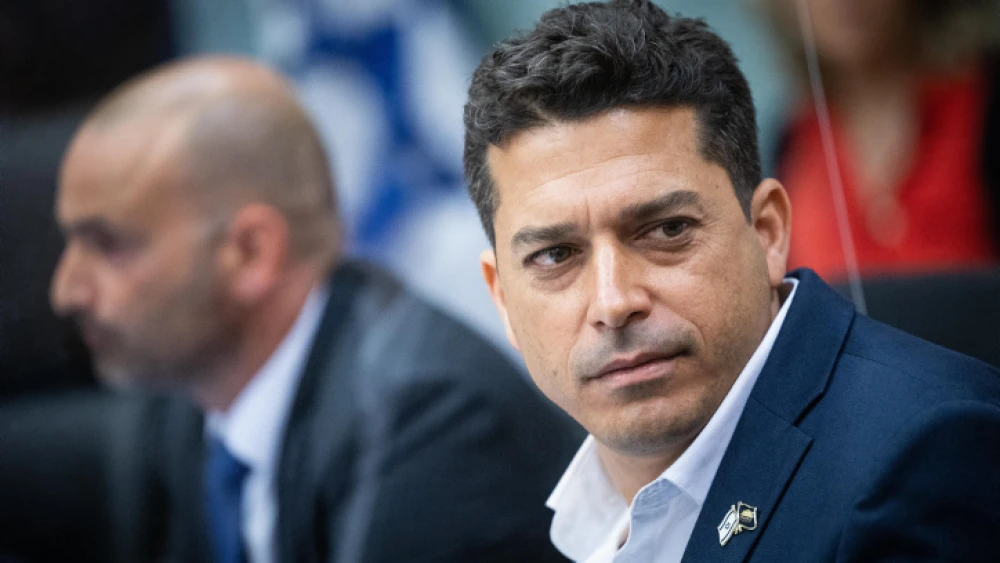
Israeli Minister of Diaspora Affairs and Countering Antisemitism Amichai Chikli on Monday condemned the “unprecedented levels” of Jew hatred in Australia, rebuking that country’s government for fueling the phenomenon.
“The next special report on antisemitism by the @AlboMP government should begin with a record of the government’s own antisemitic actions—the most hostile government toward the Jewish community since 1939,” said Chikli said of Australian Prime Minister Anthony Albanese’s government in a post on X.
Chikli was referring to a July report by the Office of Australia’s Special Envoy to Combat Antisemitism. The government appointed a special envoy in July 2024 as part of an effort “to preserve social cohesion in Australia.”
According to that report, which focused on giving recommendations to combat the rise in antisemitism: “From October 2023 to September 2024, antisemitic incidents surged by 316%, with over 2,000 cases reported—threats, assaults, vandalism and intimidation.”
“In 2024, over 60% of Australian Jewish students who experienced antisemitism felt unsupported by their institutions, according to a survey conducted by the Australasian Union of Jewish Students,” it said.
Antisemitism in Australia reached unprecedented levels in 2024, with 2,062 incidents documented by the @ECAJewry, the worst since monitoring began in 2013, and a 4x rise from 2023.
— עמיחי שיקלי - Amichai Chikli (@AmichaiChikli) August 18, 2025
These incidents ranged from vandalism, synagogue arson, physical assaults, death threats, and… pic.twitter.com/rfmFmWCMik
According to another report released in May, the J7 Annual Report on Antisemitism 2025, Australia experienced a fourfold increase in documented antisemitic incidents in 2024—the steepest rise among English-speaking countries with available data.”
The report compiled statistics from member organizations of the J7 task force, a global coalition formed in 2023 that includes the Anti-Defamation League (ADL), and partner groups in the United Kingdom, Australia, Canada, France, Germany and Argentina.
“For Australia’s small Jewish community of roughly 100,000 people, the situation has become unbearable,” said Chikli. “Holocaust survivors describe reliving past trauma, while many Jews hide religious symbols in public or contemplate leaving the country altogether.”
Chikli’s comments come on the background of a sharp downturn in Australia-Israel relations after Australia canceled a visa for Religious Zionism Party MK Simcha Rothman, who was about to travel to the country for a solidarity visit to the Jewish community.
The Australian government’s pretext for cancelling Rothman’s visa was that he would “spread a message of hate and division,” according to Australia’s Home Affairs Minister Tony Burke.
In a separate post on Monday, Chikli said the Australian government’s decision to ban Rothman “reflects a broken moral compass, discrimination, and a grave assault on free speech.”
The move against the MK follows other visa cancellations by Australia, including that of Hillel Fuld, a pro-Israel social media personality, in June, and in November 2025 of former Israeli Justice Minister Ayelet Shaked.
Chikli noted that the Australian government boycotts appear to be reserved “exclusively for Jews.”
While Rothman was banned for three years, the Australian government, in the months leading up to January 2025, granted nearly 1,000 three-year humanitarian visas—mostly to Palestinian nationals—fleeing the Israel-Hamas conflict.
Israeli Prime Minister Benjamin Netanyahu on Tuesday slammed Albanese. “History will remember Albanese for what he is: A weak politician who betrayed Israel and abandoned Australia’s Jews,” Netanyahu posted to X.
Israeli Foreign Minister Gideon Sa’ar also weighed in, describing the Australian government’s decision as “shameful.”
“Instead of battling against antisemitism in Australia, as they should, they are doing the opposite. They are fueling antisemitism by these mad decisions to ban from Australia Israeli politicians and other figures,” Sa’ar said, during an interview with The Erin Molan Show on Tuesday.