Newsletter
Newsletter Support JNS

Israel’s immigration ministry to refocus efforts on the West

According to an Aliyah Ministry official, the war in Ukraine has led to a wave of immigration from former Soviet-bloc countries.

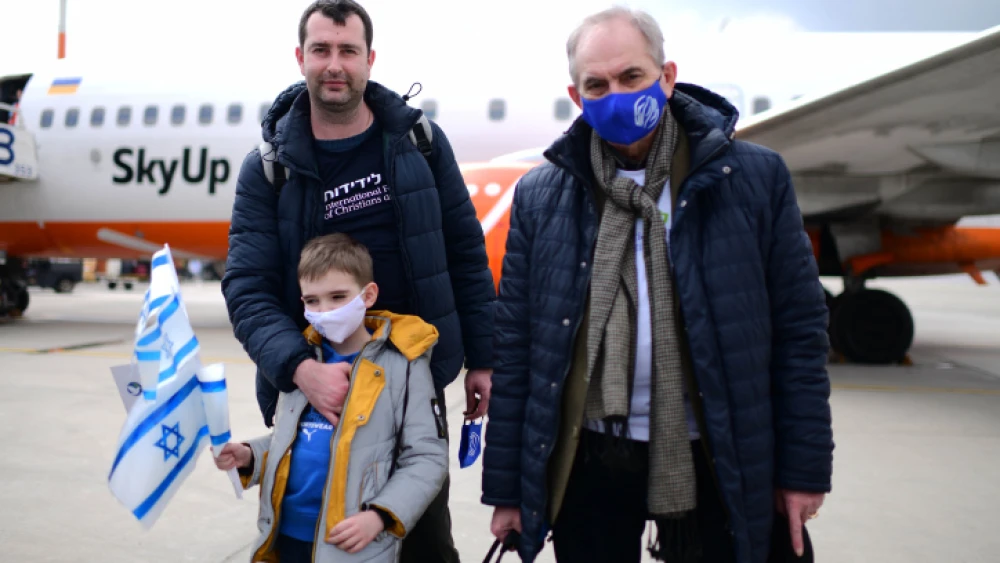
Ukrainian Jewish immigrants arrive at Ben-Gurion International Airport in Tel Aviv as part of an aliyah from Ukraine on Feb. 20, 2022. Photo by Tomer Neuberg/Flash90.

In part due to the war in Ukraine, Israel is reorienting its immigration efforts from former Soviet Union countries to Western nations, such as France and the United States.

Israel’s Aliyah and Integration Minister Ofir Sofer has recommended the redistribution of the ministry’s budget, which will see funds meant to promote immigration from the former Soviet bloc slashed almost in half, from $8 million to $4.5 million. Instead, the funds will be directed to encourage immigration first and foremost from France.

A senior ministry official explained that there was simply no need to encourage immigration from Eastern Europe, as the Ukraine war led to a mass migration to Israel.

“Since the outbreak of the war, 100,00 people from Ukraine and Russia have moved to Israel,” the official explained.

In contrast, he said, Israel has seen a steady decline in immigration from Western nations, partially due to a lack of encouragement by the ministry.

“We have seen a consistent decrease both from France, where there are about 200,000 Jews, and from the United States. There was no effort on Israel’s part, of the Jewish Agency, to promote immigration from these countries. Since the nations of the former Soviet Union already have mass immigration following the war, it is more correct to direct the state efforts where they are required,” the official said.

The official stressed that the change will not impact those immigrating from former Soviet Union countries and that immigrants “will continue to enjoy the benefits that immigrants from those nations receive today.”

Originally published by Israel Hayom.

Ariel Kahana is a seasoned Israeli journalist and diplomatic correspondent, frequently sought after as a TV commentator and speaker. He began his media career as an editor and presenter for Arutz 7 radio and has since held key roles across print, broadcast, and digital platforms. Over the years, his work has provided him with a front-row seat to many of Israel’s most pivotal events.
Adam Muhammad Ibrahim Abu Hadid, who oversaw weapons production, was eliminated in a strike in Khan Younis, according to the Israeli military.
The shooting guard, 22, is the son of legendary Maccabi Tel Aviv basketball star Derrick Sharp.
The demonstration caused heavy traffic, including a chain accident on Highway 1 in which a pregnant woman was moderately injured.
More than 700 injured as a state of emergency is declared and international aid is rushed to the South American country.
Basil Sweid, 32, a driver in the military’s 75th Battalion, was “a brave reservist fighter, filled with a sense of mission, who symbolized the unbreakable bond between the Druze community and the State of Israel,” said Israel’s prime minister.
Banning brit milah would prevent Jewish life from flourishing in Europe, said Katharina von Schnurbein.
Benny Gantz, JNS editor-in-chief Jonathan S. Tobin, Gilad Erdan, Mosab Hassan Yousef, Nissim Black and leading voices in security, diplomacy, media, law and Jewish communal affairs headline the summit’s third day in Jerusalem.