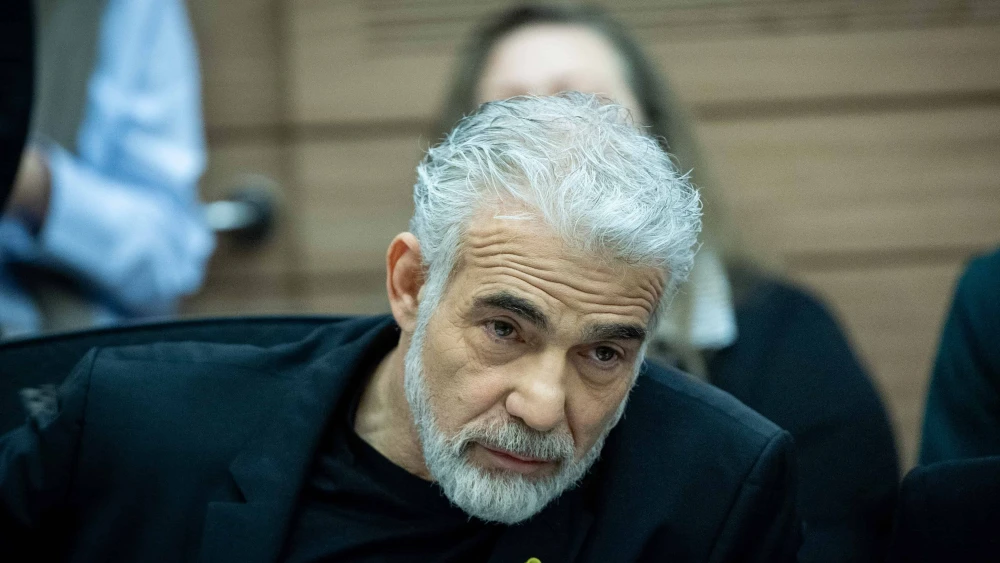
Israeli opposition leader Yair Lapid (Yesh Atid) told JNS on Monday that Hezbollah must withdraw north of Lebanon’s Litani River for the ceasefire with the Iranian-backed terrorist group to become permanent.
“It is supposed to be a permanent ceasefire,” Lapid told JNS, speaking at a party meeting held at the Knesset in Jerusalem on Monday afternoon.
“The first stage of it was just in order to make sure that the forces are organized in the right direction, but now, [we are] going to negotiate the final stage of this agreement,” he added.
“The one condition we have is that Hezbollah will go up to the Litani River,” which is located some 18 miles north of the border, he said, adding that “this is supposed to be happening in the next few days.”
Israeli Defense Minister Israel Katz warned earlier this month that the Nov. 26 deal with Beirut would be void if Hezbollah refuses to withdraw from Southern Lebanon in accordance with the terms of the accord.
Under the terms of the deal, which went into effect on Nov. 27, Israel Defense Forces soldiers are to gradually withdraw from Lebanon’s south before Jan. 26, as the Lebanese Armed Forces and U.N. Interim Force in Lebanon (UNIFIL) troops take over responsibilities for ensuring that Hezbollah remains disarmed south of the Litani River.
However, concerns are growing in Jerusalem about whether the LAF can fulfill its obligation to clamp down on Hezbollah’s presence in the south, and the Israel Defense Forces remains engaged in frequent operations in the border area.
IDF Chief of Staff Lt. Gen. Herzi Halevi has ordered the military to prepare plans for continued fighting in Lebanon, as well as in the Gaza Strip, the IDF Spokesperson’s Unit said in a statement on Monday afternoon.
Earlier on Monday, Lebanon’s Al Mayadeen channel, which is closely affiliated with Hezbollah, reported artillery strikes on the village of Kfarchouba. The IDF did not immediately comment on the report.
On Thursday, the IDF revealed that troops had cleared additional terrorist infrastructure in the western sector of Southern Lebanon.
As part of a mission to eliminate threats, the troops conducted targeted raids and reconnaissance operations against terrorist infrastructure in urban areas and thicketed terrain used by Hezbollah. The forces were said to have acted in accordance with the understanding with Beirut.