Newsletter
Newsletter Support JNS

Merav Michaeli elected head of Israel’s struggling Labor Party

The new Labor leader says her first move will be to exit the coalition of Israeli Prime Minister Benjamin Netanyahu.

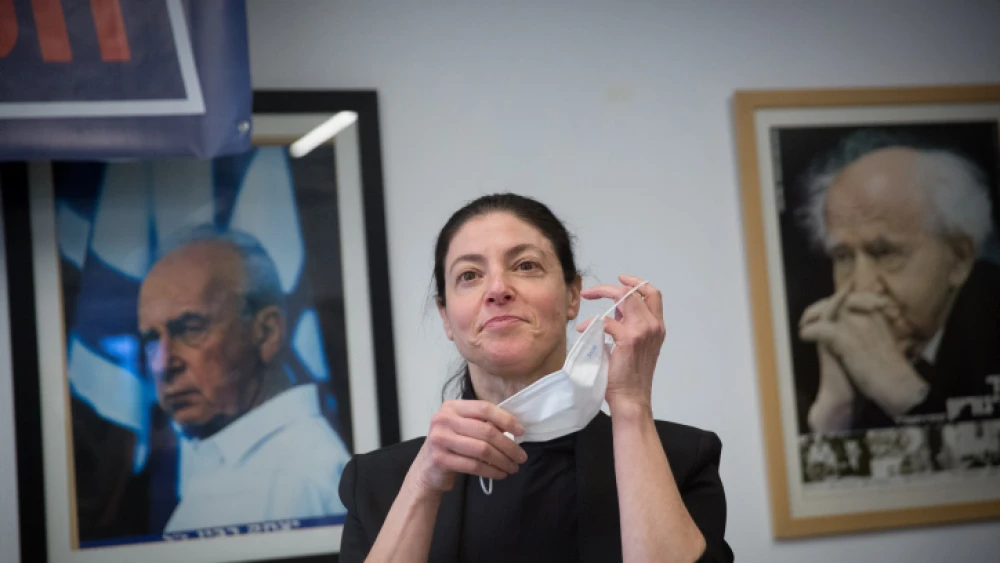
Labor Party Knesset member Merav Michaeli casts her vote in the primary election at a polling station in Tel Aviv on Jan. 24, 2021. Photo by Miriam Alster/Flash90.

Israel’s Labor Party on Sunday elected as its new leader Knesset member Merav Michaeli. Michaeli won 77 percent of the approximately 10,000 votes in the party’s primary, held ahead of the country’s March 23 Knesset elections, the fourth round in two years.

The vote followed the resignation last month of Labor leader Amir Peretz, who serves as economy minister in the current government.

Peretz announced that he would be stepping down after the party had its worst showing ever in the last election, and after having lost the support of many Labor voters when he broke his campaign promise not to join a coalition headed by Israeli Prime Minister Benjamin Netanyahu.

In an interview with Kan Radio on Monday, Michaeli said that her first move as Labor leader would be to leave Netanyahu’s coalition.

Michaeli is the second woman elected this month to head an Israeli party after Jerusalem Deputy Mayor Hagit Moshe emerged victorious in the Bayit Yehudi primary last Tuesday.

Following Michaeli’s win, a Channel 13 poll on Sunday night showed the Labor Party just barely passing the electoral threshold, contrary to previous surveys conducted over the past three months indicating that it would not make it into the Knesset.

However, the American military will continue to degrade Iranian assets as long as the safe and free transit through the Strait of Hormuz is not secured.
“If you hear a loud explosion, or if sirens are activated, immediately seek cover,” the legation said.
Targets included an arms storage facility, a weapons production site and a rocket launch pad.
“I hope to see Israel at the next World Cup hosted in your country, as well as in Portugal and Morocco!” the Israeli president said.
The Israeli Air Force’s first dedicated combat unit for religious women reflects a growing shift within Religious Zionism as new military frameworks seek to reconcile faith with frontline service.
A Lebanese initiative signed by people from across the country’s sectarian and political spectrum, including Shi’ites, is offering fresh hope to the group’s opponents.
