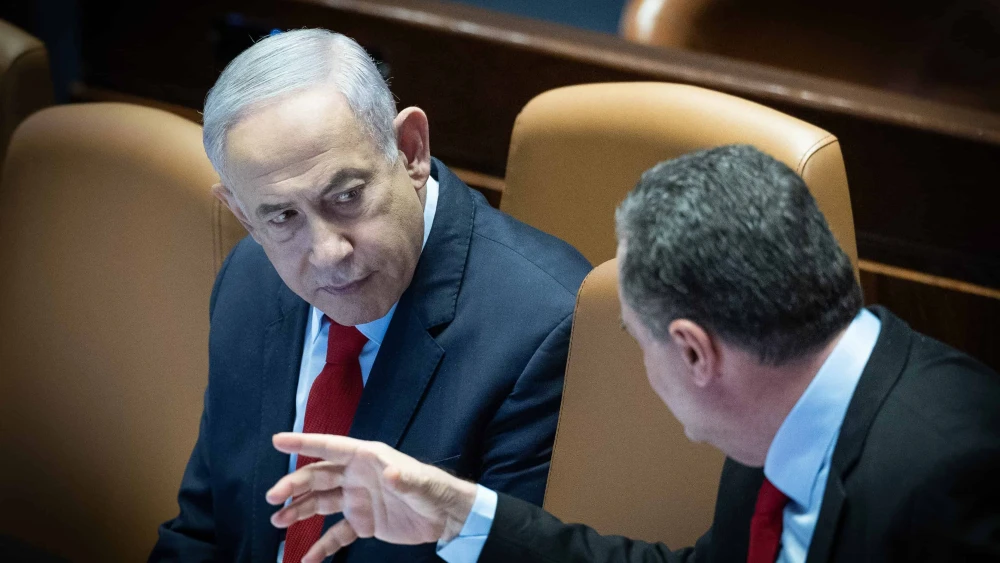
Israeli Prime Minister Benjamin Netanyahu convened a consultation on Sunday night with Defense Minister Israel Katz and other senior security officials to discuss the Lebanon ceasefire efforts, Hebrew media reported on Monday.
“We are close to an agreement. It could happen within days; a few details remain to be finalized,” Israel’s Ambassador to the United States Michael Herzog told Israel’s Army Radio on Monday morning.
Among the remaining gaps between the sides is reportedly Jerusalem’s demand that the IDF maintain freedom of action in Lebanon should Hezbollah violate the terms of the ceasefire by rearming itself and attempting to reestablish forces south of the Litani River.
The topic is expected to be a central item on the agenda during U.S. Deputy Assistant Secretary of Defense for the Middle East Dan Shapiro’s expected visit to Israel on Monday.
Shapiro’s visit follows that of U.S. presidential envoy Amos Hochstein last week and of Gen. Erik Kurilla, the head of U.S. Central Command (CENTCOM), over the weekend.
Negotiators are working out the framework for an international enforcement mechanism to ensure that Hezbollah does not reestablish itself in Southern Lebanon.
Recent diplomatic efforts have aimed at minimizing situations where Israel will violate Lebanese sovereignty in response to a breach of the agreement. The goal is to empower the international monitoring mechanism as much as possible, while establishing clear criteria for when Israel can exercise its military freedom of action.
Kurilla met with IDF Chief of Staff Lt. Gen. Herzi Halevi on Saturday to discuss the proposed U.S. monitoring mechanism for Lebanese army operations.
Under the developing draft agreement, the Lebanese army will be required to conduct a comprehensive operation to remove weapons from villages in Southern Lebanon, with CENTCOM forces overseeing strict enforcement of this process.
One unresolved issue is whether France will be involved in the oversight mechanism, according to Kan News. Beirut supports Paris participating, while Jerusalem opposes it. However, Kan reported that estimates in Israel are that a compromise will be reached on this matter.
Another potential obstacle is that Iran’s supreme leader, Ali Khamenei, must grant final approval for any ceasefire agreement, according to Channel 12.
Meanwhile, Halevi has instructed IDF General Staff directorates to continue developing and finalizing comprehensive operational plans for both the failure of negotiations and possible breaches of any agreement by Hezbollah, should one be reached.