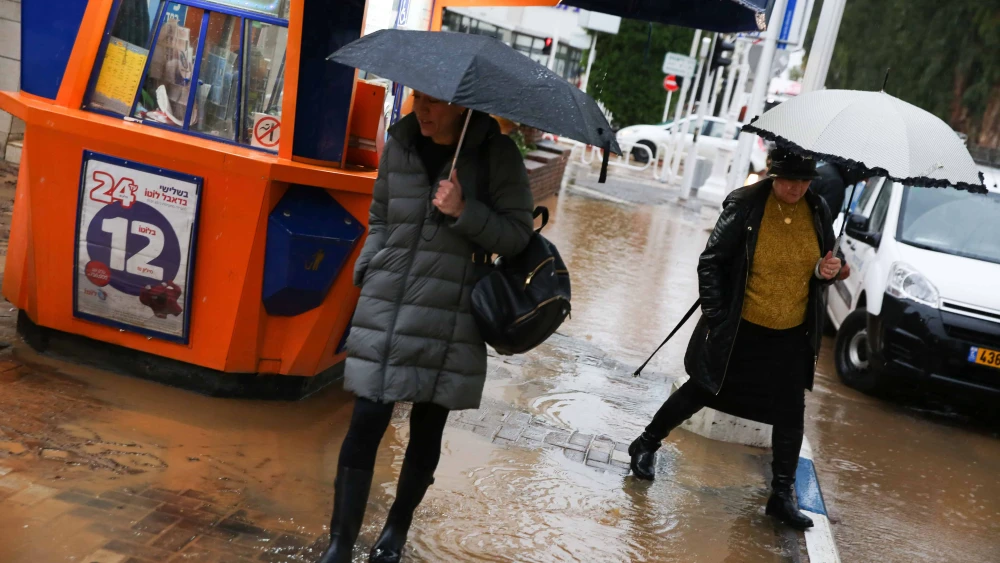
About four inches of rain fell in the northern Israeli city of Nahariya on Thursday, breaking a nearly century-old record as the first rains of the fall season arrived the day after Rosh Hashanah.
The rainfall, which was heaviest along the northern coastal plain, the Carmel region and the Western Galilee, set a record for a single day during September in Israel, surpassing the 3.76 inches that fell on Sept. 12, 1932, in the Gush Etzion area near Jerusalem.
The much-needed precipitation, which followed Israel’s long and dry summer and a drought last winter, began overnight and ended by midday.
The Haifa Municipality banned bathing in the sea due to dirty runoff water that typically ends up on the beaches after the first rain of the season.
Despite the record-setting rainfall on an unseasonably cool fall-like day, many other areas of the country remained dry, including Tel Aviv, which saw partly sunny skies.
The weekend is forecast to be temperate and pleasant.