


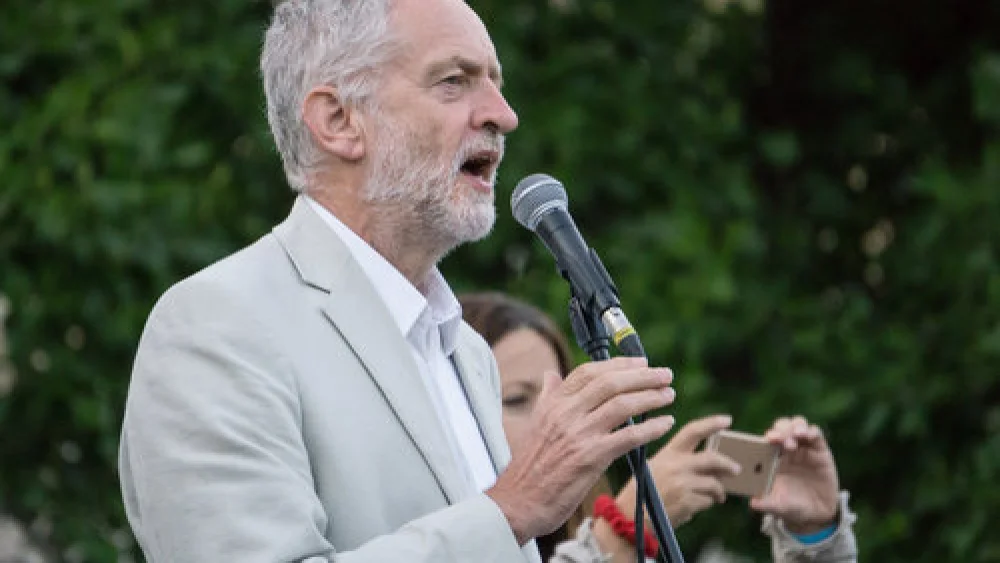
The Labour Party, which has been dogged by allegations of anti-Semitism in recent years centered around party leader Jeremy Corbyn, formally adopted an amended version of the International Holocaust Remembrance Alliance’s definition of anti-Semitism that left out some examples of anti-Semitism that relate to support for Israel.
“The NEC [national executive committee] upheld the adoption of the code of conduct on antisemitism but, in recognition of the serious concerns expressed, agreed to reopen the development of the code, in consultation with Jewish community organisations and groups, in order to better reflect their views.”
According to the Jewish Chronicle, the amended version dropped anti-Semitic language related to Israel such as “accusing Jewish citizens of being more loyal to Israel than their own nations, claiming that the existence of the state of Israel is a racist endeavour and comparing Israeli actions to the Nazis.”
The move to adopt the amended version came despite an outcry of opposition from dozens of Jewish leaders, British Jewish organizations and even Labour Party politicians. A day earlier, members of the Parliamentary Labour Party voted to adopt the full definition.
“The Labour Party has acted in a deliberate and offensive, reckless manner in believing it understands the needs of a minority community better than the community itself. We await to see if any further ‘reviews’ change this,” a spokesman for the Jewish Labour Movement said, according to The Guardian.
Former Labour leader Ed Miliband, who is Jewish, also said that the party should adopt the full definition.
“Labour should adopt the full IHRA definition. The argument that it is somehow incompatible with criticising the actions of the Israeli government is wrong.”
Sixty-eight British rabbis also called on Labour to adopt the full, unamended definition of anti-Semitism.
“The Labour party’s leadership has chosen to ignore those who understand antisemitism the best, the Jewish community,” the rabbis wrote. “By claiming to know what’s good for our community, the Labour party’s leadership have chosen to act in the most insulting and arrogant way.”
Since taking over as leader of the Labour Party in 2015, Corbyn and his party has been dogged by allegations of anti-Semitism—allegations that he denies.
Separately, three-dozen far-left pro-BDS Jewish organizations from around the world issued a joint statement on Tuesday that also rejected the IHRA’s definition due to concerns that it conflates anti-Semitism with criticism of Israel.



