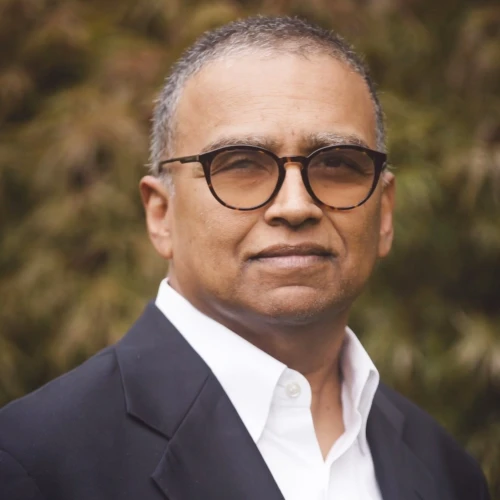

A British pop star who is not Jewish and has never lived a day of his life in Israel posted a reggae song to social media and closed it out singing in Hebrew. He didn’t clear it with a label. He didn’t put it on Spotify or Apple Music, where a playlist committee might have quietly declined to feature it. He uploaded a new song, “Od Nirkod” (“We Will Dance Again”), straight to X, captioned it “Shalom” and let the backlash come.
It came fast, and it came ugly. And still, he didn’t take it down.
I want to sit with that for a moment, because Boy George earned the right to a very different, very comfortable retirement. He built Culture Club into one of the defining sounds of the 1980s; survived the ruin and rebuilding of a life lived loudly as an openly gay man in an industry and an era that punished exactly that; and became one of the most recognizable queer icons in modern pop culture—the eyeliner, the hats, the voice, all of it still unmistakable and still unapologetic.
This is a man who taught a good chunk of the world how to be fabulous and unbothered before “authentic” was a marketing word. He has never once, in 40-plus years of public life, struck me as someone who needed a focus group to tell him what he believes.
That kind of clarity doesn’t come from a press strategy. It comes from having lived through enough real fights—over identity, over survival, over the right to simply exist as himself in public—to recognize a real fight for survival when he sees one, and to know instinctively which side of it is right and which side is dressed up in borrowed outrage.
He could coast on nostalgia tours and greatest-hits sets.
Instead, for years, he has spent his cultural capital on Israel and on the Jewish people, going back to at least 2017: a concert in Tel Aviv, a bilingual single with Israeli artist Asaf Goren, public letters defending Israel’s place in the Eurovision Song Contest, and now, a song that names Oct. 7 by name and refuses to let it be euphemized into disappearance.
He sang, plainly: “If you’re ever confused: I stand with the Jews.”
Decades into a career, and still willing to say the sentence that gets you dropped from a playlist. Still willing to be, as he has been his whole life, the one person in the room saying the obvious thing everyone else is too nervous to say out loud.
#Shalom pic.twitter.com/0BfHIrThzO
— Boy George (@BoyGeorge) July 26, 2026
Widen the lens, and the pattern is the one I live inside every day. Boy George is not an anomaly because solidarity with Israel is rare in entertainment. He’s an anomaly because he is willing to be loud about it while so many of his peers—and frankly, too many people in my own community—choose the quiet, fashionable alternative.
I say this as a proud gay man who has spent years building bridges between communities that are supposed to be natural allies: it should not be remarkable that an LGBT icon supports Israel. It should be the default.
Iran hangs gay men from cranes. Hamas has thrown suspected homosexuals off rooftops in Gaza. The Muslim Brotherhood’s founding ideology criminalizes the very existence of people like me. And yet I watch, year after year, as segments of the progressive and LGBT movements march under banners for the regimes and terror organizations that would be the first to kill them, while treating the one country in the region where they could walk safely, marry, speak freely and hold for mutual benefits rights as the enemy.
That is not solidarity. That is a rehearsed script, written by the information operations associated with Hamas and Tehran, and recited by people who have never once asked who actually wrote it.
I know the counterargument because it’s thrown at me constantly, and I take it seriously enough to answer it directly: This isn’t about criticizing Israeli policy, and it isn’t about erasing Palestinian suffering, which is real and which I don’t wave away. Legitimate criticism of a government’s conduct is not what I’m describing. What I’m describing is something else—the laundering of talking points spewed by terror organizations and the propaganda of the Islamic Republic through the language of human rights, until an antisemitic blood libel gets to walk around wearing a progressive rainbow pin.
Boy George didn’t write a policy paper. He wrote a song that refuses to let the world forget who was murdered at a music festival and why the current war in the Middle East started. Noticing that distinction is not extremism. Erasing it is.
So here is where grief has to become duty, because it always does, in every fight I’ve ever been part of.
The easy move is to resent the celebrities, the activists, and the entire slice of my own LGBT and progressive world that has chosen the comfortable lie over the inconvenient truth. I understand the resentment. I’ve felt it. But resentment doesn’t move anyone, and it’s not what Boy George just modeled.
What he modeled was simpler and harder: Say the true thing, in your own voice, on the platform you have and accept the cost. That’s the whole assignment.
Not everyone needs a record deal or a byline to do it. They need the willingness to show the industry that this is possible.
So, the next time someone tells you that it’s too risky, too complicated or too unfashionable to stand with the Jewish people and the State of Israel, point them to a man in eyeliner who just proved otherwise—in Hebrew with a hashtag that cost him nothing but his comfort.