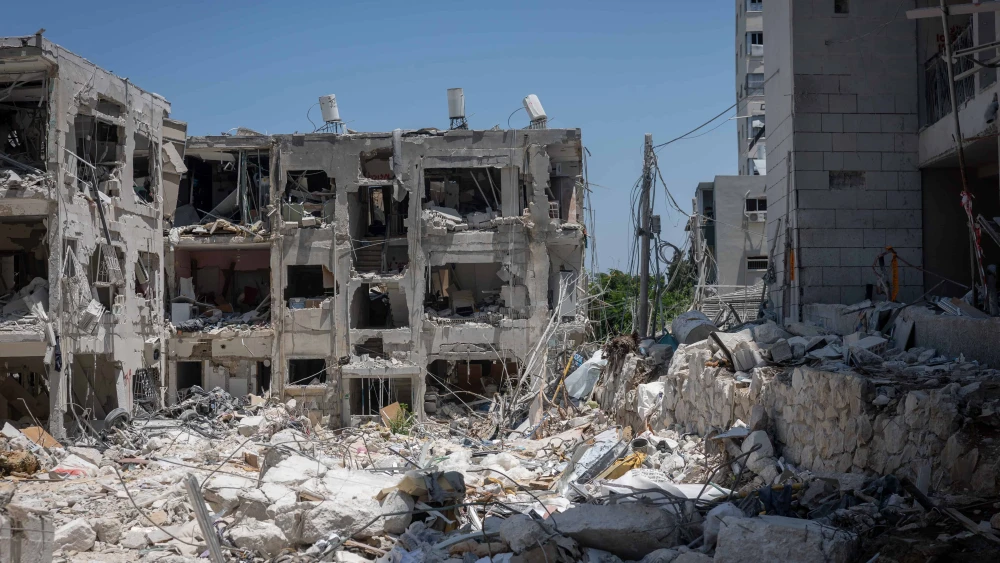
The Israeli government announced on Wednesday that it will continue covering temporary housing costs for civilians whose homes were rendered uninhabitable by Iranian missile strikes, while most other evacuees will lose eligibility for state-funded accommodations after Aug. 1.
“Hotel accommodations, organized and funded by the Compensation Fund [of the Israel Tax Authority] in coordination with local authorities, were intended to provide immediate and secure shelter during the emergency,” the Tax Authority said in a notice to evacuees.
“Now, with stability returning, we—the Compensation Fund and local authorities—are working together to help you return to routine and community life,” the statement added.
Government funding for hotel accommodations will end in less than four weeks, except in exceptional cases, which will be reviewed individually.
For example, if a home remains uninhabitable and cannot be repaired before Aug. 1, and no alternative housing has been secured, or in cases involving special needs—such as medical conditions or complex family circumstances—government agencies will help locate alternative solutions. If necessary, hotel stays may be extended for an additional period.
Thousands of Israelis were evacuated to 92 hotels across the country after Iran launched hundreds of ballistic missiles at Israel during the 12-day war that followed Jerusalem’s June 13 strikes on the Islamic Republic’s nuclear program.
Dozens of projectiles breached Israeli air defenses during the conflict, causing widespread destruction—particularly in the Tel Aviv area—and killing 27 civilians and an off-duty Israel Defense Forces soldier.
The Tax Authority’s Compensation Fund also announced Wednesday that it has paid out 18.5 billion shekels (approximately $5 billion) in damages, having processed 98 percent of the 626,000 claims filed following the recent war.
In related news, Israel’s Channel 12 reported on Wednesday that the coastal city of Bat Yam, just south of Tel Aviv, has begun demolishing buildings that were completely destroyed during the war. According to the report, 16 structures are slated for demolition in the area.