Newsletter
Newsletter Support JNS

Israel to procure armored vehicles from US in $26 million deal

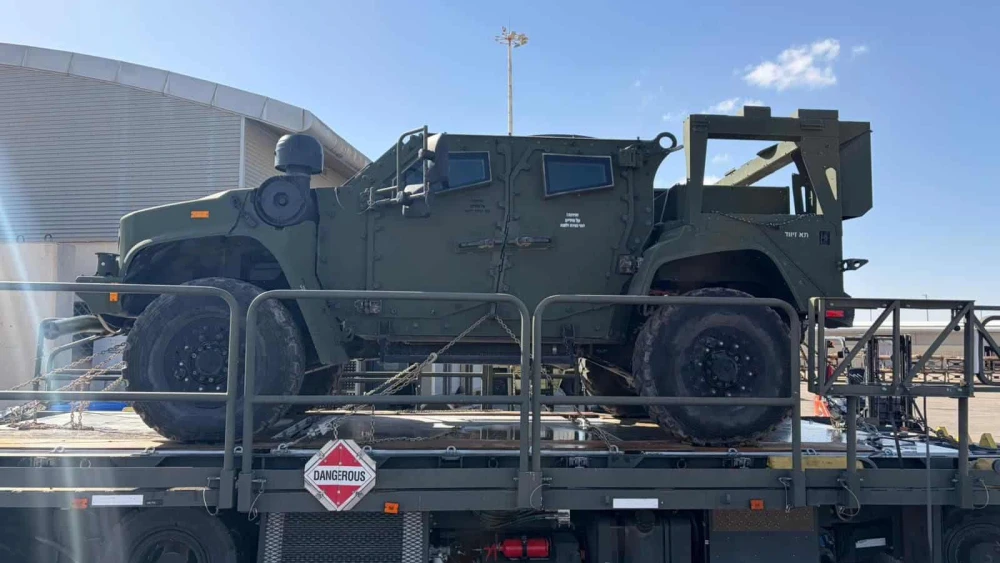
The deal involves dozens of armored tactical mobility vehicles designated for maneuvering ground forces, as well as a full maintenance and sustainment package, according to the Israeli Defense Ministry.

Armored vehicles
Israel is set to acquire Joint Light Tactical Vehicles (JLTV) from the U.S. as part of its comprehensive support for the Israel Defense Forces, the Israel Ministry of Defense said on March 5, 2026. Credit: Israel Ministry of Defense.

The Israeli government is set to acquire Joint Light Tactical Vehicles (JLTV) from the United States as part of its comprehensive support for the ground forces of the Israel Defense Forces, the Israel Defense Ministry said on Thursday.

The ministry, through its mission to the United States, has signed the first phase of the deal, valued at approximately $26 million, the statement read.

The acquisition involves dozens of armored tactical mobility vehicles designated for maneuvering ground forces, as well as a full maintenance and sustainment package, according to the ministry.

This contract is the latest in a series of recent procurement contracts under the strategy led by the ministry to address the IDF’s immediate and long-term operational requirements, the statement added.

The ministry and the Israel Defense Forces completed the reception and unloading of a cargo ship over the weekend, carrying tons of military equipment, including military gear, dozens of Humvees and trucks, the ministry’s spokesperson said on Saturday.

Since the Hamas-led invasion into Israel on Oct. 7, 2023, 1,150 cargo aircraft and 166 ships have arrived in Israel carrying over 130,000 tons of munitions and military equipment, of which over 6,500 tons were delivered in 90 flights and shipments in recent weeks, according to the ministry.

The negotiation was held “in a positive and constructive atmosphere,” said Shehbaz Sharif.
“Israel is fighting the world’s fight, and it is a battle of good vs. evil,” Tzipi Hotovely said
Jerusalem has no territorial ambitions in Lebanon, but it will not withdraw from the security zone and “expose its citizens to Hezbollah’s attacks,” said Gideon Sa’ar.
Western leaders risk repeating pre-WWII mistakes by engaging with the regime in Tehran, said Knesset member Amit Halevi.
The announcement came seven weeks after the Labour Party suffered a defeat in the May 7 local elections.
The weapons systems found in Hezbollah’s underground infrastructure “threatened not only northern Israel, but most of Israel’s coastline.”
Israeli President Isaac Herzog, Knesset Speaker Amir Ohana, Israeli Ambassador to the U.N. Danny Danon, JNS Editor-In-Chief Jonathan S. Tobin, Israeli Prime Minister Benjamin Netanyahu’s adviseer Caroline Glick and leading voices in diplomacy, technology, national security, law, media and faith headline the summit’s second day in Jerusalem.
