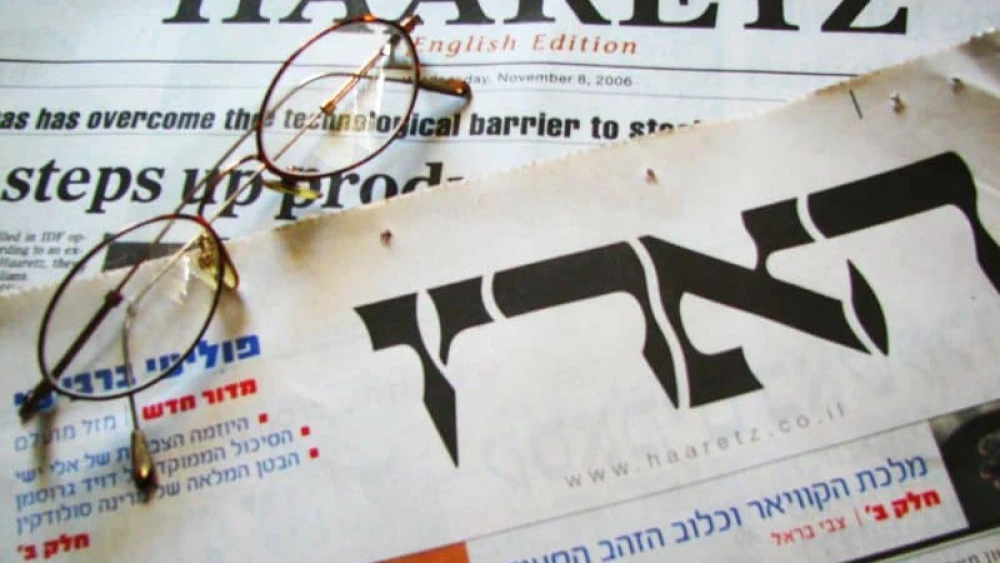
Israeli government ministers on Sunday voted to cut all connection with the left-wing Haaretz daily.
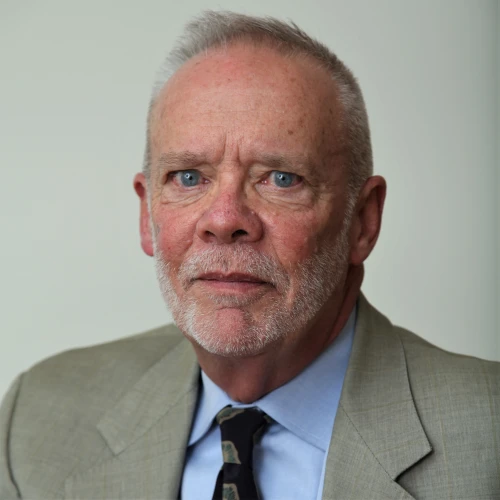
The Cabinet decision came, according to a statement from Communications Minister Shlomo Karhi’s office, in response to “numerous articles that harmed the legitimacy of the State of Israel in the world and its right to self-defense, particularly in light of the recent statements by the publisher of Haaretz, Amos Schocken, who expressed support for terrorism and called for sanctions against the government.”
Karhi explained, “We cannot allow a reality in which the publisher of an official newspaper in the State of Israel calls for sanctions against it and support the state’s enemies in the midst of a war, while international bodies harm the legitimacy of the State of Israel, its right to self-defense, and actually impose sanctions against it and against its leaders.”
At a Haaretz-organized London conference on Oct. 27, Schocken urged that sanctions be imposed on the Jewish state, accused the government of imposing apartheid rule in Judea, Samaria and Gaza, referred to Palestinian terrorists as “freedom fighters” and claimed that the Israel Defense Forces was carrying out a second nakba, or “catastrophe” (the Arab term for the creation of the modern-day State of Israel in 1948).
In response to the remarks, several Israeli government ministries vowed to cancel business ties with Haaretz, including the Foreign, Education, Culture and Sport, and Diaspora Affairs and Combating Antisemitism ministries.
Sunday’s government decision halts all state-paid advertising, state-funded subscriptions and other connections with the newspaper.
Haaretz lost hundreds of subscribers due to Schocken’s remarks, news site Walla reported earlier this month. The financial blow to the paper is “one that has not been seen in many years,” Haaretz stated, according to Walla, adding that during internal meetings there was talk of “a crazy rate of cancellations and a sharp drop in newspaper advertising.”
Meanwhile, Justice Minister Yariv Levin is seeking to advance a bill that would criminalize calls by Israeli citizens for international sanctions against the Jewish state. Under the proposed law, offenders could face up to 20 years in prison for public calls for sanctions against “Israel, its leaders, members of the security forces and Israeli citizens.”
According to Levin, calls for boycotts are “tantamount to encouraging and promoting a move whose actual purpose is the denial of Israel’s right to self-defense. This act is all the more serious when committed during an existential war and while our daughters and sons are being held in inhumane conditions by a murderous terrorist group.”