Newsletter
Newsletter Support JNS

‘Israeli airstrike in Syria targeted Hezbollah, Iranian commanders’

Iranian Revolutionary Guard Corps sources tell Kuwaiti newspaper that Israeli missiles stuck Damascus airport mere minutes after Iranian, Hezbollah and Syrian military commanders met, wounding several of them • Iranian cargo plane crashes near Tehran.

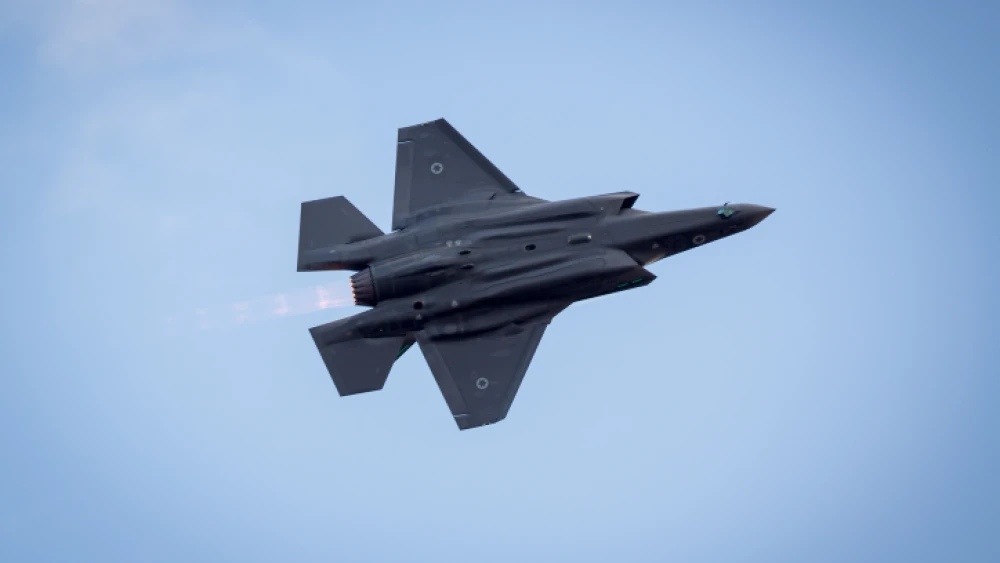
An Israeli Air Force F-35 fighter jet flies during an air show at the Hatzerim Air Base in the Negev Desert, Dec. 29, 2016. Credit: Miriam Alster/Flash90.

The Israeli airstrike on Iranian warehouses in Damascus on Friday was timed to target a meeting of Hezbollah and Iranian Revolutionary Guard Corps commanders who were meeting with Syrian military leaders, the Kuwaiti newspaper Al-Jadira reported on Monday.

Al-Jadira quoted sources in the Revolutionary Guards who said the Syrian, Iranian and Hezbollah commanders had convened to discuss a joint Russian-Turkish plan to attack the Al Qaeda-affiliated jihadist Nusra Front group in Idlib in northwestern Syria.

The sources told the Kuwaiti paper that the strike came moments after the meeting adjourned, and badly wounded two Revolutionary Guard commanders and a number of Hezbollah and Syrian military personnel.

In a highly unusual step, Israeli Prime Minister Benjamin Netanyahu confirmed on Sunday that Israel was responsible for the strike on the Damascus airport.

“Just in the past 36 hours, the IDF struck Iranian targets in Damascus, proving we are more determined than ever to take action against Iran in Syria,” Netanyahu said in the weekly cabinet meeting.

Syrian state media reported the strike and claimed that air defenses intercepted most of the missiles. Hezbollah’s Al-Manar television reported that the attack covered a wider area than usual, ranging from the eastern Damascus suburb of Dmeir to the village of Dimas in the west near the Lebanon border.

Also on Monday, an Iranian cargo plane crashed in the city of Karaj, near Tehran.

The state-run news agency FARS reported that the Boeing 707 had been carrying 16 crew members and 15 bodies had been recovered. The crew engineer reportedly survived and was evacuated to a hospital.

In a draft report delivered to the U.S. president, the commission also called for improved religious accommodations for U.S. service members.
Salah Salem Sarsour, accused of concealing Israeli military court convictions on immigration forms, argued his detention was part of a Trump admin effort to target the pro-Palestinian movement.
CENTCOM stated that the strikes targeted missile, drone and radar facilities after the Islamic Republic attacked a cargo ship in the Strait of Hormuz, calling the assault a violation of the ceasefire.
Now that the primaries are over, “we hope that everyone will come together and be united,” Christine Quinn, chair of the executive committee of the New York State Democratic Party, told JNS.
An Iranian official warned on Friday that the safety of ships passing through the Strait of Hormuz without Iran’s permission “cannot be guaranteed.”
“We have put the train back on the tracks and going in the right direction,” said Yechiel Leiter, Israeli ambassador in Washington. “Final destination? Peace between our two countries.”
Benny Gantz, JNS editor-in-chief Jonathan S. Tobin, Gilad Erdan, Mosab Hassan Yousef, Nissim Black and leading voices in security, diplomacy, media, law and Jewish communal affairs headline the summit’s third day in Jerusalem.