Iran said on Monday that the 60-day negotiating period with the United States had “completely lost its relevance,” while U.S. President Donald Trump reiterated that preventing Tehran from obtaining a nuclear weapon remained his “number one goal.”
“The Islamic Republic of Iran never formulates its policies under pressure, ultimatums or time constraints,” Iranian Foreign Ministry spokesman Esmaeil Baghaei told reporters, according to a translation by the semi-official ISNA news agency.
Baghaei said the June 17 memorandum of understanding between Washington and Tehran provided “merely a 60-day window for talks on two axes, sanctions relief and the nuclear issue, which could be extended if no result was reached.” He claimed the substantive negotiations envisioned under the agreement never began.
Iranian Foreign Minister Abbas Araghchi said on Saturday that Tehran had not decided whether to hold talks with Washington. Qatar and Pakistan were continuing to pass messages between the sides, he said, but stressed “that does not mean negotiations.”
The United States, meanwhile, has continued its military and economic pressure on Tehran. “The number one goal is, and always will be, that Iran cannot have, in any way, shape, or form, a nuclear weapon,” Trump wrote on Monday.
Last week, he said Washington would “pretty soon” declare the Strait of Hormuz “a territory of the United States.”
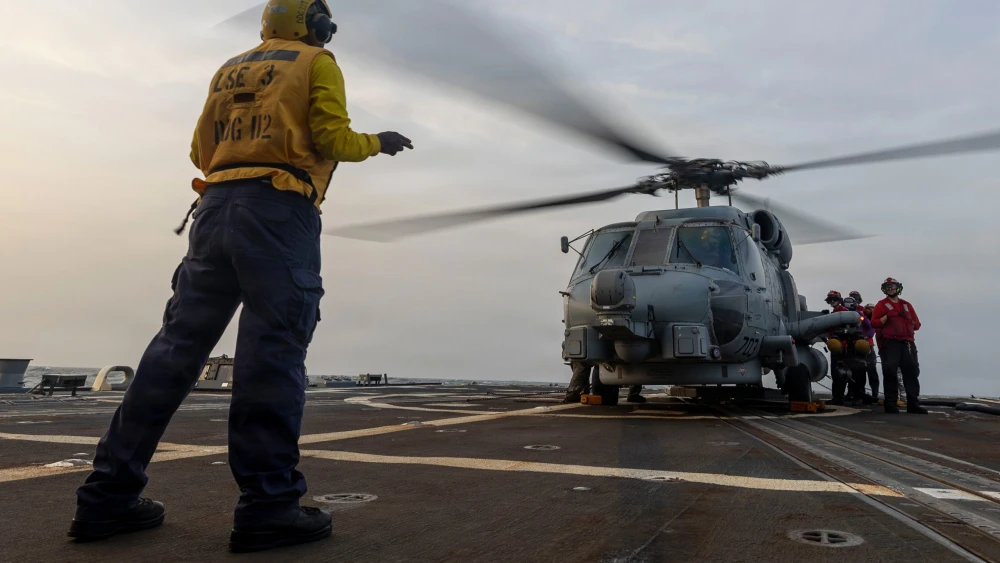
U.S. Secretary of Defense Pete Hegseth said on Friday that the U.S. Navy could maintain its blockade of Iran “indefinitely,” while U.S. Treasury Secretary Scott Bessent said the administration was preparing additional measures aimed at further isolating Tehran economically.
According to a Wall Street Journal report on Sunday, Iran spent the two months since signing the memorandum preparing for a wider conflict. Tehran strengthened the Islamic Revolutionary Guard Corps’ control over the country’s conventional armed forces, increased missile and drone production and coordinated plans for expanded attacks by Iranian-backed terrorist groups across the region, according to the report.
Iranian military officials also issued a series of escalating statements on Sunday. Army chief Amir Hatami announced a $30,000 bounty for killing or capturing U.S. soldiers, with the reward doubled if the act was carried out by a woman, according to Iran’s state-run IRNA news agency. Hatami said the offer followed a “large number of requests” to fund such actions.
Separately, Iran’s military General Staff said Tehran would not retreat from the “legitimate demands of the nation and the Leader” until “the rights of the Iranian nation are upheld and the enemy surrenders.”
Baghaei said Monday that Iran’s armed forces remained ready as the diplomatic window expired.
“The primary focus of the entire country is on managing current affairs,” he said, “while simultaneously the armed forces are closely monitoring all movements with full vigilance.”