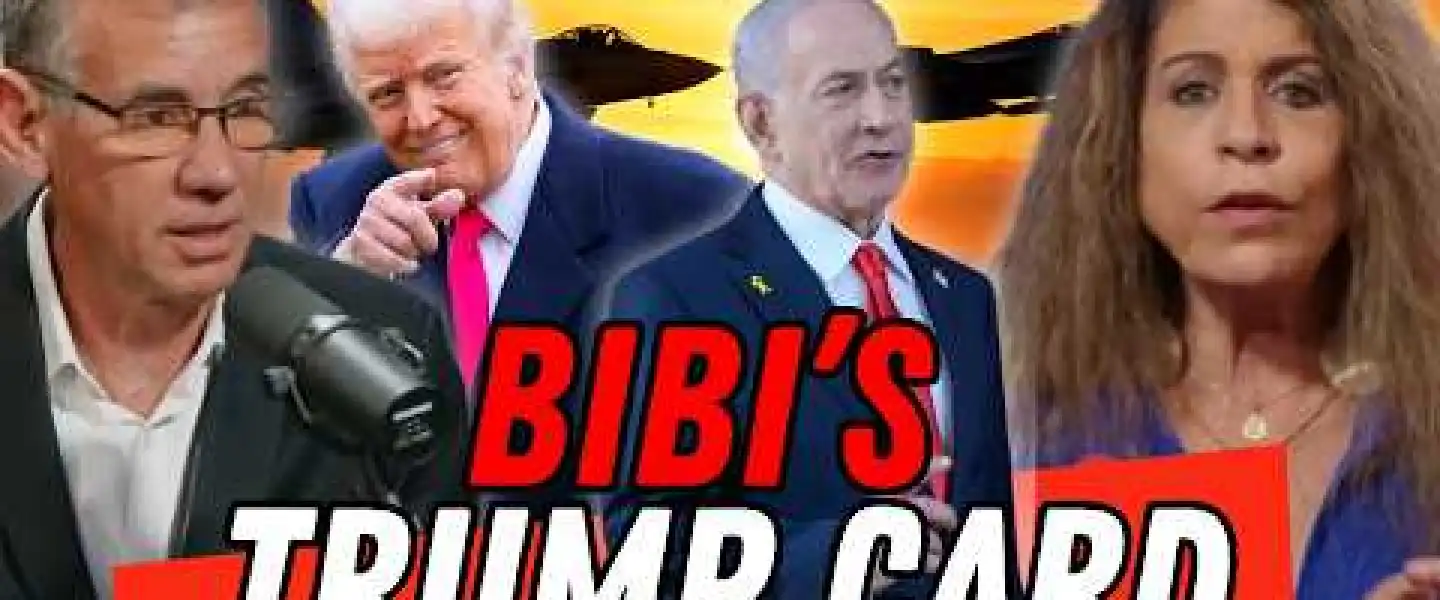
The main question to be asked about President Donald Trump’s foreign policy is not the immediate one about whether or when the United States will attack Iran, important though that may be. Rather, says JNS editor-in-chief Jonathan Tobin, it’s understanding that far from being isolationist, Trump and his approach to world matters focus on the selective use of force when perceived to be in America’s direct interest.
Tobin is joined in this week’s episode of “Think Twice” by veteran diplomat and Tikvah Fund head Elliott Abrams. He believes that a negotiated deal between the United States and Iran that might prevent a military conflict is highly unlikely. Abrams asserts that after the severe losses suffered during last year’s 12-day war on Iran by Israel and the United States, Trump thought Tehran understood that it was in no position to avoid making real concessions on its nuclear program and other issues. But the Iranians are clearly more worried about looking weak in the eyes of a restive population.
The Islamists are also, Abrams says, much like the Palestinians in their thinking about conflict. They believe that demonstrating a willingness to be steadfast and continue the war against America and Israel is vital to maintaining their ideological purpose, despite it not being in their interests to do so.
On the other hand, Abrams points out that a failure on Trump’s part in following through on his threats against Iran and his promise of help to the Iranian people will have serious consequences for U.S. foreign policy. Trump also cannot afford to look weak in the eyes of America’s adversaries.
As for the situation in Gaza in the aftermath of the ceasefire that ended the post-Oct. 7 war with Hamas, Abrams says that Trump’s Board of Peace is “frankly absurd” and “won’t achieve anything.”
The situation in which Hamas continues to dig in and strengthen its military position in the portion of Gaza it still controls while Israel attacks and seeks to weaken the Islamists, will likely continue. At least, it will until after the next election, when Jerusalem decides that it can no longer tolerate a Hamas state in Gaza, even if it is smaller and not as militarily strong as the one that existed before Oct. 7.
Abrams also discussed the surge in antisemitism in the United States, particularly on the right. He said Trump and Vice President JD Vance are in a position to do something about it. But will they? Meanwhile, the Tikvah Fund leader said American Jewry should concentrate more on strengthening its own community than playing defense against haters.
Listen/Subscribe to weekly episodes on Spotify, Apple Podcasts, YouTube Music, iHeart Radio or wherever you listen to your podcasts.
Watch new episodes every week by subscribing to the JNS YouTube Channel.