


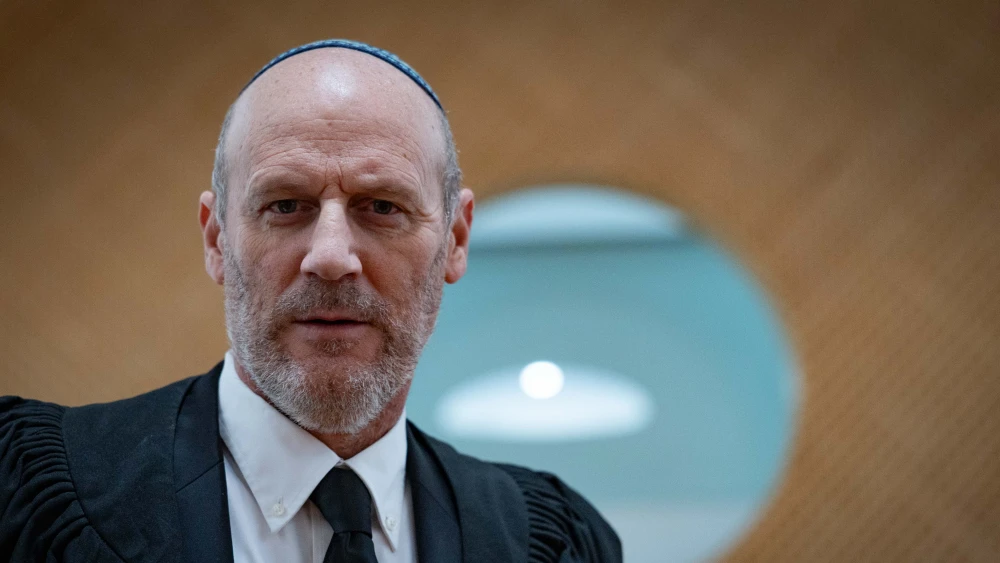
Israeli Knesset Speaker Amir Ohana on Sunday rejected a recommendation by judges of the Supreme Court, sitting as the High Court of Justice, that a repeat election be held for the state comptroller amid allegations that the secrecy of the ballot was violated in the Knesset vote that selected Michael Rabello on June 3.
“The Knesset has already spoken,” Ohana tweeted, adding in an attached statement that he would not order a repeat vote. “For all the reasons detailed in the preliminary response to the petition and during the hearing,” he said, he had decided against holding another ballot.
The court’s suggestion came last Thursday during a hearing on petitions filed against Rabello’s appointment. Deputy court president Justice Noam Sohlberg said the panel was effectively urging a procedural remedy that would not interfere with parliamentary discretion. “In simple Hebrew: Do it again,” he said, referring to the possibility of a new vote to remove doubts about its integrity.
Sohlberg, together with justices Gila Kanfi-Steinitz and Ruth Ronen, gave the Knesset, Israeli Prime Minister Benjamin Netanyahu and Rabello—Netanyahu’s longtime attorney—until Monday to respond. The judges warned that failure to do so could result in a conditional order against the appointment.
At the center of the dispute are allegations that at least seven coalition members filmed themselves voting for Rabello. According to the petitions, the MKs acted on instructions from senior Likud officials who wanted proof of loyalty during the vote, effectively undermining the legal requirement that the election be conducted by secret ballot.
The petitioners argued that this conduct compromised the integrity of the process. They contended that once votes are recorded, even informally, the principle of secrecy is breached and the validity of the election is called into question.
The State Comptroller’s Office is Israel’s independent oversight authority, responsible for auditing government ministries and public agencies, evaluating policy implementation and reviewing state preparedness. The office also investigates systemic failures and publishes public reports on government performance.
On June 3, the Knesset selected Rabello over retired Supreme Court Justice Yosef Elron by a vote of 61–57. The election was marked by procedural controversy. In the second round, Likud lawmakers reportedly instructed Knesset members to film their ballots while voting. MK Kati Sheetrit was seen recording her vote, prompting objections from opposition members who demanded the results be invalidated. Ohana temporarily halted the process to consult legal advisers before ordering a repeat vote that day. Coalition lawmakers suspected of supporting Elron were later summoned to the Prime Minister’s Office.
During the hearing, the court also criticized aspects of the conduct in the Knesset chamber, saying that “there is currently an unwanted cloud” over the vote and that “some of the votes are problematic on their face,” particularly given claims that MKs acted contrary to guidance from the Knesset legal adviser by filming their ballots.
In response to the petitions, the Knesset argued that they should be dismissed, stating that “no real evidence was presented in real time or in the petitions that the jurors were required to record the vote.” However, the Knesset legal adviser warned that if such instructions had been issued, they could constitute “a very serious action that could have real implications for the validity of the entire election.”
Following Ohana’s decision, the matter now returns to the High Court, which will determine whether the vote can stand or whether Rabello’s appointment should be invalidated.
Outgoing State Comptroller Matanyahu Engelman’s seven-year term ends on July 4.


