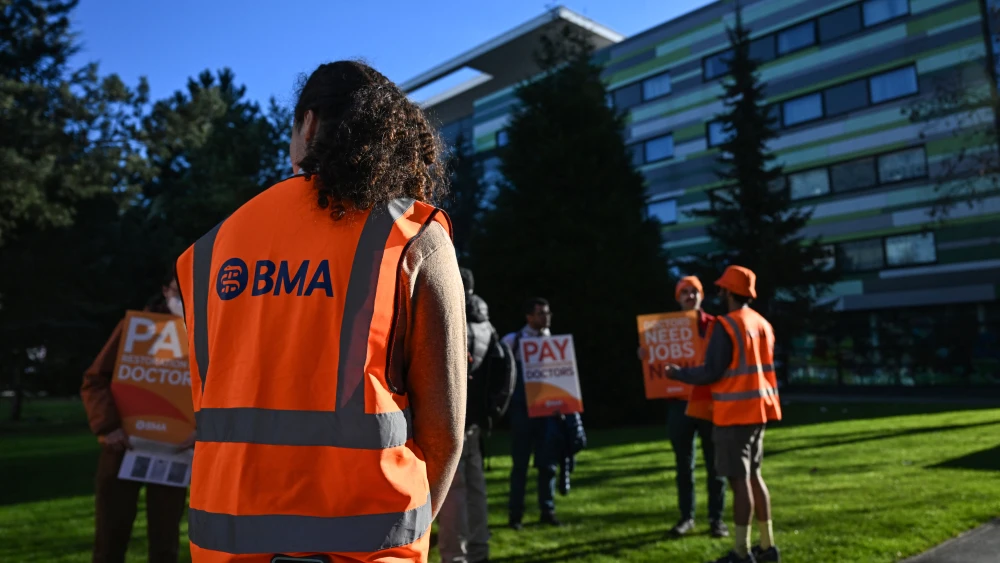
The British Medical Association on Tuesday called on the government to “revoke” the British National Health Service’s adoption of the International Holocaust Remembrance Alliance definition of antisemitism, arguing it silences debate about Israel’s actions.
The call, issued in a resolution passed by a majority of BMA members at a vote during the organization’s annual conference in Brighton, follows the NHS adoption of the definition in October amid claims it has an antisemitism problem.
Anti-Israel activists oppose the IHRA definition because it lists some examples of demonization of Israel and singling it out for criticism as potentially antisemitic.
According to the resolution, the definition’s adoption could have a “chilling effect on legitimate political speech and professional expression of ethical concerns about Israel’s actions in Palestine.”
The BMA, which serves as a trade union for doctors and medical students, should “lobby the government and NHS England to revoke the mandatory adoption of the IHRA definition across the NHS until proper safeguards, consultation processes, and clarity on implementation are established,” the text says.
A review published earlier this month by John Mann, the British government’s independent advisor on antisemitism, found “routine ostracism” of Jewish staff and patients within the NHS, the publicly funded healthcare system of the United Kingdom.
The Jewish Medical Association of the United Kingdom, a body that represents Jewish medical professionals, said on Thursday that it was “highly alarmed that a motion calling for the rejection of the world’s most widely accepted definition of antisemitism was passed at the British Medical Association’s Annual Representative Meeting.” This year was “the third consecutive year that several motions identified as hostile to Jews have been included” in the BMA’s agenda, the Jewish group said.
The U.K. Holocaust Educational Trust called the resolution “outrageous,” adding: “The IHRA definition does not silence free speech or prevent criticism of Israel. What it does is draw a clear line between legitimate political debate and antisemitism.”
The International Holocaust Remembrance Alliance is an intergovernmental commemoration committee with 35 member states, including 25 E.U. member states and the United Kingdom. IHRA adopted the definition in 2016, three years after the European Union’s agency for fighting racism dropped a very similar text following lobbying by anti-Israel activists.