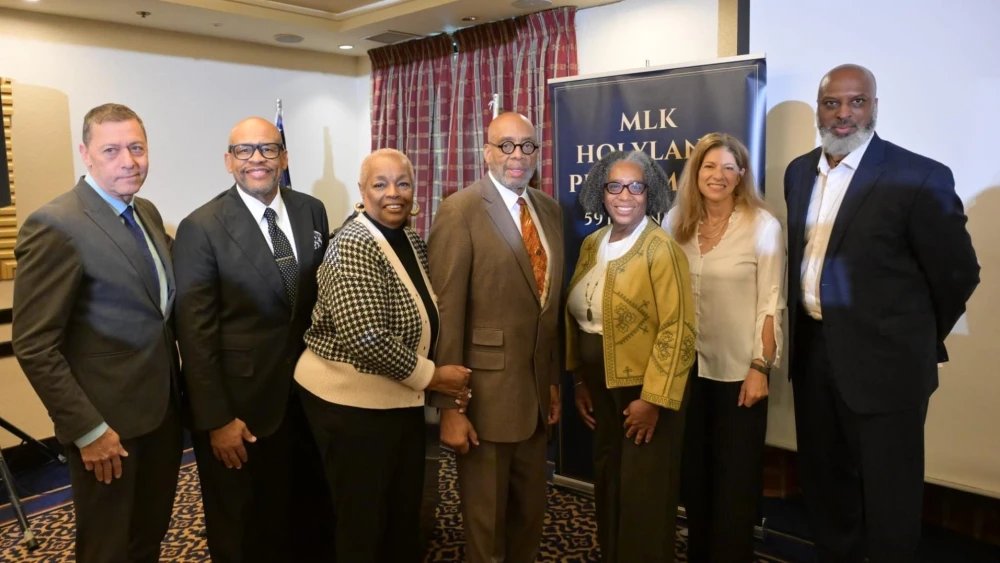
Hundreds of African American pastors began a pilgrimage to the Holy Land on Thursday, seeking to revive historic Black-Jewish relations in keeping with Martin Luther King Jr.’s vision of interfaith solidarity.
The visit comes amid a complex history between American Jews and the African American community marked by deep historical alliances and persistent, modern strains.
The tour, named “Unfinished Business,” commemorates a trip to the Holy Land that Martin Luther King Jr. had planned for November 1967, which was first delayed by the Six-Day War and then prevented by his assassination in April 1968.
The eight-day trip, primarily funded by the Israeli Foreign Ministry, will also be attended by scores of Christian leaders from 10 African countries, some 30 American rabbis arriving to mark the Jewish-Christian partnership, and religious influencers.
The American pastors heading the delegation said Wednesday that they want to highlight the biblical roots of their shared Judeo-Christian tradition, which they feel politics has obscured.
“The whole world is dying in lack of knowledge of its biblical foundation and relationship with Israel,” Pastor Dumisani Washington of North Carolina, who is leading the delegation, told JNS on Wednesday.
He said that tension between the African American community and American Jews draws especial scrutiny because of their historic relationship.
The pastor noted that because African Americans attend religious services at higher rates than any other demographic group, they represent a vital opportunity for faith-based outreach rooted in biblical connections.
The ongoing political tensions between the groups were on full display this week when Bishop J. Drew Sheard, one of the most influential religious leaders in the Church of God in Christ (COGIC), the largest predominantly black Pentecostal denomination in the United States, hosted Michigan senate nominee Abdul El-Sayed at the Greater Emmanuel Institutional Church of God in Christ in Detroit alongside Rep. Jim Clyburn (D-S.C.), two days before the Nov. 3 midterm elections.
In contrast, the Black Christian Leadership Council on Israel, the national organization of pastors that organized the pilgrimage to the Holy Land, last month categorically rejected an assertion made by former U.S. President Barack Obama that Israel “took land off people,” saying that claim was a dangerous omission of the Jewish people’s three-thousand-year-old connection to the Holy Land.