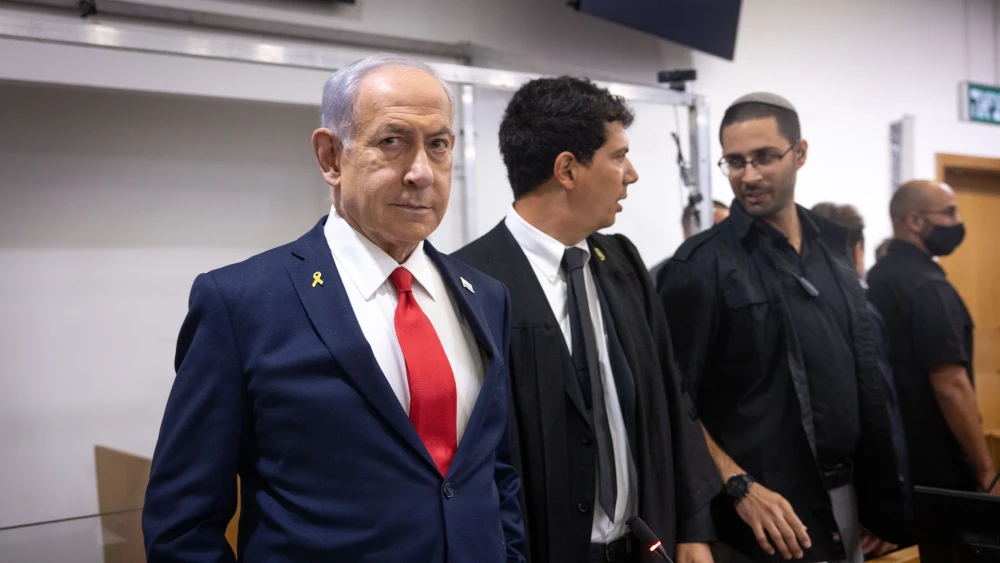
Israeli prosecutors on Tuesday completed the final cross-examination of Israeli Prime Minister Benjamin Netanyahu in his corruption trial, ending more than a year of questioning.
“I have no more questions,” Yoni Tadmor of the State Attorney’s Office told judges on Tuesday afternoon.
Netanyahu is expected to take the stand for several more days for re-examination by his defense attorneys before concluding his testimony.
The prime minister’s testimony before the Jerusalem District Court began in December 2024 and has spanned nearly 100 hearings, according to Hebrew media.
Judges on Tuesday rejected a request by Netanyahu’s defense team to shorten the hearing because of regional security tensions, and proceedings continued as scheduled.
The final day of cross-examination was reportedly marked by heated exchanges, with Netanyahu at times raising his voice and sharply criticizing prosecutors.
“There has never been anything like what you’ve done to me! It’s disgraceful,” the premier exclaimed at one point. “What you’ve done to me, you haven’t done to any other public official! You’ve dragged everyone into this web of intimidation and terror.”
“What you’ve done here is try to bring down Netanyahu—you didn’t catch anything,” he told Tadmor. “What we have here is political persecution, just like in a police state!”
The prime minister faces corruption charges in three separate cases—Cases 1000 and 2000 (the charge is “breach of trust” in both instances), and Case 4000 (bribery, fraud and breach of trust).
Netanyahu submitted a request for a pardon to Israeli President Isaac Herzog on Nov. 30, 2025, arguing that it would enable him “to devote all of his time, abilities and energies to advancing the State of Israel in these critical times, and to address the challenges and opportunities ahead.”
Herzog has faced pressure to grant a pardon from U.S. President Donald Trump.
On March 5, Trump said of Herzog, “I think the people of Israel should really shame him. He’s disgraceful for not giving it,” referring to a pardon. Herzog “promised me five times that he would give Bibi a pardon,” Trump claimed, adding that he would refuse to meet with the Israeli president until the pardon was granted.
On Feb. 12, Trump said that the Israeli president “should be ashamed of himself,” adding that Herzog had been holding the issue over Netanyahu “for a year” and should stop using it as leverage. Before that, on Oct. 13 of last year, while addressing the Knesset, Trump called on Herzog to grant a pardon. Trump followed that up with a letter to the Israeli president on Nov. 12.