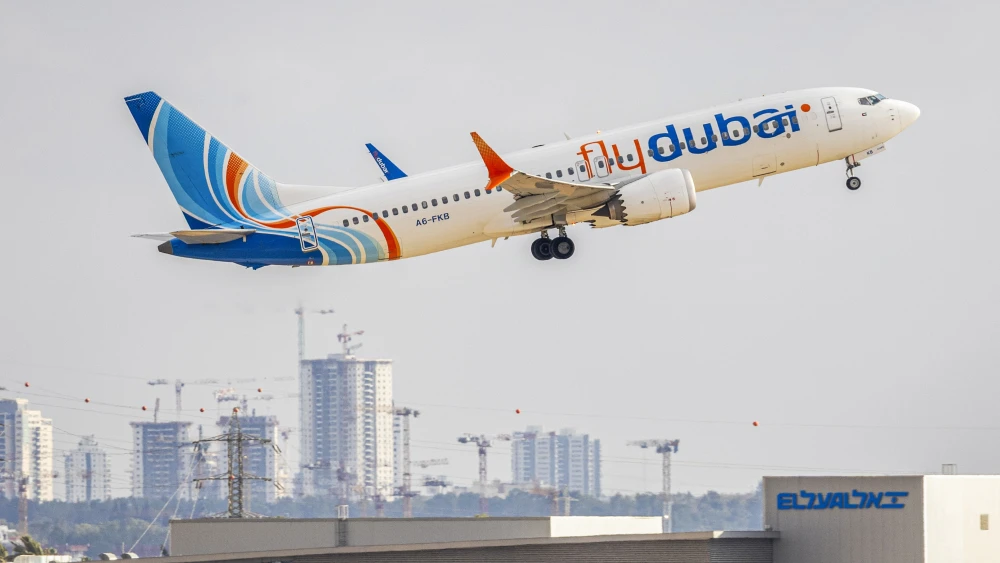
Almost seven weeks after the thwarted terrorist attack on a flydubai flight to Tel Aviv, a delegation from Israel’s Transport Ministry departed on Sunday for the United Arab Emirates for talks on resuming flights, the ministry said.
Service between Tel Aviv and Dubai has been suspended since the attack.
The delegation, led by Transport Ministry director-general Moshe Ben Zaken, will be briefed on the findings of the Emirati investigation into the Sept. 30 attack and will meet with senior officials at Dubai International Airport.
The meetings on Monday are due to discuss both the resumption of flydubai flights to Tel Aviv and the renewal of service by Israeli carriers to the Gulf state.
The Emirati carrier, which used to operate 10 daily flights to Tel Aviv, suspended service following an Israeli request to halt its operations after the attempted hijacking. Reservations remain unavailable until the end of the year.
Israeli carriers were previously scheduled to resume service to Dubai in November, but they have been unable to resume flights because of a disagreement over security arrangements at the Dubai airport.
Israeli security officials are reportedly seeking to station their own security officials in Dubai, as they do in many countries, and to install X-ray screening stations at the airport to check luggage being loaded on the planes.
Etihad Airways is currently the only airline flying between the United Arab Emirates to Israel, and recently tripled its Abu Dhabi-Tel Aviv schedule to six daily flights.
The two Emirati carriers gained international prominence for flying to Israel almost uninterrupted throughout the three-year regional war, with the United Arab Emirates serving as a hub for onward travel when U.S. and European carriers were not flying to Israel.
Israel’s Transport Ministry acknowledged last month that it had failed to vet foreign flight crews arriving in the country, and relied entirely on airlines to confirm their crews had passed background security checks.
The admission came after it emerged that the flydubai Omani co-pilot who attacked the captain in the cockpit with an emergency ax on Sept. 30 had been allowed to fly the commercial route in violation of bilateral agreements, which stipulate that flight crews must come from countries that maintain diplomatic relations with Israel.
Two senior Israeli Transport Ministry officials were questioned by police this month over the security lapses that came to light following the failed hijacking.
The move came after the ministry and the security establishment have faced harsh criticism for their failures ahead of the attack, which was foiled midair by the captain and passengers.
Israel and the United Arab Emirates, which made peace as part of the landmark 2020 Abraham Accord reached during the first Trump administration, maintain close ties.