


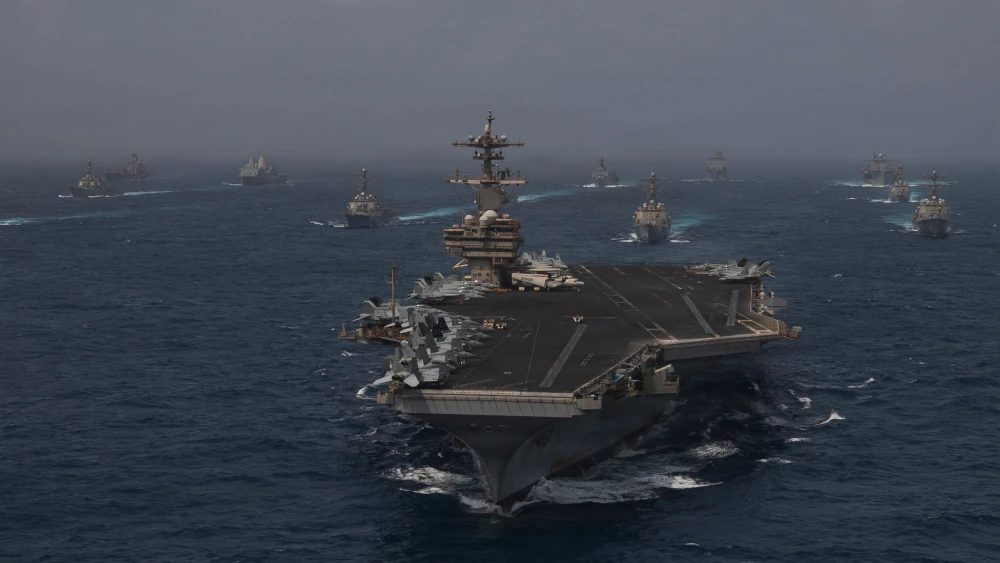
U.S. Central Command completed its 12th consecutive night of strikes on Iran overnight Wednesday, targeting maritime capabilities, missile and drone storage facilities, coastal surveillance sites, and air defense assets.
“The strikes further degrade Iran’s ability to attack civilian mariners and commercial vessels,” CENTCOM said in a statement.
The U.S. military said that this month it has hit dozens of Iranian military sites on land and resumed the naval blockade on the Islamic Republic, redirecting nine commercial vessels and disabling another to prevent their entry or departure from Iranian ports.
— U.S. Central Command (@CENTCOM) July 23, 2026
The Islamic Revolutionary Guard Corps said on Thursday morning that it had prevented three oil tankers from transiting the Strait of Hormuz, stressing that the choke point is under its control, AFP reported.
“Three oil tankers ... were trying to pass through the mine-laid route south of the Strait of Hormuz, but after one of them exploded and caught fire, the other two quickly turned around and turned back,” the IRGC was quoted saying by Iranian state media, according to AFP.
Meanwhile, President Donald Trump on Wednesday said that Tehran is not ready to seal an accord with Washington, but “They’ll be ready very soon.
“This skirmish that we have with the Islamic Republic of Iran, and I call it that because let me tell you, they’re getting hit so hard, and they want to make a deal. But I say they’re not ready to make a deal because every time they make a deal, they want to change it,” the U.S. president said at a rally at a high school in Georgia.
.@POTUS on the Islamic Republic of Iran: "They're getting hit so hard, and they want to make a deal — but I say they're not ready to make a deal because every time they make a deal they want to change it and everything. They're not ready." pic.twitter.com/JBbdi5BXMD
— Rapid Response 47 (@RapidResponse47) July 22, 2026
Earlier in the day, Trump threatened to strike critical Iranian infrastructure should the Islamic Republic continue to target vessels in the Strait of Hormuz.
“From this point forward, any time the Islamic Republic of Iran shoots at a ship in the Strait of Hormuz, whether it be by missile, rocket, drone or another device or weapon, the United States will bomb and destroy one bridge or power plant, including those located next to, or in, the capital city of Tehran,” Trump wrote on Truth Social.
Asked whether Israel should enter the fray, Likud lawmaker Tally Gotliv told JNS on Thursday, “Israel is prepared for every scenario. Israel demonstrated aerial, intelligence and military superiority against Iran, and it will act as necessary to ensure our security and resilience without announcing its intentions in advance.
“This is not a question that should be answered openly, because when we attack, how we attack and why we attack are matters of strategy. Wars are fought through strategy, not by declaring plans publicly,” she said.



