
The Iranian nuclear program has not recovered from the devastating blows it absorbed during successive military campaigns by Israel and the United States. Yet, intelligence assessments indicate that Tehran remains deeply committed to clandestinely reconstituting its nuclear capabilities in the long term.
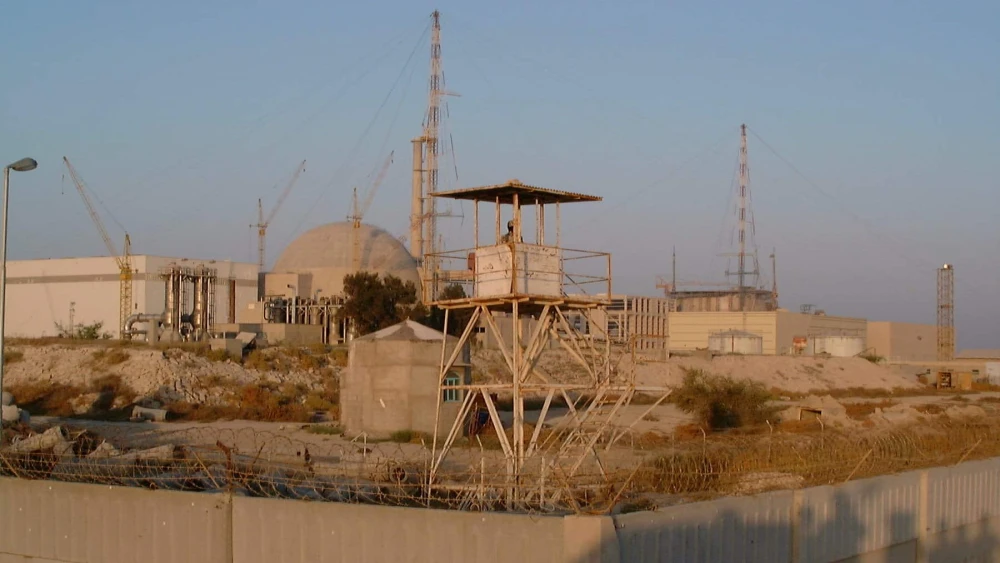
Recent Wall Street Journal and CNN reports, citing Israeli intelligence estimates shared with Washington, said Iranian authorities secretly transferred thousands of uranium-enrichment centrifuges into deeply buried tunnels at the Kuh-e Kolang Gaz La facility (commonly known as Pickaxe Mountain) located less than two kilometers south of the Natanz nuclear complex, which was struck in the 2025 war. Some of the reports claimed Iran also transferred a portion of its uranium into the underground site.
The reports come as tensions flare across the Persian Gulf and the Strait of Hormuz, prompting U.S. President Donald Trump to issue stark warnings that American military forces are prepared to strike the heavily fortified site under the granite Pickaxe Mountain.
Kupperwasser’s assessment
Brig. Gen. (res.) Yossi Kuperwasser, head of the Jerusalem Institute for Security and Strategy and former head of the Research and Assessment Division of Israel’s Military Intelligence, assessed that the cumulative kinetic blows delivered during the two Iran wars, particularly “Operation Rising Lion,” have severely degraded Iran’s nuclear infrastructure across multiple vectors.
“What we need to understand is that the Iranian nuclear program was hit very hard in both operations, mainly in ‘Rising Lion’ and then once again in ‘Roaring Lion’,” Kuperwasser told JNS.
The devastation extended far beyond primary enrichment sites, crippling vital support networks essential for weaponization and missile production, he added.
“All these strikes caused enormous damage to the Iranian nuclear program, both to the uranium enrichment array, to the centrifuge array, to the launch array, to the weaponization, including the attack on the Taleghan-2 site [a nuclear weapons research facility at Parchin], and additional facilities in Parchin and other areas,” Kuperwasser explained.
“Enormous damage was caused to the Iranian nuclear program, and also to the ballistic missiles that are part of the Iranian nuclear program. The ability to produce new missiles was damaged,” Kuperwasser noted. “Another component that was damaged very hard is the uranium conversion facility at Isfahan. It was essentially destroyed,” said Kuperwasser.
Since then, he said, “very little has been done in the Iranian nuclear program.”
The Washington-based Institute for Science and International Security (ISIS) has identified activities in some of the facilities, “mainly in this facility of Pickaxe Mountain, which is under construction,” he said.
The construction at Pickaxe Mountain began in the wake of previous sabotage incidents at Natanz, and the new site is designed specifically to provide robust subterranean shielding against aerial bombardment, though not against sabotage operations from within Iran. “Sabotage can also happen 100 meters underground,” said Kuperwasser.
Iran continues to try to complete construction of the Pickaxe Mountain facility, and may have transferred centrifuges there, he cautioned.
“They may exploit this situation to enrich the uranium entirely for military purposes. Even then it will take them a very long time until they reach nuclear weapons production, because the weaponization facilities were also badly damaged, and the conversion facility was damaged hard,” he added. It is also possible that the Iranians still cannot regain access to the enriched material stuck underground at multiple sites under debris.
Despite the general devastation of the Iranian nuclear program, the activity at Pickaxe Mountain demonstrates that Iran is still committed, from its perspective, to rehabilitate the program and try to reach nuclear weapons, he added.
‘Decades of deception’
Jonathan Ruhe, a fellow at Washington-based Jewish Institute for National Security of America, told JNS that Iran has spent years preparing Pickaxe Mountain “as its main backup option for enrichment-related activities, long before Israel-U.S. airstrikes on Fordow, Natanz and Isfahan. Recent efforts to fortify the site only reinforce these concerns.”
Ruhe emphasized that Western defense planners must evaluate Tehran’s actions through the lens of decades-long patterns of deception.
“American and Israeli planners should assume Iran intends to reconstitute key activities clandestinely, including centrifuge manufacturing and storage, as well as uranium conversion, enrichment, stockpiling and metallurgy,” Ruhe argued. “This would be entirely in keeping with three decades of Iranian behavior, where its nuclear program always has covert subterranean dimensions.”
Notably, he added, International Atomic Energy Agency director Rafael Grossi has consistently said that his inspectors “cannot fully account for Iran’s uranium stockpiles, centrifuges, and related capabilities,” even before the two Iran wars.
“Two things are equally plausible right now. On one hand, Iran’s nuclear program has been set back significantly in three rounds of conflict since October 2024, and it likely cannot restore or salvage enrichment sites that were severely damaged in those conflicts,” Ruhe assessed. “But to borrow President Trump’s terms, the program has not been ‘obliterated,’ and securing the ‘nuclear dust’ at Isfahan does not solve this larger problem. Iran has spent decades building this program to survive military attacks.
“The real question is not, ‘Can Iran rebuild?’ but rather, ‘How quickly?’ and ‘Can we detect it in time?’” said Ruhe.
‘What to Know About Pickaxe Mountain’
In a report titled “What to Know About Pickaxe Mountain,” published on July 14 by the Institute for Science and International Security, which includes high-resolution satellite imagery, ISIS assessed that it remains unclear whether the site is operational, adding that the site could be vulnerable to deep earth-penetrating weapons via aerial attacks.
An earlier report on July 10, titled “Repair and Rehabilitation Activity Identified at Taleghan 2,” examined satellite imagery of Taleghan-2, the buried nuclear weapons R&D facility within the Parchin Military Complex, following earlier strikes. It found that Iran has moved on from initial damage assessment and debris removal into a phase of repair and reconstruction, including work at the three impact holes over the underground hall, more durable sealing of those holes, and additional concrete hardening over the facility.
On June 8, the Institute assessed that the Fordow underground enrichment plant had been “largely destroyed” during the June 2025 conflict, eliminating its ability to enrich uranium and rendering its centrifuges inoperable, and stated that there have been no indications in satellite imagery that the underground facility is being rebuilt or operating. However, some above-ground activity had been noticed.
On May 7, ISIS published its “Comprehensive Analysis of Nuclear Facilities Targeted During the Second Phase of the Iran War” imagery report. The report concluded that a total of nine to 12 sites involved in developing and building nuclear weapons had been targeted across both wars, and that the second-conflict attacks this year “have further set back Iran’s ability to make nuclear weapons.”
Recent American media reports citing intelligence community findings that the second Iran war “did not set back timelines for Iran to build nuclear weapons do not accord with the visible damage of nuclear weaponization facilities and require both more explanation and scrutiny,” the ISIS report added.