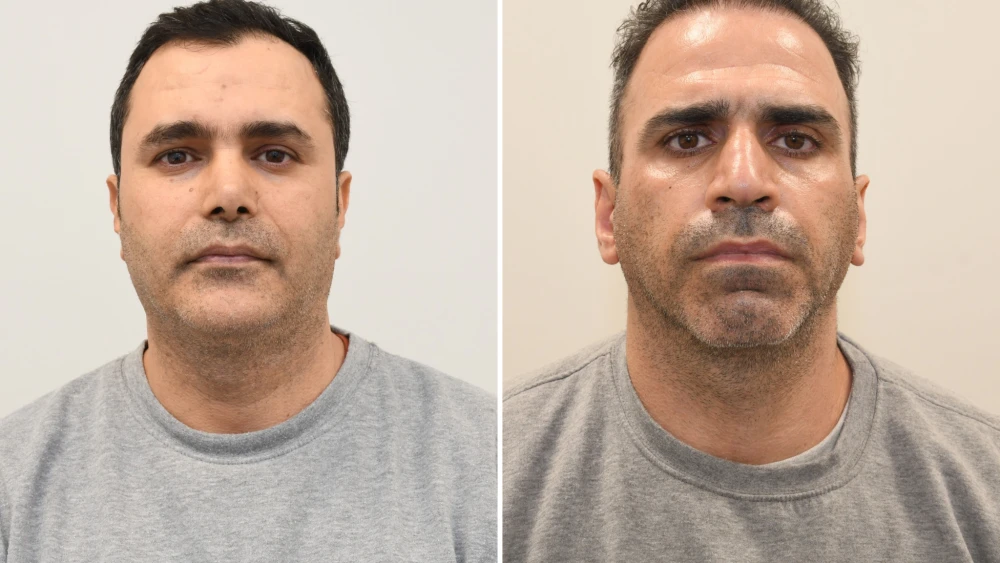
Two Iranian men who spied on journalists for a news outlet banned by the Islamic regime also spied on the CEO of U.K. Lawyers for Israel (UKLFI).
Mostafa Sepahvand, 41, and Farhad Javadi Manesh, 46, were found guilty on Nov. 12 of working for Iran. They were convicted of assisting a foreign intelligence service, contrary to the National Security Act 2023, following a six-week trial at Woolwich Crown Court.
While it is understandable why they targeted two journalists highly critical of the Islamic regime, it is less clear why UKLFI’s Chief Executive Jonathan Turner was on their radar.
“I don’t know why. There has been quite a lot of publicity about our efforts to counter false allegations against Israel and to prevent support for Hamas and other terrorist organizations that seek to destroy Israel,” Turner told JNS.
UKLFI provides legal support to counter efforts to undermine or delegitimize Israel, assists university students facing antisemitism and hate speech and builds networks among like-minded lawyers and organizations internationally.
The anti-regime journalists, Mojtaba Pourmohsen and Kambiz Hosseini, faced the threat of serious violence. In messages to Iran about one target, Sepahvand spoke of “finishing him off.” He was promised £150,000 from his contacts in the Islamic Revolutionary Guard Corps (IRGC) to do the job, the Crown Prosecution Service (CPS) said. The United Kingdom officially designated the IRGC a terror group and banned it on July 13, 2026.
One of the targets had already left his home and moved into a hotel in west London out of security concerns, CPS said. Photographs, online searches and addresses on Sepahvand’s mobile phone showed that he was searching for information about that target.
“It was alarming to me and I think it’s fair to say that my wife was considerably more alarmed than I was. I was rather comforted from what I gathered from the police that their nastiness was matched by their incompetence,” Turner told London’s The Times on Nov. 12.
Sepahvand was a criminal in his native country. He fled Iran after 32 robberies. His Iranian handlers, named Haji and Amin, offered him money and clemency in exchange for locating Turner and the Iranian journalists, the paper reported.
Turner said, “We took some advice about having better security and made further efforts to have our address removed from any public records but apart from that we have just carried on and hoped for the best.”
He thanked the police for catching the culprits and “all their other efforts to protect the Jewish community in Britain.”
However, Turner told The Times, “I think Britain is becoming increasingly unsafe for the Jewish community, and frankly, I’m rather dubious that there is a future for the Jewish community in the UK. I have felt this for quite some time already. I think that concern is increasingly widespread in the Jewish community.”