Newsletter
Newsletter Support JNS

Iran’s Revolutionary Guards begin recruiting 12-year-olds

Children are being enrolled for checkpoint duty and logistics.

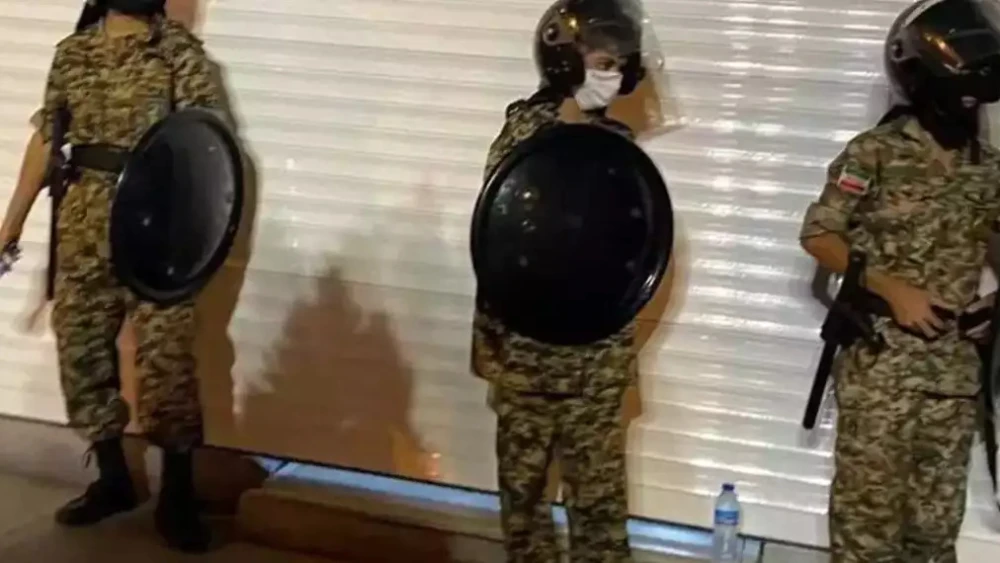
Minors serving in the Basij forces of the Islamic Revolutionary Guard Corps. Credit: Iran International.
Minors serving in the Islamic Revolutionary Guard Corps’ Basij forces. Credit: Iran International.

Iran’s Islamic Revolutionary Guard Corps has lowered the minimum age for participation in war-support roles to 12, a senior official acknowledged on state television, in remarks cited by the Iran International news channel.

Rahim Nadali, a cultural official in the IRGC’s Tehran branch, said an initiative called “For Iran” has been recruiting participants to assist in activities such as patrols, checkpoints and logistics. According to him, most of the minors being recruited are being directed to the Basij paramilitary militia, which is responsible for suppressing opposition to the regime.

“Given that the age of those coming forward has dropped and they are requesting to participate, we lowered the minimum age to 12,” he said, adding that children aged 12 and 13 can now join. The remarks were broadcast as part of state media coverage of the war effort.

The move comes despite Iran’s commitments under the Convention on the Rights of the Child, which prohibits the use of children in military activities.
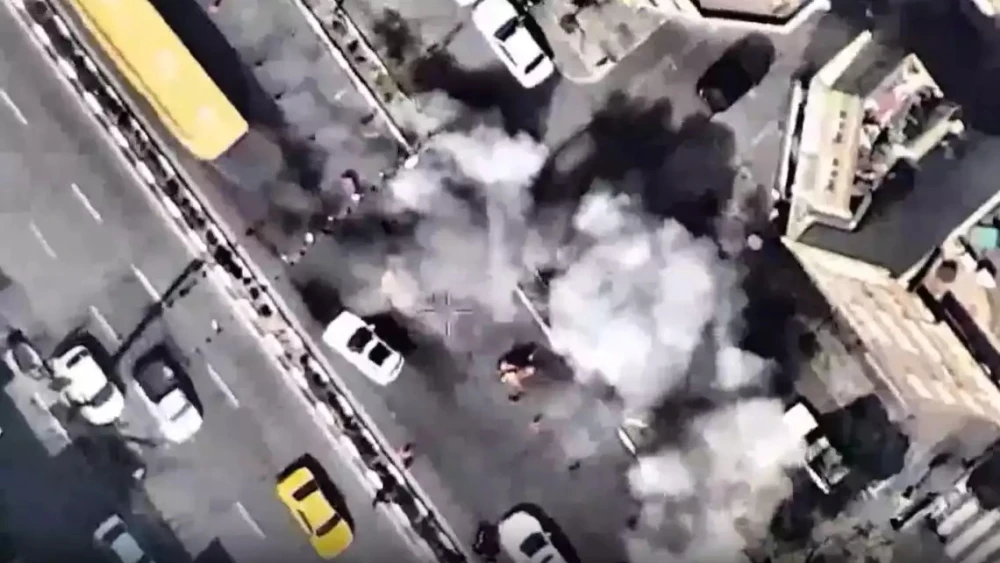
The elimination of Basij personnel in Tehran. Credit: IDF.

For weeks, the U.S. and Israeli air forces have been targeting Basij personnel, who have suffered heavy casualties. Morale among Basij gunmen has plummeted, driven by fear of strikes on checkpoints and headquarters, with many forced to sleep in streets and mosques. Videos circulating on Iranian social media show Basij members fleeing in panic after civilians play drone sounds through their mobile phones.

Originally published by Israel Hayom.
Neta Bar reports on Israeli culture, community life, and societal developments at JNS.org.
In a draft report delivered to the U.S. president, the commission also called for improved religious accommodations for U.S. service members.
Salah Salem Sarsour, accused of concealing Israeli military court convictions on immigration forms, argued his detention was part of a Trump admin effort to target the pro-Palestinian movement.
CENTCOM stated that the strikes targeted missile, drone and radar facilities after the Islamic Republic attacked a cargo ship in the Strait of Hormuz, calling the assault a violation of the ceasefire.
Now that the primaries are over, “we hope that everyone will come together and be united,” Christine Quinn, chair of the executive committee of the New York State Democratic Party, told JNS.
An Iranian official warned on Friday that the safety of ships passing through the Strait of Hormuz without Iran’s permission “cannot be guaranteed.”
“We have put the train back on the tracks and going in the right direction,” said Yechiel Leiter, Israeli ambassador in Washington. “Final destination? Peace between our two countries.”
Benny Gantz, JNS editor-in-chief Jonathan S. Tobin, Gilad Erdan, Mosab Hassan Yousef, Nissim Black and leading voices in security, diplomacy, media, law and Jewish communal affairs headline the summit’s third day in Jerusalem.