


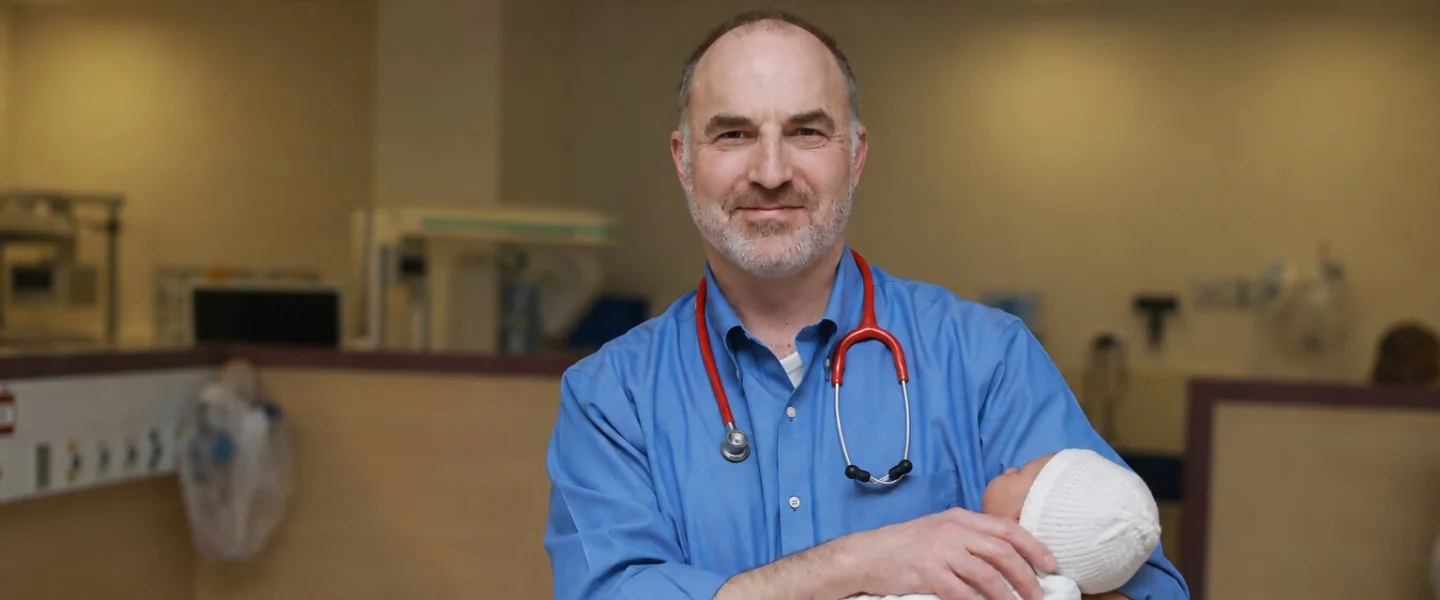
From the Galilee to the Negev, olim (immigrant) physicians such as Dr. Scott Weiner and Dr. Shilo Kramer are having a significant impact on Israel’s health-care system.
The two doctors—and many others who made aliyah from around the world through the International Medical Aliyah Program (IMAP)—are drawing on their advanced training to provide high-quality patient care, train the next generation of Israeli health-care professionals, introduce new techniques and procedures, and recruit top medical personnel to follow in their footsteps.
Weiner, who grew up in Hamden, Conn., made aliyah with his wife and three children in 2013. For him, coming to Israel was something of a homecoming. The Givat Ela resident, who serves as head of neonatology, neonatal intensive care and nurseries at HaEmek Medical Center in Afula, attended medical school in Israel.
Weiner wishes he had made his first trip to Israel earlier in life, though he had to wait until after graduating from college.
The aspiring doctor worked at a Jewish summer camp in Texas, where he met an Israeli emissary (shlicha) named Anat, and enrolled in the World Union of Jewish Students program in Arad.
While in Israel, he said, “I fell in love with Anat, with the country and with being here!”
He applied to the American Medical Program at Tel Aviv University, which he attended from 1994 to 1999.
Scott and Anat married in 1997 and returned to the United States for his pediatric residency at Mount Sinai Hospital in New York City and a neonatology fellowship at Yale University. He then worked at New Britain Hospital as director of nurseries.
“Anat lived in the US for me—the plan was always to return to Israel!”
In 2013, the Weiners made aliyah before their oldest child turned 10.
‘A melting pot of what Israel really is’
Weiner interviewed with several hospitals in northern Israel.
“We didn’t want to be in the mercaz (center). We wanted to be in a place that was smaller, greener and closer to Anat’s family.”
He said he “loved” the neonatal intensive care unit at HaEmek Medical Center.
“It was not small, and not huge. It felt like a place where people could hold my hand while learning to write in Hebrew.”
Weiner speaks fondly of the diversity among his colleagues and patients.
“It is a great mishmash—Sabras, Jews and non-Jews, Israeli Arabs, Bedouins, Circassians and olim from around the world. I love the mix of people. It is a nice melting pot of what Israel really is. Beautiful people working for a common cause.”
Despite his responsibilities, Weiner is quick to say, “I am not all that special.”
He feels his most important contributions to medical care in Israel have more to do with “being someone who is good and up to date” and working in a field that needs doctors.
He notes that many older physicians are retiring and that there are “not enough people who want to be neonatologists.”
He is proud of “grooming the next generation to take over.”
“It happens in the US too, but it feels even more special here—as a Jew and as a Zionist—especially after Oct. 7 when you see how the world reacts.”
He then makes a plea: “This place needs top-notch doctors.”
Bringing doctors to Israel
Weiner appreciates Nefesh B’Nefesh for “helping with licensing, understanding the red tape and other assistance.”
He participated in a MedEx event, which provides a comprehensive one-stop-shop experience designed to streamline license conversion and professional integration for health-care professionals considering aliyah.
MedEx is part of the International Medical Aliyah Program, a joint initiative launched in 2024 with the goal of bringing 2,000 doctors to Israel by 2029.
The initiative is led by Nefesh B’Nefesh in partnership with Israel’s ministries of Aliyah and Integration; Health; and Negev, Galilee and National Resilience, as well as the Jewish Agency for Israel.
It is supported by the Marcus Foundation, the Gottesman Fund, Jewish Federations of North America, the Azrieli Foundation and the Arison Foundation.
The program aims to strengthen the country’s health-care system, particularly in Israel’s north and south. Since its launch, more than 1,300 doctors have made aliyah, surpassing half of the program’s five-year goal.
MedEx events have been held in Paris, Buenos Aires, London, Los Angeles, New Jersey, Sydney, Melbourne, Toronto and Montreal. A recent event took place in London, with upcoming events planned for Sydney and Melbourne.
Weiner recently represented HaEmek Medical Center at a MedEx event in New Jersey.
He acknowledges the trade-offs involved in moving to Israel but remains pleased with his work, choice of community and overall quality of life.
“I feel that where I live is like where I grew up, which doesn’t exist so much anymore—open neighborhoods where kids run free, and neighbors feed each others kids, and people look out for each other.”
A homecoming in the Negev
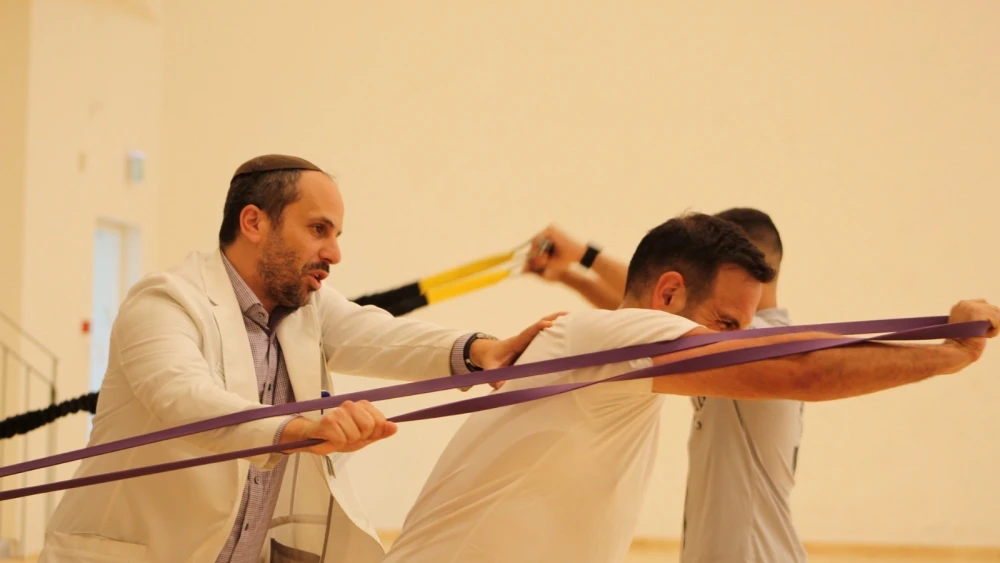
Unlike Weiner, who had to wait until after college to visit Israel, Dr. Shilo Kramer, 44, was born in Jerusalem and spent his first 12 years in the country before his parents relocated to Vancouver, Canada.
Kramer made aliyah in 2020 and is now director of the Department of Orthopedic Rehabilitation at the Harvey and Gloria Kaylie Rehabilitation Medical Center at ADI Negev-Nahalat Eran. For him, returning was a true homecoming.
He had always combined his professional studies with Jewish learning, studying biology, economics and business administration at Yeshiva University in New York.
He simultaneously pursued rabbinic training, a master’s degree in Jewish education and medical school, sometimes watching recorded medical school lectures at double speed.
When Kramer met his wife, he told her, “I have Yemenite grandparents who refuse to leave Israel and I want to get married in Israel!”
They married in 2004 and worked from 2004 to 2020 at Congregation Kehilath Jeshurun in various capacities, but never lost sight of their goal of living in Israel.
“Getting back to Israel was always in the back of our head—with a 5-year, 10-year…15-year plan.”
They eventually moved to Long Island, where their family grew.
In 2014, Kramer trained at Memorial Sloan Kettering Cancer Center.
“It was the best decision ever,” he said. “I learned from the five biggest gurus! I honed all my skills that year. It changed my ability to diagnose and treat and look at the entire person. I saw thousands of complicated cancer cases.”
From 2015 to 2020, Kramer directed physical medicine and rehabilitation at Complete Wellness PC in Manhattan.
“Then, COVID hit!”
‘The catalyst that pushed aliyah’
Kramer describes the pandemic as “the catalyst that pushed aliyah.”
“Our offices were closed, our rehab centers were closed and the kids were on Zoom. We said, ‘let’s try Israel out for a year.’”
He then learned about ADI Negev-Nahalat Eran Rehabilitation Village.
He was initially hesitant to explore the program in the northern Negev—an area Kramer describes as “in the periphery” and an hour’s drive from his intended home in Beit Shemesh.
Kramer visited four hospitals, including Alei Negev. He learned that working at hospitals in major cities would require a commute of more than an hour.
“At Alei Negev, I just fell in love. It had all of the foundation blocks in place thanks to [founder] Doron Almog.”
“As a rehabilitation physician specializing in cancer rehabilitation, and Sports and Regenerative medicine, I was intrigued by the village’s plans to establish the first-ever rehabilitation hospital in Israel’s south. As a proud Israeli, I was excited by the prospect of helping bring quality care, housing and employment opportunities to the Negev. And as a devout Jew, I was overcome with pride when I heard about (and later witnessed) the acts of heroic humanity performed daily by the ADI staff and volunteers who care for and empower hundreds of children and young adults with severe disabilities. This is my calling. This is my IDF service!”
Kramer saw an institution deeply invested in its patients.
“I wanted to be part of something making an impact,” he said.
He accepted the position but did not fully appreciate the significance of his decision until the Hamas-led attacks of Oct. 7, 2023.
“I didn’t fully grasp the decision until Oct. 7.”
After Oct. 7
Kramer shares stories of the center’s vital work on and after Oct. 7, marveling at the dedication of staff from all backgrounds.
He highlights “Bedouin Arabs who ran here on Oct. 7.”
He also recalls “soldiers who began pouring in—from Ofakim, Netivot—and Lebanon.”
Kramer’s enthusiasm for his work, patients and staff is evident.
He recognized a staffing shortage soon after his arrival and has since overseen the growth of the staff from 250 to 850.
He is working with government ministries to obtain temporary licenses for rehabilitation professionals from abroad and bring more olim medical professionals to Israel.
Toward that end, he said, “I go to Nefesh B’Nefesh’s MedEx events each year—to find rehab professionals. I tell them the impact they can create!”
Kramer concludes: “We have an opportunity with our amazing training to make an impact on Israeli society including soldiers, their spouses and children. And, you will feel the greatest sense of self-fulfillment and realization of your Zionism.”
