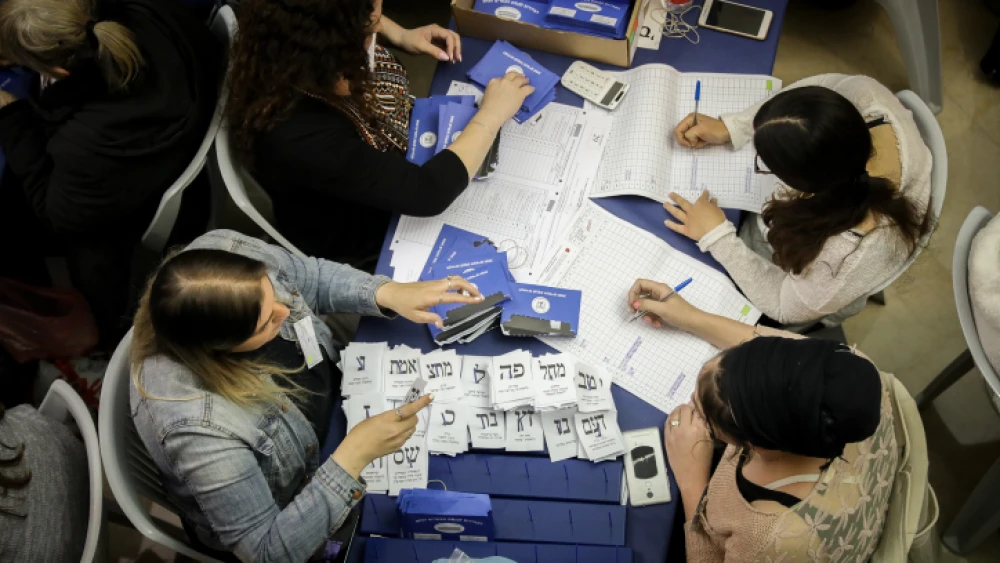
Unlike the April 9 election, when the various political parties all but ignored immigrants from the former Soviet bloc, Israel’s September election battle is widely expected to be waged on the “Russian street.” Two parties—Likud and Yisrael Beiteinu—are leading the charge to capture this electoral stronghold, with the potential to provide 16 mandates, although the Blue and White Party will also try squeezing a few votes out of it, while perhaps putting forth a few Soviet-born candidates.
The challenge facing the Likud is particularly daunting. From an ideological perspective, Russian-speaking Jews are the Likud’s natural constituency, but the party has so far failed to provide them with a viable political home.
On the other hand, Yisrael Beiteinu leader Avigdor Lieberman, the man who has forced yet another general election on us, is hoping to reposition himself as the definitive representative of Israel’s Russian-speaking community. Right now support for Lieberman is high because his refusal to enter Netanyahu’s government is perceived within some immigrant circles as a strong, principled stance.
People who stopped voting for Lieberman (or never did in the first place) are declaring on social media that he now has a chance to win their support. Once the Likud explains to them that Yisrael Beiteinu’s move had nothing to do with principles and that it torpedoed the formation of a good nationalist government that could have made strides toward strengthening the country, this equation will likely change.
The under-representation of Russian-speaking Israelis on the Likud’s Knesset ticket is a significant Achilles’ heel for the party. Although the Likud does have two wonderful Russian-speaking leaders—Yuli Edelstein and Zeev Elkin—who have soared to the top of the party, paradoxically, their success has come with a price: they are no longer perceived by Russian-speaking immigrants as representatives. What’s more, when a ruling party with nearly 40 mandates produces just two candidates to represent such a massive constituency, the party cannot realistically hope to be a real home for them.
The solution can be two-fold: The Likud can reserve more slots on its Knesset ticket for new faces from the Russian-speaking community, and it can launch a broad-based campaign to invite these people to join the party’s ranks to truly help shape Israel’s future. Anything less likely won’t suffice. The Russian-speaking public is intelligent and sophisticated and is capable of distinguishing between fleeting election propaganda and an offer of true partnership that doesn’t come with an expiration date.
Ariel Bolstein is the founder of the Israel-advocacy organization Faces of Israel.
This column first appeared in Israel Hayom.